
The Hidden Frustration of Modern Crypto Trading
I remember sitting in front of my monitor late one night, heart pounding, trying to make a simple swap on an exchange. I felt like a stranger in a maze. The numbers on the screen were dancing, the fees were skyrocketing, and I had no idea who was on the other side of my trade. I was just clicking buttons, hoping that some mysterious algorithm would fulfill my request without eating up my entire profit. It felt like I was fighting against a system that was built to confuse, not to empower.
My journey into crypto wasn’t paved with gold; it was built on trial, error, and a lot of late-night research. I’ve lost money on trades that didn't go through, and I’ve spent hours trying to understand why my wallet balance didn't match the exchange's data. That sense of helplessness is something many of us share when we first enter this space. We want the freedom of digital assets, but we are met with technical walls that make us feel like we are always at a disadvantage.
You might be feeling that same frustration today. You hear terms like "liquidity" and "smart contracts" thrown around by influencers, but they rarely explain what these things actually mean for your personal wallet. It feels like you need a computer science degree just to trade a few tokens. That barrier to entry isn't just annoying; it’s a mental burden. It keeps you from truly owning your financial future because you are always relying on platforms you don't fully understand.
The reality is that traditional systems are outdated. They keep us waiting, they keep us guessing, and they keep us paying middleman fees for services we should be able to handle ourselves. When you finally realize that the system isn't broken—it’s just designed for someone else to win—that’s when the real struggle begins. You start looking for alternatives, but the information you find is either too complex or filled with jargon.
I want to change that narrative for you. You deserve to trade with confidence, not fear. You shouldn't have to worry about whether your assets are safe or if the price you see is the price you get. Once you strip away the hype and the fancy tech-speak, you find a logic that is surprisingly simple. My goal is to share that logic with you, so you can stop being a spectator and start being an informed participant in this digital era.
Decoding the Engine of Decentralized Finance
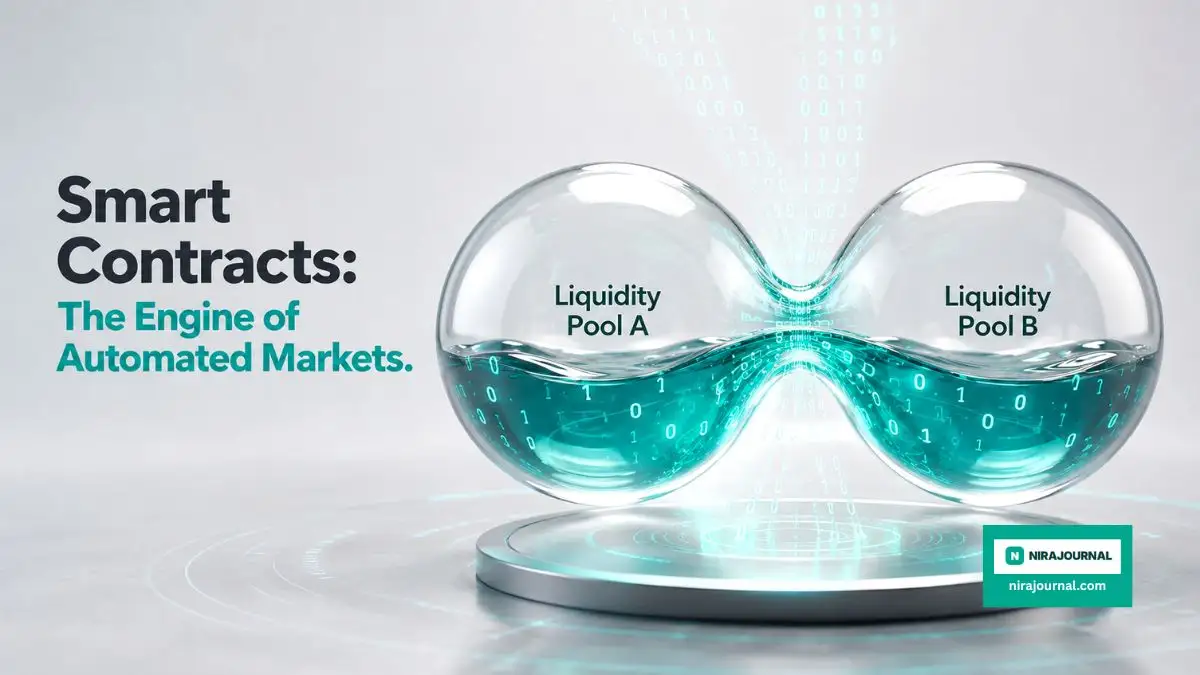
To understand why DeFi is so different, we have to look at how liquidity pools actually move the needle. A liquidity pool is essentially a digital vault. Instead of a traditional exchange where a buyer needs to find a specific seller, these pools act as a reservoir where tokens are locked by community members. This creates a space where anyone can swap assets instantly at any time of the day or night.
To understand the technical integrity of these systems, you can examine the research on how Automated Market Maker mechanics function via mathematical models, which provides a transparent look at how prices are maintained without human intervention.
Why Liquidity Providers Are the Backbone
When you provide liquidity, you are essentially acting as the market maker. You deposit a pair of tokens into a smart contract—a piece of code that lives on the blockchain. Because your tokens are sitting there waiting for traders, the exchange doesn't need to hunt for a counterparty for every single transaction. This is a massive leap forward from the old ways of trading.
For your contribution, the protocol rewards you with a portion of the trading fees.
Pro Tip: My biggest realization when I started was that I didn't need to be a whale to benefit. Even adding a small amount of liquidity allows you to earn your share of the fees. Don't let the technical complexity stop you from starting small and learning how the mechanism works with a test amount you're comfortable with.
Smart Contracts: The Silent Law Enforcers
Smart contracts are the backbone of this entire operation. They are self-executing programs that follow a set of predefined rules without human interference. Think of them as a vending machine: you put your tokens in, the contract calculates the price based on current supply, and it spits out the new asset automatically. No banker, no broker, and no delays.
If you want to dive deeper into the security aspect of these tools, check out this guide on The Ultimate Guide to Crypto Key Management [Step-by-Step]. It will help you understand how to keep your access points secure while you participate in these pools.
How Automated Market Makers (AMMs) Set Prices
In traditional finance, prices are set by human emotion and high-frequency trading firms. In DeFi, we use AMMs. An AMM is a mathematical formula that adjusts the price of a token based on how many tokens are in the pool. If a lot of people are buying Token A with Token B, Token A becomes more expensive. It is a fair, transparent, and completely automated process that removes human bias from the equation.
Understanding the Value of Decentralization
Many people ask me if this is truly better than the systems we grew up with. My answer is always the same: it’s about control. In a centralized system, the platform controls your funds and your ability to trade. In a liquidity pool, your funds are governed by code that you can verify yourself on the blockchain.
If you are curious about the risks and the best ways to protect your digital identity while navigating these exchanges, this video breaks down the process visually for better understanding:
Watch this short, expert-led tutorial on how to safely interact with smart contracts to ensure your assets remain under your control.
Navigating Risks: What They Don't Tell You
It is not all sunshine and rainbows. One of the risks you need to keep in mind is "impermanent loss." This happens when the price of the tokens in the pool moves significantly in one direction. While the fees you earn can help offset this, it is something you must calculate before you commit your funds.
It is also vital to keep track of your wallet security as you interact with these protocols. For more details on protecting your assets, read through my insights on 7 Hidden Truths About Crypto Wallets (Avoid These Mistakes). Being prepared is the best way to avoid common pitfalls that many new investors fall into.
Before committing capital, it is wise to review the educational resources provided by official government financial literacy portals regarding the risks of digital assets, as they offer a neutral perspective on the volatility inherent in this space.
The Path Forward: Simplicity Over Hype
You are now armed with the knowledge that liquidity pools and smart contracts aren't just buzzwords. They are practical tools that solve real problems. They replace the slow, manual, and expensive processes of the past with fast, automated, and community-driven solutions.
As you start your journey into providing liquidity, keep things simple. Don't rush into complex yield-farming strategies immediately. Master the basics of a simple token pair first. Understand how the fees work and watch how the pool reacts to price changes.
The future of finance is open to everyone, but it requires a bit of homework. By understanding how these protocols function, you are already ahead of most people. You aren't just trading tokens; you are interacting with the infrastructure of a new financial age. Take your time, stay curious, and always prioritize the security of your own digital wallet.
Mastering the Art of Decentralized Liquidity
Once you have grasped the basics of how liquidity pools operate, the next step is moving from a beginner to a more confident participant. Many people stop at simply depositing tokens, but there is so much more you can do to optimize your results. You need to think about how different pools behave and how market shifts impact your specific assets.
The Secret to Smarter Asset Allocation
Diversification is a term you hear in every financial circle, and it holds true here as well. Instead of putting all your resources into one high-yield pool, consider splitting your holdings across different token pairs. This helps you manage your risk if one specific token experiences high volatility.
When you are looking at long-term growth, you must understand the broader ecosystem. This shift from old models is explained in detail in our guide on Transitioning to Web3: Understanding the Shift from Centralized Platforms to User-Owned Networks. Embracing this change is essential for those who want to stay ahead in the evolving market.
You should also keep an eye on trading volume within the pool. Pools with high activity generate more fees, which is where your rewards come from. Tools that track The Evolution of Global Regulatory Frameworks for Distributed Ledger Technology can offer insights into how these platforms operate under different rules. Staying informed helps you spot long-term opportunities rather than just chasing short-term hype.
Scaling Your Strategy Without Fear
When you feel ready to take the next step, look at how you manage your rewards. Many successful providers reinvest their earned fees back into the pool to take advantage of compounding. This simple act can grow your position significantly over time without needing to add more capital from your own pocket.
Always maintain a separate record of your transactions. Even though the blockchain keeps a public log, having your own clean spreadsheet makes tax time and performance tracking much easier. I personally use a simple tracker to see which pools are performing best and which ones are stagnant.
Learning from the Pro-Level Cycles
Market cycles are a natural part of any financial system, including crypto. When the market is calm, you might notice your fees dropping. That is actually the perfect time to evaluate your strategy rather than panic. I have found that those who stay patient during quiet periods are the ones who capture the most value when trading volume spikes again.
Think of your liquidity position like a garden. You plant your seeds by providing tokens, you nurture them by choosing the right pools, and you harvest the rewards as the market moves. It takes time, consistency, and the willingness to learn from every season.

Watching Out for Hidden Pitfalls
Another mistake is failing to adapt to the changing landscape. It is easy to get caught in traps that drain your progress if you ignore how the market is shifting. One of the biggest mistakes is jumping into a pool just because it promises an extremely high yield. Often, these pools are filled with tokens that have very low liquidity, meaning your assets could get stuck if you try to exit.
Another common error involves ignoring gas fees. If you move your funds too often, the costs of the transactions can quickly eat up your earned rewards. I once lost a significant portion of my gains just by being impatient and trading when network traffic was at its peak. Always wait for the right moment to make your moves.
Avoiding Emotional Trading Patterns
It is human nature to want to follow the crowd, especially when everyone is talking about a new, trendy token. However, reacting to emotions is a dangerous way to manage your finances. If you feel like you are panic-buying or panic-selling, take a step back and look at the hard data.
The Danger of Ignoring Security
Security is not a suggestion; it is the foundation of your survival in this space. I have seen many people lose access to their funds because they shared their private keys or connected their wallets to untrusted websites. You should always treat your digital wallet like a physical bank vault.
Always remember that security starts with your own habits. For instance, cybersecurity experts emphasize the importance of using hardware wallets to keep your private keys offline, which is the most reliable way to prevent unauthorized access. If a website asks for your secret recovery phrase, close the browser immediately. A legitimate protocol will never ask for that information. Protecting your assets is the first priority; growing them is only the second.
Your Path to Financial Clarity
You now have a solid understanding of how these powerful financial engines work. You know how to provide liquidity, how to use smart contracts to your advantage, and how to stay safe while navigating the space. This is not just about trading; it is about taking ownership of your financial tools.
Consistency is your biggest ally. By making small, educated decisions every day, you build a foundation that is much stronger than any quick trade could ever provide. You are now part of a movement that is changing how the world handles value.
My journey began with the same questions you likely have today, and I still learn something new with every single transaction I make. Take this knowledge, be patient with your progress, and trust the process. You have the ability to build something meaningful, so start today by making one smart move toward your goals.
Common Questions About DeFi Liquidity
How do I choose the best pool to join?
Look for pools with high trading volume and established, reputable tokens. Higher volume means more fees are being generated, and established tokens are generally less likely to drop in value unexpectedly.
What is impermanent loss?
Impermanent loss is a calculated risk. You can use open-source academic calculators and simulations to visualize how price divergence affects your returns over different time frames. It is called "impermanent" because if the prices return to their original ratio, the loss disappears.
Do I need a lot of money to start?
Not at all. You can start with a small amount to get comfortable with the interface and the mechanics. The goal in the beginning should be learning how the system functions, not maximizing immediate returns.
Are liquidity pools safe?
They are secure in terms of how the smart contracts function, but you face risks from price changes and potential project failures. Always research the protocol before you deposit your assets.
Can I withdraw my tokens at any time?
Yes, in most decentralized protocols, you have the freedom to withdraw your liquidity whenever you choose. You just need to pay the network fee for the transaction, and your assets are returned to your wallet.
Disclaimer: I am not a financial advisor. The information provided here is for educational purposes only and should not be considered financial or investment advice. Crypto assets are highly volatile, and you should perform your own research before making any financial decisions.
About the Author
Munira Parveen is a dedicated Digital Content Strategist and Lead Researcher with a passion for simplifying complex topics. From navigating personal finance and emerging tech trends to uncovering the best practical lifestyle solutions, she spends her time analyzing data to bring readers highly accurate, actionable, and easy-to-understand guides. Her ultimate goal is to empower everyday people to make smarter, more informed decisions in this fast-paced digital world.

![The Ultimate Shift: How to Navigate the Web3 Revolution [Step-by-Step]](https://nirajournal.com/storage/uploads/blogs/1786622898_the-ultimate-shift-how-to-navigate-the-web3-revolution-step-by-step.webp)