
Key Takeaways
- Follow the Data: Use historical sales and tax records instead of gut feelings.
- Spot the Cycle: Identify if your target area is in Growth, Stability, Decline, or Renewal.
- Watch Commercial Growth: New organic grocery stores or transit hubs often signal rising home values.
- Ignore the Noise: National headlines rarely reflect the reality of your specific street.
The Hidden Heartbreak of Guessing the Housing Market
Buying a home often feels like a high-stakes gamble where the odds are stacked against you. You watch prices climb, worry about timing the market, and fear that one wrong move could cost you your life savings. But here is the reality: successful investors don't rely on luck or crystal balls. They rely on predictable patterns hidden in public data.
I still vividly remember staring at my laptop screen late one night, feeling a heavy knot form in my stomach. A modest house in my dream neighborhood had just sold for an amount that completely shattered my budget.
Just a few months prior, I had walked past that exact same property and thought it was perfectly within my reach. I decided to wait, hoping the prices would magically drop. Instead, I watched from the sidelines as the neighborhood transformed, prices skyrocketed, and my dream slipped through my fingers.
I was completely crushed. I kept asking myself how I missed the warning signs.
The truth is, I was flying blind. I was making massive life decisions based on gut feelings and friendly gossip rather than actually looking at the numbers. I realized that my lack of understanding was costing me a lot more than just money. It was stealing my peace of mind.
Every time I looked at a listing, anxiety would wash over me. Was I buying at the top of the market? Would the value crash the moment I signed the papers?
Millions of regular people face this exact same terrifying reality every single day. We pour our life savings into a home, crossing our fingers and hoping for the best. The constant fear of making a bad investment can literally keep you awake at night.

Decoding the Invisible Patterns of Your Neighborhood
Real estate isn't a random casino game; it functions like the seasons. By observing local shifts in infrastructure and business growth, you can predict where the market is headed before the rest of the crowd catches on.
Once I wiped away my frustration, I decided to take control of my own financial future. I realized that treating real estate like a casino was a guaranteed way to lose.
You see, local property prices do not just bounce up and down randomly. They follow distinct, rhythmic patterns. Think of these shifts like the seasons of the year. After a freezing winter, you know spring is inevitably coming. The housing market behaves in a very similar way.
By looking at what happened in the past, you can actually build a fairly accurate map of what might happen next. This is not about guessing. This is about observing human behavior, local economics, and basic supply and demand.
Why the Past Always Leaves Clues
Have you ever noticed how an old, run-down part of town suddenly becomes the trendiest spot for coffee shops and art galleries? That shift did not happen overnight.
If you look closely at the public records, you will see a quiet buildup. First, younger buyers move in because the rent is cheap. Then, a few small businesses open up. Suddenly, developers start buying abandoned lots.
This is the exact moment when property prices begin their upward climb. By the time the fancy organic grocery store opens on the corner, the massive price jump has already happened.
If you only pay attention to the present moment, you will always be too late. You need to look backward to move forward safely. Understanding this concept was a massive turning point for me.
I started digging into historical pricing data for my local area. I looked at how long houses sat on the market before selling. I checked the gap between the asking price and the final sale price over different cycles. The patterns began to jump off the page.
7 Proven Strategic Frameworks for Small Business Continuity (Avoid These Mistakes)
Identifying the Local Life Cycle
Every single neighborhood goes through a specific life cycle. If you want to make smart moves, you must figure out which phase your target area is currently sitting in.
The first phase is the Growth Stage. This is when new construction is everywhere. Families are moving in, and local schools are expanding. The demand is high, and values are steadily climbing.
Next comes the Stability Stage. The neighborhood is fully established. The trees are fully grown, and people tend to stay in their homes for a long time. Prices remain relatively flat or grow very slowly with regular inflation.
After that, we often see the Decline Stage. Older homeowners move away, properties get turned into rentals, and general maintenance slows down. Values might stagnate or even drop during this time.
Finally, the most exciting part is the Renewal Stage. Investors spot the low prices and begin buying up the old homes. They renovate them, bringing fresh life back into the streets.
When you track the historical sales data of a zip code, you can clearly see these waves. Buying a home right at the start of a Renewal Stage is often the sweetest spot for long-term equity.
The Realities of Supply and Demand
We hear the phrase "supply and demand" all the time, but how does it actually affect your local street?
Let me break it down simply. When there are fifty families looking for a home, but only ten houses for sale, the sellers hold all the power. They can ask for outrageous prices, and someone will eventually pay it.
Conversely, if a major local factory shuts down and hundreds of people put their homes up for sale at once, the power shifts entirely to the buyers. Prices will naturally drop as sellers compete for a tiny pool of interested buyers.
To spot these trends, you can easily look up historical employment data in your region. A strong history of steady job growth almost always runs parallel to a strong housing market. For reliable economic methodologies, you can always check out resources like the National Bureau of Economic Research, which offers incredible insights into how employment impacts local economies.
My Personal Wake-Up Call
I used to think that a beautiful house was always a good investment, regardless of the area. I was dead wrong.
Pro Tip: I once almost bought a stunningly renovated house in a declining neighborhood simply because the kitchen was gorgeous. Thankfully, I checked the historical tax assessments for the street and realized every single home around it had been dropping in value for consecutive cycles. Always let the neighborhood data guide you, not just the shiny granite countertops!
You have to remove your emotions from the equation. A house is a place to live, yes, but it is also a massive financial asset.
Here is a quick video explaining exactly how to pull up and read local property data without feeling overwhelmed by numbers:
The Power of the "Ripple Effect"
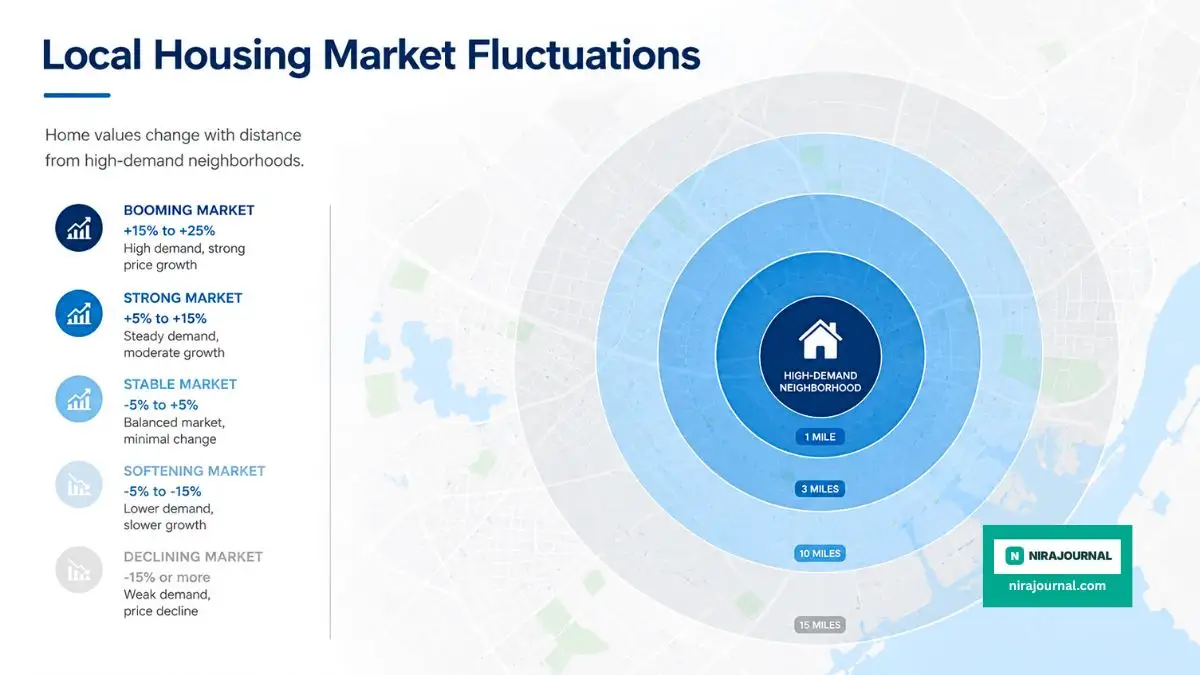
One of the most fascinating concepts I learned is something called the Ripple Effect.
Imagine throwing a heavy stone into a quiet pond. The water splashes in the middle, and rings of waves slowly push outward toward the edges.
Housing markets do the exact same thing. When a highly desirable neighborhood becomes completely unaffordable, buyers do not just give up. They simply move one street over. Then they move one neighborhood over.
If you want to know where values are going to spike next, just look for the most expensive, booming neighborhood in your city. Then, draw a circle around it. The immediately adjacent, slightly less popular areas are almost guaranteed to see a price increase next.
This historical pattern has repeated itself in nearly every major city across the globe. By tracking where the highest sales happened in the past, you can confidently predict where the middle-tier sales will boom next.
Dispelling Common Real Estate Myths
When you start talking to people about buying property, you will hear a ton of terrible advice. It is incredibly important to separate fact from fiction.
Myth 1: Property values only go up.
This is a dangerous lie. While real estate generally appreciates over a long timeline, local markets can and do experience severe dips. If you buy at the absolute peak of a Growth Stage, you might be stuck underwater for a very long time before values recover.
Myth 2: You need an economics degree to understand market trends.
You absolutely do not. All you need is internet access and a bit of patience. Local county tax websites, public registry offices, and free real estate portals hold all the historical data you will ever need.
Myth 3: The national news reflects your local street.
This is my biggest pet peeve. National news headlines will scream that the housing market is crashing. Meanwhile, your specific little suburb might be experiencing a massive bidding war because a new tech headquarters just opened nearby. Always prioritize local data over national panic.
A Quick Cheat Sheet: Healthy vs. Unhealthy Trends
To make things incredibly simple, I created a mental checklist. When I look at the historical data for a specific area, I actively look for these specific indicators.
This simple framework saved me from making a massive financial mistake. It forces you to look at the cold, hard facts instead of getting swept away by a charming real estate agent.
Digging into the Real Data
If you want to get serious about protecting your future, you need to know where to find the numbers.
Start by looking up the historical House Price Index (HPI) for your specific region. This index tracks how single-family home prices have moved over long periods. You can often find transparent public data tools provided by government entities like the Federal Housing Finance Agency to see how broad regional trends behave over time.
Once you have the big picture, zoom in. Go to your local city planning office website. Look for historical zoning changes. Did the city recently rezone a large industrial area into residential? That is a massive clue.
When a city changes the rules to allow more houses, it usually means they are anticipating a population boom. If you can spot that zoning change early, you can position yourself perfectly before the rush happens.
Proven Strategy: How to Learn Advanced Data Analysis Without Spending a Dime [Inside Guide]
How Inflation Secretly Changes Values
We cannot talk about historical trends without addressing the silent thief in the room: inflation.
When the cost of everyday goods goes up, the value of money goes down. It takes more money to buy the exact same loaf of bread. Well, the same thing happens to houses.
Sometimes, a house appears to have gone up in value simply because the currency itself is worth less. The actual purchasing power of the home has not changed at all.
This is why looking at historical data is so incredibly helpful. You can compare house price growth against the standard rate of inflation. If a neighborhood is truly booming, the property values will climb much faster than basic inflation.
If the values are just barely keeping up with inflation, the neighborhood is likely sitting in a stagnant Stability Stage. Knowing this difference is what separates an amateur buyer from a smart, protected homeowner.
Understanding the Seasonality of Selling
Another fascinating pattern hidden in the historical numbers is seasonality.
Most people do not want to move during a freezing winter or pull their kids out of school in the middle of a term. Because of this, the housing market usually explodes with activity in the spring and early summer.
If you look at the sales charts from past decades, you will see a distinct zigzag pattern. Prices and competition peak in May and June, then slowly dip down in November and December.
If you are a buyer trying to find a good deal, understanding this historical trend gives you a massive advantage. Shopping for a home in the dead of winter means you will face far less competition. Sellers are usually more desperate and willing to negotiate.
Why You Should Track Rental History
- Pro Tip for Renters-turned-Buyers: Before you fall for a specific house, look at the median rent-to-price ratio in that zip code. If rents are surging while purchase prices remain stable, you have found an area where home values are likely suppressed and primed for a catch-up phase.
Many regular homebuyers completely ignore the rental market. They think it has nothing to do with them. That is a huge mistake.
The rental market is actually a leading indicator of where property values are heading. Think about it logically. If rent prices in an area start shooting up, renting becomes highly uncomfortable. Eventually, those frustrated renters decide that buying a house is a better financial move.
This creates a sudden surge of first-time homebuyers flooding into that specific neighborhood. That surge in demand instantly pushes property values higher.
If you want to know what home values will do next, pull up the historical rental rates for the past few cycles. A steady, sharp increase in rent is almost always followed by a surge in home purchase prices.
Taking the Emotion Out of the Equation
Buying a house is inherently emotional. You walk through the front door, imagine your furniture in the living room, and suddenly you are willing to pay anything to get the keys.
I have been there. It is intoxicating.
But when you commit to understanding historical market trends, you build a protective shield around your wallet. You learn to look past the fresh paint and staged furniture. You start seeing the underlying structure of the local economy.
You learn to ask the right questions. How many times has this house been sold? Why did it sit on the market for six months last time? What is the city building down the street?
By becoming a student of the past, you completely remove the fear of the future. You stop feeling like a victim of a crazy market, and you start feeling like a confident participant.
You do not need to be wealthy to win at real estate. You just need to be willing to look at the patterns that everyone else is too busy to notice.
Next-Level Strategies for Mastering Local Property Cycles
Once you understand the basic rhythm of the housing market, you are already ahead of most buyers. But if you want to truly master this process, you need to look at the subtle signals that most people completely ignore.
The smartest investors do not just look at past home sales. They look at the historical movement of everyday life within a specific zip code. You can learn so much just by paying attention to what is happening right down the street.
Let me share a brilliant strategy that completely changed how I look at neighborhoods. I call it the "Commercial Piggyback" method. Big retail corporations spend millions of dollars analyzing local market trends before they ever open a new store.
When you see a premium coffee shop or an expensive organic grocery store open in a sleepy neighborhood, pay close attention. Those big brands have looked at the demographic data. They already know that the area is about to experience a massive influx of wealth and younger residents.
If you track the historical opening dates of major commercial stores in your city, you will see a clear pattern. Within just a few cycles after these stores open, local residential property values almost always shoot straight up. You do not need a million-dollar research budget. You just need to follow the trail they leave behind.
The Hidden Power of City Planning
When I look at a potential neighborhood, I skip the fancy listing photos initially and head straight to the city’s public zoning portal. Finding an approved permit for a new park or transit hub years before completion has been my most reliable way to spot long-term equity growth.
Another incredible way to predict future property growth is by looking at long-term city development plans. Every city government publishes their master plans online for anyone to read.
You can easily find out where the city is planning to build new public transit hubs, parks, or community centers. Historically, whenever a city invests heavy tax dollars into improving public infrastructure, nearby property values experience a healthy boost.
For instance, if you review urban development studies from the American Planning Association, you will see a direct link between walkable neighborhoods and sustained property value growth. Areas that become easier to navigate without a car historically retain their value much better during economic downturns.
Whenever I am researching a new neighborhood, I always check the local zoning board meetings. I look for approvals of mixed-use developments, which combine apartments with ground-floor retail shops. These projects are massive indicators that an area is moving into a strong growth phase.
If you buy a home near one of these upcoming public projects before the construction actually begins, you are putting yourself in a fantastic position. By the time the ribbon-cutting ceremony happens, your property will likely have already gained significant equity.
Tracking Demographic Shifts
Properties do not buy themselves; people do. If you want to understand where the market is going, you have to understand who is moving in and who is moving out.
Look at the age groups migrating into your target neighborhood. Are young professionals moving in because of a new tech hub? Are older couples downsizing and selling their large family homes?
These generational shifts create massive waves in housing demand. If an area is suddenly flooded with young families, the demand for three-bedroom homes near good schools will skyrocket. If you want to dive deep into how these specific age demographics impact long-term housing needs, the research reports provided by the Joint Center for Housing Studies of Harvard University are absolutely incredible resources.
By matching your home search to the needs of the incoming demographic, you ensure that your property will remain highly desirable when it is eventually time for you to sell.
The Micro-Neighborhood Reality
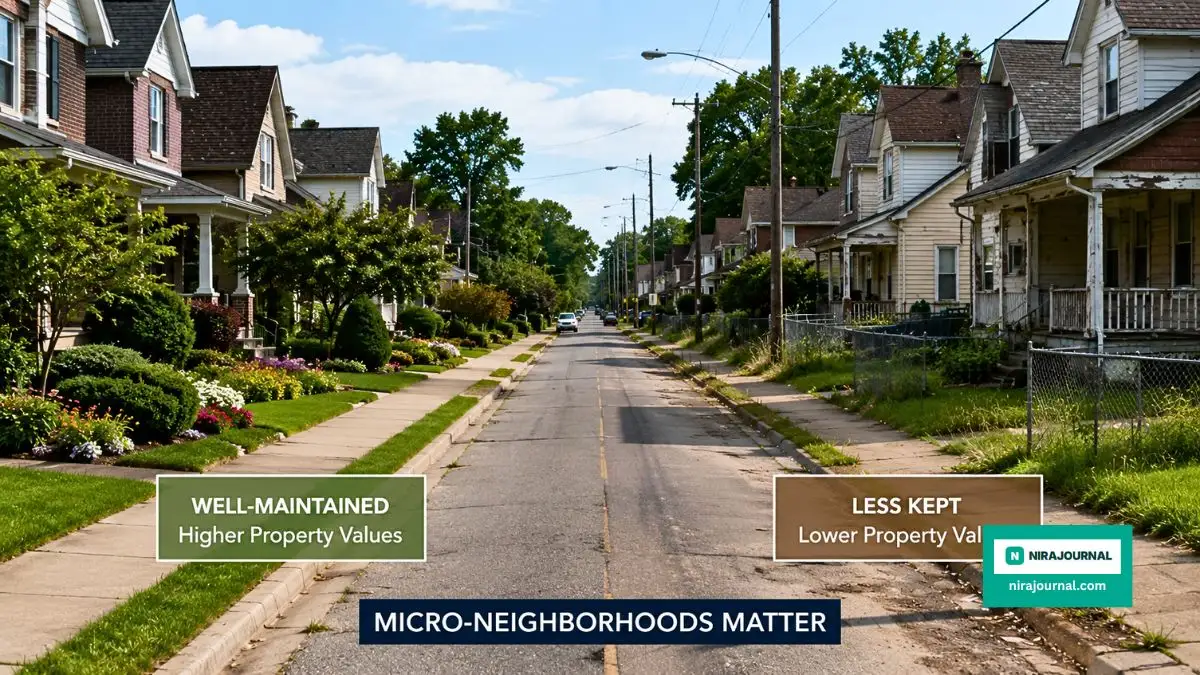
One of the biggest secrets in real estate is that not all streets are created equal. You can have a booming neighborhood, but specific streets within that area might actually be losing value.
We call these micro-neighborhoods. Sometimes, the dividing line for a highly-rated school district cuts straight down the middle of a street. Houses on the right side appreciate rapidly, while houses on the left sit completely stagnant.
You must look at historical trends on a street-by-street basis. Check the noise pollution from nearby highways or flight paths. Notice if one side of the community has better access to walking trails or natural light.
These tiny details might seem insignificant when you are desperately trying to win a bidding war. However, they become extremely obvious when you look at decades of historical pricing data. Always dig down to the micro-level before making an offer.

The Heartbreaking Traps of Real Estate Investing
Even when you have access to the best data in the world, human psychology can still trip you up. I have seen so many smart people make terrible financial decisions simply because they let their emotions take over the steering wheel.
The single biggest mistake buyers make is falling victim to the fear of missing out. We see homes selling in three days for way over the asking price, and panic sets in. We start believing that if we do not buy something today, we will be forced to rent forever.
This panic leads people to abandon all their research. They waive home inspections, drain their emergency funds, and buy properties that are sitting at the absolute peak of a pricing bubble.
When the market naturally cools off and returns to a normal cycle, these panicked buyers are left holding a massive mortgage on a home that is suddenly worth less than what they paid. It is a terrifying and stressful situation to be in.
Ignoring the Hidden Holding Costs
Another major trap is focusing entirely on the purchase price while completely ignoring the historical holding costs. A cheap house is not actually cheap if the local property taxes have been doubling every few cycles.
People often look at the current property tax bill and assume it will stay the same forever. They never bother to check the historical assessment trends for that specific county.
If a neighborhood is rapidly gentrifying, the local government will frequently reassess the property values. This means your tax bill could jump significantly just a short time after you move in. You have to budget for the future, not just the present moment.
The same rule applies to old houses that require massive upkeep. A historic home might look like a wonderful bargain on paper. But if you look at the historical repair costs for homes in that era, you will quickly realize why the asking price was so low.
The Illusion of "Forever Upward"
Many new buyers suffer from a kind of historical amnesia. They look at the explosive growth of the past few seasons and assume the graph will just keep going up in a straight line.
They use this flawed logic to justify borrowing way more money than they can comfortably afford. They think, "Even if my mortgage is tight, the house will appreciate so much that I can just sell it and make a profit."
This is an incredibly dangerous game to play. Real estate cycles naturally include periods of stagnation and mild corrections. If life happens and you are suddenly forced to sell during a down cycle, you could easily lose your entire down payment.
Never buy a home relying strictly on assumed future appreciation to save you. Make sure the monthly payment comfortably fits your current budget, regardless of what the broader market is doing.
Overlooking the Digital Side of Modern Real Estate
We often think of real estate strictly in terms of bricks, dirt, and neighborhood streets. But the modern process of buying, managing, and eventually selling a home has become heavily tied to the digital world.
Buyers often lose track of important digital documents, historical property records, and online neighborhood assessments during the chaotic buying process. Protecting your financial future means treating your online real estate data just as carefully as your physical keys.
If you want to make sure your overall portfolio is protected, you need to understand how digital terms apply to your physical assets. Warning: Stop Ignoring These 3 Digital Asset Terms (A Complete Blueprint)
By keeping a secure, organized digital history of your property’s improvements, local tax changes, and market shifts, you position yourself perfectly for a stress-free sale down the road.
Your Roadmap to Confident Home Buying
Understanding local property values does not require a magic formula. It simply requires a willingness to pause, breathe, and look backward before you take a massive leap forward.
You now know that neighborhoods operate in predictable cycles of growth, stability, decline, and renewal. You understand how to read the breadcrumbs left behind by commercial developers and local city planners.
Most importantly, you know how to detach your emotions from the transaction. You can look at a beautiful listing and confidently walk away if the historical numbers do not support the asking price.
This knowledge gives you an incredible superpower in the housing market. Instead of feeling anxious and overwhelmed, you can approach your home search with quiet, calm confidence.
A Quick Action Plan for Tomorrow
If you want to put this knowledge to work immediately, I challenge you to take a few simple steps this week. First, pick three neighborhoods you are interested in and pull up their past sales data.
Compare the original asking prices to the final sale prices. Notice how long homes typically sit on the market before selling. Then, take a drive through those streets and look for signs of commercial growth or infrastructure improvements.
Make a habit of checking local economic indicators, like job growth and zoning changes. Over time, reading these market signals will become second nature to you.
You will start seeing opportunities that other buyers are completely blind to. You will know exactly when to be patient and exactly when to aggressively make an offer.
A Personal Word of Encouragement
I know firsthand how intimidating the real estate market can feel when you are standing on the outside looking in. My own journey started with a lot of frustration, countless mistakes, and moments where I wanted to completely give up. But once I stopped guessing and started genuinely listening to what the historical data was trying to tell me, everything shifted. I want you to know that your dream of making a secure, profitable home investment is entirely possible if you just trust the numbers and trust yourself.
Common Questions About Property Market Trends
How far back should I look at historical property data?
You generally want to look back at least one full economic cycle, which is typically around seven to ten years. This time frame allows you to see how the local neighborhood reacted during periods of high growth as well as mild economic slowdowns.
Can I completely trust the home value estimates on popular real estate websites?
No, you should never treat those automated estimates as absolute facts. They are generated by algorithms that often fail to recognize micro-neighborhood differences, recent interior renovations, or sudden local zoning changes. Always use them as a rough starting point, not a final answer.
Does a sudden increase in local property taxes mean my home value is going up?
Usually, yes. Local governments reassess property taxes based on recent comparable sales in your direct area. While paying higher taxes is frustrating, it is normally a very strong indicator that your personal wealth and home equity are actively growing.
Should I avoid buying a house in a neighborhood that is currently in a "Decline Stage"?
Not necessarily, because the decline stage is often followed by a profitable renewal stage. If you see early signs of investors buying up properties or the city planning new parks in that declining area, it might actually be the perfect time to buy low.
How do rising mortgage interest rates affect local home prices?
When interest rates go up, borrowing money becomes much more expensive, which usually prices many buyers out of the market. Historically, this sudden drop in buyer demand forces sellers to lower their asking prices, causing a temporary cooling effect on local property values.
Disclaimer: The information provided in this article is for educational and informational purposes only and does not constitute financial, legal, or real estate advice. Real estate markets are highly volatile and localized. Always conduct your own thorough research and consult with a licensed real estate professional or financial advisor before making any property investment decisions.
About the Author
Munira Parveen is a dedicated Digital Content Strategist and Lead Researcher with a passion for simplifying complex topics. From navigating personal finance and emerging tech trends to uncovering the best practical lifestyle solutions, she spends her time analyzing data to bring readers highly accurate, actionable, and easy-to-understand guides. Her ultimate goal is to empower everyday people to make smarter, more informed decisions in this fast-paced digital world.
![Proven Strategy: How to Learn Advanced Data Analysis Without Spending a Dime [Inside Guide]](https://nirajournal.com/storage/uploads/blogs/1787656789_proven-strategy-how-to-learn-advanced-data-analysis-without-spending-a-dime-inside-guide.webp)