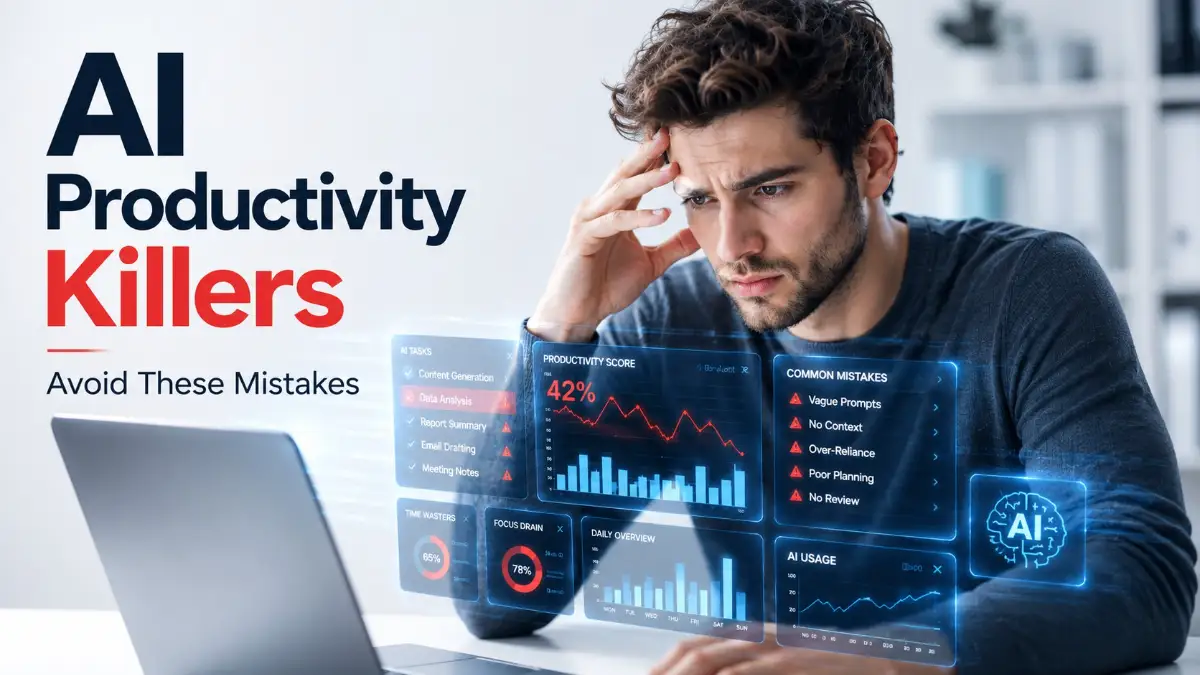
Are Fake Tech Stories Ruining Your Peace of Mind?
Imagine waking up, grabbing your morning coffee, and scrolling through your news feed. Every single headline seems to scream about how machines are taking over the world.
You read that robots are coming for your job, your privacy, and maybe even your safety. It is enough to make anyone want to throw their smartphone into the nearest river.
I completely understand this feeling. The anxiety is incredibly real, and it affects millions of smart, capable people every single day.
So many hardworking individuals tell me they feel paralyzed by this overwhelming wave of new technology. They feel like they are falling behind in a race they never even signed up for.
When you hear that a computer program can write, draw, and code in seconds, it naturally triggers a deep sense of insecurity. You might wonder if your hard-earned skills will become completely useless tomorrow.
This constant worry silently drains your mental energy. Instead of focusing on your daily tasks or enjoying time with your family, you carry this heavy, invisible weight of uncertainty.
You might even avoid trying out new digital tools just because the concept feels too intimidating. You tell yourself that you are just not a "tech person," hoping the whole trend will magically fade away.
But here is a secret that most news outlets will not tell you. That fear? It is mostly built on fiction, Hollywood movies, and wildly exaggerated internet rumors.
You are stressing over a monster hiding under the bed. In reality, that monster is actually just a very fast, slightly confused calculator.
Let us take a deep breath and look at the facts. It is time to clear the fog, drop the anxiety, and understand what is actually happening behind the screens.
Breaking Down the Hollywood Illusions: What Actually Happens Behind the Code
We need to start by looking at how the media portrays technology versus how it actually functions. Movies have spent decades convincing us that computers will eventually wake up and start making their own decisions.
Because of this intense programming, our brains are wired to fear the unknown. When an algorithm talks back to us in complete sentences, it feels like magic.
However, magic is just science that we do not understand yet. Let us look closely at the biggest misunderstandings that hold beginners back from using these amazing tools.
By understanding the basic logic, you take away the fear. You move from feeling threatened to feeling empowered and in control of your digital life.
The "Conscious Machine" Illusion
One of the most terrifying thoughts is that these programs have feelings, thoughts, and personal desires. People chat with a digital assistant and genuinely believe there is a ghost in the machine.
They ask a chatbot how it is feeling, and the program replies that it is feeling great. This makes people panic, thinking the machine has achieved self-awareness.
Pro Tip: Always remember that a computer program does not have a soul, emotions, or consciousness. It is simply guessing the next best word to say based on millions of books and articles it has scanned.
Think of it like the autocomplete feature on your phone's keyboard, just on a massive scale. When you type "Good," your phone suggests "morning."
Your phone does not actually know what a morning is. It just knows that "morning" usually follows the word "Good."
Advanced algorithms do the exact same thing but with entire paragraphs. There is no actual thinking happening, only highly advanced pattern recognition.
The Massive Job Market Panic: Separating Fact from Fiction
The next huge worry is the idea of total human replacement. You have probably heard someone say that in a few years, humans will not need to work at all.
This creates a terrifying picture for anyone trying to build a stable career or support a family. People worry that a piece of software will just completely wipe out their entire industry overnight.
Let us look at a real-life example to calm this specific fear. Imagine you run a small local bakery and make the best chocolate chip cookies in town.
An algorithm can absolutely help you write a catchy Facebook post to advertise your cookies. It might even help you organize your weekly supply budget in a spreadsheet.
However, that software cannot bake the bread, taste the chocolate, or smile warmly at your regular customers. It lacks physical presence, empathy, and the human touch that builds real loyalty.
Expert Insight: Technology rarely replaces an entire job from top to bottom. Instead, it replaces the boring, repetitive tasks within that job, leaving you more time for creative work.
Historically, whenever a new tool was invented, it created entirely new categories of jobs we could not have imagined. The goal is to become the person who knows how to direct the tool, not the person who hides from it.
The "Magic Wand" Misunderstanding
Many beginners believe that these new systems are perfect, all-knowing, and flawless. They think you can just press a button and get a perfect essay, a perfect image, or a perfect business plan.
Because they believe the system is flawless, they get extremely frustrated when it gives them a bad result. They assume they broke it, or they assume the whole thing is just a useless scam.
This happens because of a very simple rule in computer science: Garbage In, Garbage Out. If you give a machine a vague, confusing instruction, it will give you a vague, confusing answer.
These programs are not mind readers. They are like highly enthusiastic interns who want to please you but have absolutely zero common sense.
If you tell an intern to "make a report," they will likely give you something completely wrong because you were not specific. You need to tell them exactly what the report should cover, who it is for, and how long it should be.
When you learn how to give clear, specific instructions, the magic finally starts to happen. You realize the power is not in the machine itself, but in how well you can communicate your ideas to it.
The "You Must Be a Tech Genius" Myth
Another major roadblock is the belief that you need to know how to code to use modern software. People look at green lines of code in movies and think, "I am way too old to learn that."
This is simply no longer true. We have entered an era where you can talk to computers using plain, everyday English.
You do not need to know a single thing about Python, C++, or any complex programming languages. If you know how to write an email to a friend, you already have the skills you need.
The barrier to entry has completely vanished. The most successful users today are not programmers; they are writers, teachers, marketers, and everyday people who ask good questions.
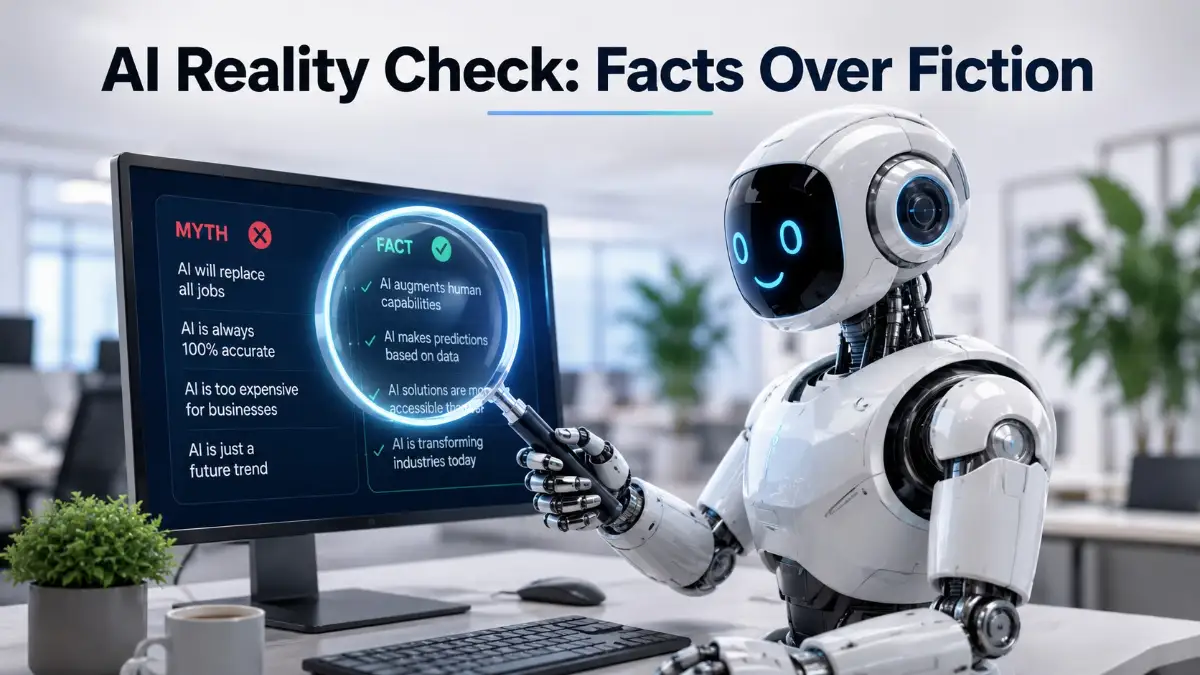
Myth vs Reality:
- Myth: You need an expensive computer science degree to understand modern algorithms.
- Reality: You just need a web browser, a bit of curiosity, and the ability to type clear sentences.
Navigating the Flaws: The Blind Spots of Machine Learning
Once you get past the fear, you need to understand the limitations. Trusting these systems blindly is just as dangerous as being completely terrified of them.
The biggest problem right now is something developers call "hallucination." This is a fancy term for when the computer confidently lies to your face.
Because the program is designed to always give you an answer, it hates saying "I do not know." If it cannot find the right information, it will sometimes just invent facts that sound highly believable.
For example, if you ask it for a historical biography of a person who never existed, it might write a highly detailed, fake story. It will even invent fake dates and fake locations to make the story sound real.
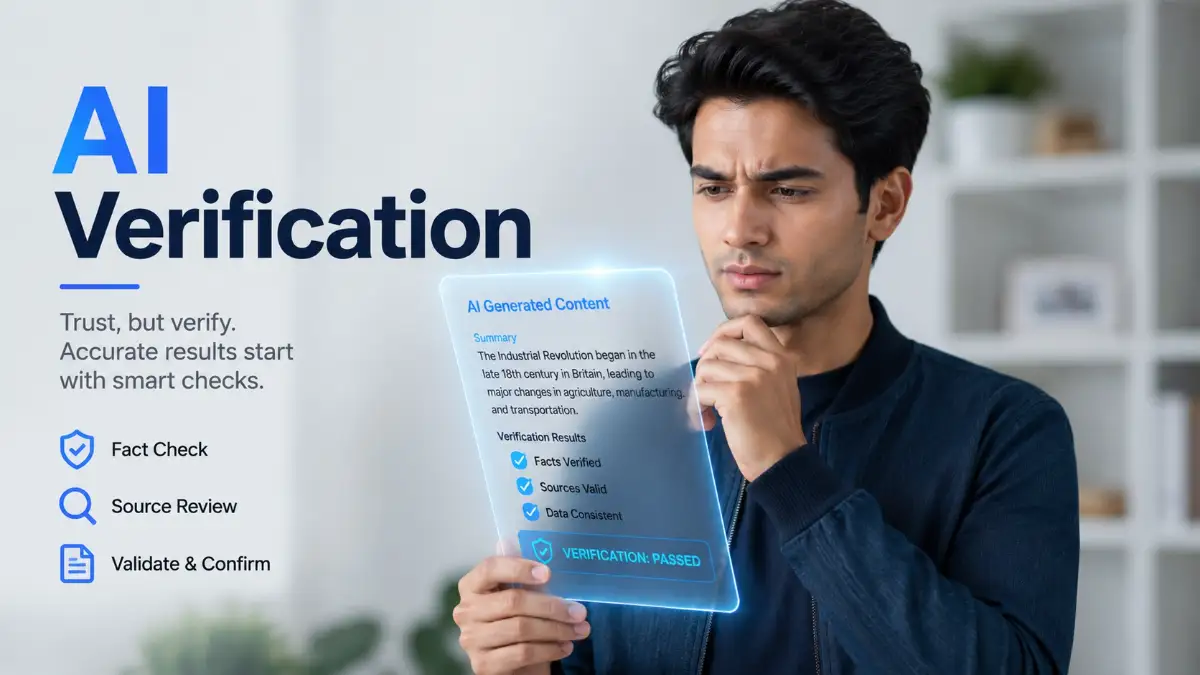
This is why human judgment is more important now than ever before. You must always act as the editor and fact-checker for anything a computer produces for you.
Never copy and paste important information without verifying it through a reliable search engine or an official source. Your critical thinking skills are your greatest asset in a world full of instantly generated text.
The Bias Hiding in the Data
Another major limitation is that computers are only as smart as the information they are fed. If a system is trained on millions of articles from the internet, it will also learn the internet's bad habits.
This means algorithms can sometimes be biased, unfair, or lean toward specific stereotypes. The machine itself is not evil, but it acts like a mirror reflecting human society's existing flaws.
If you ask a program to draw a picture of a "boss," it might only show pictures of men in suits. This happens because historically, the internet has more pictures of male executives.
Being aware of this bias makes you a smarter, more responsible user. You can actively push against these stereotypes by asking the system to provide diverse and inclusive results.
Practical Ways to Conquer Your Technology Anxiety Today
Now that we have busted the biggest myths, how do you actually move forward? The best way to conquer any fear is through small, safe exposure.
You do not need to dive into the deep end and change your whole life today. Start by taking tiny, low-pressure steps that prove to your brain that this technology is harmless.
Step One: Play the Game of Prompts
Find a free, reputable chatbot and treat it like a fun game rather than a serious tool. Do not ask it to do your taxes or write a legal document.
Instead, ask it to write a funny poem about your pet cat or give you a recipe for dinner based on three ingredients in your fridge. Seeing it perform a silly, helpful task instantly breaks the intimidation factor.
You will quickly realize that you are the one in the driver's seat. The machine only moves when you tell it to move.
Step Two: Focus on Core Human Skills
While the digital world keeps changing, human nature remains exactly the same. The best way to secure your future is to focus on things a machine can never replicate.
Work on your emotional intelligence, your ability to build trust, and your face-to-face communication. People will always prefer doing business with people they like and trust.
A computer can generate a perfect sales pitch, but it cannot look a client in the eye and shake their hand. Your humanity is your ultimate competitive advantage.
Step Three: Protect Your Privacy Mindfully
A valid concern among beginners is data privacy. You should be careful, but you do not need to be paranoid.
A simple rule is to never share sensitive personal information with a public chat interface. Do not type in your passwords, your bank details, or private company secrets.
Treat these programs like a public notice board. Only share information that you would be comfortable shouting in a crowded room.
By setting these simple, common-sense boundaries, you completely eliminate the major risks. You can enjoy the incredible benefits of modern tools while keeping your digital life perfectly safe.
Moving Beyond Basics: Smart Strategies for Everyday Users
Now that we have cleared away the scary science fiction stories, it is time to look at how successful people actually use these digital assistants. You do not need a computer science background to get amazing results.
The secret lies in changing how you communicate. Most beginners fail because they treat smart algorithms like a standard Google search bar.
When you type a few keywords into a search engine, you expect a list of website links. But when you talk to a smart chatbot, you are speaking to a highly capable blank canvas.
If you give it a lazy, three-word instruction, it will give you a generic, boring response. This is the exact moment when most people get frustrated and give up completely.
I want to show you how to change your approach. By making small changes for highly accurate responses, you will instantly see a massive difference in quality.
The "Role-Playing" Technique
One of the most powerful secrets experts use is called "role-playing." Instead of just asking a question, you first tell the computer exactly who it needs to be.
Imagine you are trying to write a polite email to a difficult client who owes you money. If you just ask the machine to "write an email asking for payment," it will sound robotic and cold.
Instead, start your request like this: "Act as an expert customer service manager with twenty years of experience in dispute resolution."
Suddenly, the program searches its massive database for the specific tone, vocabulary, and empathy of a professional manager. The resulting email will be soft, polite, and highly effective.
You can use this trick for absolutely anything. Tell the program to act like a fitness coach, a personal budget planner, or a friendly math tutor for your kids.
This simple mental shift helps you figure out how to master AI tools easily without constant stress. You stop fighting the machine and start directing it like a movie director guiding an actor.
The Power of Continuous Conversation
Another incredible strategy is treating your interactions like a real, ongoing conversation. When humans talk to each other, we rarely get everything perfect in the very first sentence.
We explain things, ask for clarification, and adjust our words based on the feedback we receive. You should treat modern digital tools the exact same way.
If the software gives you an answer that is too long, you do not need to start entirely over. Just reply, "That is good, but please make it half as long and sound more enthusiastic."
The system remembers what you were just talking about. It will instantly rewrite the text based on your new feedback.
According to research from the Stanford Institute for Human-Centered Artificial Intelligence, combining human intuition with machine efficiency creates the most powerful outcomes. The machine does the heavy lifting, but your creative taste shapes the final product.
Think of it like sculpting with clay. The software provides a big, messy block of raw material, and your ongoing instructions slowly carve it into a masterpiece.
Supplying Your Own Ingredients
A great chef cannot cook a delicious meal if you only give them water and salt. The same rule applies to generating high-quality text or data.
If you want the software to write a cover letter for a job, you must feed it good information first. Paste your resume into the chat.
Tell it the name of the company, the job title, and three reasons why you are passionate about the role. When you supply the raw facts, the program simply acts as the organizer.
It takes your unique, personal details and packages them beautifully. This completely eliminates the risk of the machine making up fake facts about your career history.

The Hidden Traps That Trip Up Smart Beginners
Even with a positive mindset and great strategies, there are a few dangerous potholes on this digital highway. Many smart professionals fall into these traps simply because they get too comfortable too quickly.
When something feels easy and magical, our natural instinct is to drop our guard. We stop checking the details and start trusting the system blindly.
This overconfidence can lead to serious embarrassment, lost time, and even major professional damage. Let us walk through the most common pitfalls so you can protect yourself from day one.
The Danger of Blind Trust
The absolute biggest mistake you can make is believing that a generated answer is always one hundred percent factual. As we discussed earlier, these programs are designed to predict words, not to verify absolute truth.
Sometimes, they connect the wrong dots and present a completely fictional answer with extreme confidence. If you copy and paste this false information into a school essay or a work report, the consequences fall entirely on you.
Imagine a small business owner who asks a chatbot for legal advice regarding employee contracts. The machine might generate a document that looks incredibly professional and uses impressive legal jargon.
However, that document might include outdated laws or completely fabricated legal clauses. If the business owner uses that contract without running it by a real lawyer, they could face massive lawsuits down the line.
You must always remain the final editor. Learning practical ways to verify information safely is a non-negotiable skill for anyone using digital assistants.
Use the software for brainstorming, drafting, and organizing. But always use your own common sense and trusted search engines to double-check the cold, hard facts.
Treating the Chat Box Like a Private Diary
Another major pitfall is misunderstanding how your data is processed. Because chatbots converse in such a friendly, human-like manner, people often forget they are typing into a massive corporate server.
People casually paste their company's private financial records into a chat window to generate a summary. Others share intimate health details or personal relationship problems, hoping for quick advice.
This is an incredibly risky habit. The text you type into free public tools is often saved and used to train future versions of the software.
This means your highly sensitive data could potentially surface somewhere else entirely. You must understand how everyday apps steal your personal data if you are not paying attention to your privacy settings.
To stay completely safe, adopt the "Billboard Rule." If you would not want the information printed on a massive billboard in your city, do not type it into a public digital assistant.
Major organizations like the National Institute of Standards and Technology (NIST) heavily emphasize the importance of personal data protection when using third-party digital tools. Always remove names, addresses, and sensitive numbers before asking a machine to help you format a document.
Losing Your Unique Voice
While these tools are incredible at writing, they naturally default to a very specific, slightly boring tone. If you rely on them completely, everything you write will start sounding exactly the same as everyone else.
If you use software to write all your social media posts, your friends and customers will eventually notice. The writing will lack your unique humor, your personal stories, and your specific emotional warmth.
Over time, this damages your authentic connection with your audience. People connect with human vulnerability, not perfectly polished robotic sentences.
The fix is simple. Let the machine write the rough draft, but always rewrite the opening and closing sentences yourself.
Inject a personal memory, use your favorite slang, or add a funny observation that only a human could notice. Use the technology to save time on the boring structure, but keep the soul of the message entirely your own.
Your Personal Action Plan for Tomorrow
We have covered a lot of ground today. We completely shattered the scary myths, explored advanced usage secrets, and highlighted the specific mistakes you need to avoid.
If you felt overwhelmed at the beginning of this guide, I hope you are now feeling a sense of clarity and relief. The heavy fog of confusion has lifted, revealing a practical tool that is ready to help you.
You now know that there is no conscious ghost inside your computer. You know that these programs are not coming to magically steal your job overnight.
More importantly, you know that you are firmly in the driver's seat. The technology is only as good, as safe, and as helpful as the human who is guiding it.
So, how do you take this newfound confidence and actually apply it to your life?
The Low-Pressure Checklist
I want you to try a simple, low-pressure experiment tomorrow morning. Do not try to revolutionize your entire workflow in a single day.
First, pick one tiny, annoying task.
Choose something that usually takes you twenty minutes but brings you absolutely zero joy. It could be drafting a polite rejection email, meal planning for the week, or summarizing a long article you do not have time to read.
Second, use the role-playing trick.
Open a free digital assistant and tell it exactly who to be. Give it clear context, tell it your goal, and supply any basic facts it needs to know.
Third, review and tweak.
When it gives you an answer, do not just accept it immediately. Talk back to it. Ask it to make the tone warmer, the length shorter, or the formatting cleaner.
Finally, add your human touch.
Before you use the final result, read it out loud. Change a few words to make it sound exactly like you.
When you complete this simple cycle just one time, the fear completely disappears. You will instantly realize that you just saved fifteen minutes of your life.
That is fifteen extra minutes you can spend drinking your coffee, talking to your kids, or just enjoying a moment of peace. That is the true promise of modern technology.
It is not here to replace our humanity; it is here to give us the time and space to be more human. Start small, stay curious, and protect your personal data along the way.
You have absolutely nothing to fear, and a whole new world of productivity to gain. Now go out there and show that blank chat box who is boss!
Disclaimer: The information provided in this article is for educational and informational purposes only. It does not constitute professional tech, legal, or financial advice. Always verify important information independently and prioritize your digital privacy when using third-party online tools.