
Quick Wins for Digital Peace
- Color Kill: Switch your phone to grayscale to immediately reduce the dopamine hit from bright icons.
- Notification Audit: Keep only direct contact alerts; mute everything else to protect your bank account of attention.
- The 30-Minute Rule: Do not touch your phone for the first 30 minutes of your day to set a proactive tone.
- Physical Barriers: Use drawers or separate rooms to create distance between you and your devices.
The Heavy Cost of an Always-Connected Life
Let’s be honest: your phone isn't just a tool anymore; it’s an extra limb. I used to think I was just staying "connected," but one evening, while ignoring my family to refresh a social media feed for the tenth time, I realized I was actually becoming a ghost in my own home. If you’re tired of the mental fog and the endless, mindless scrolling, you're in the right place to reclaim your focus.
Every single buzz or ding from my pocket sent a jolt of anxiety right through my chest. I would unlock my screen just to check the time, and suddenly, forty-five minutes would disappear into a black hole of mindless scrolling. The reality hit me extremely hard that night. I was physically present in the room, but completely absent from my own life.
We are walking around like zombies, missing out on real-world connections because we are too busy looking down at glowing glass rectangles. It feels like we are losing our ability to enjoy a simple, quiet moment without needing immediate entertainment. This constant digital noise is draining our energy and destroying our peace of mind.
Escaping the Notification Trap
If you want to take back control of your attention, you have to understand how these devices actually work against you. Tech companies spend billions of dollars designing apps to capture and hold your attention for as long as possible. They use clever psychological tricks to make you feel like you are always missing out on something important.
Every time you get a like, a message, or a news alert, your brain gets a tiny hit of a chemical called dopamine. This creates a powerful cycle of instant gratification that is incredibly hard to break. To read more about how screen time affects your brain's reward system, you can check this detailed report from the National Institutes of Health.
You have to treat your attention like a bank account. Every time you react to a random notification, you are giving away a piece of your daily wealth. Turn off every single non-essential notification right now.
To make this shift permanent, I’ve found that categorized notification management is the most effective tactic. Use this breakdown to decide what actually deserves your attention:
Leave only the alerts for actual human beings calling or messaging you directly. You do not need to know that someone you haven't spoken to in a decade updated their profile picture. You also do not need breaking news alerts popping up and ruining your morning coffee.
The Hidden Psychological Triggers That Influence Your Daily Decision Making
The Power of the "Boring Phone" Concept
One of the most effective ways to break this habit is to make your device less appealing to look at. Right now, your home screen is probably filled with bright, colorful icons that scream for your attention. Red notification badges act like tiny alarm bells, creating a false sense of urgency in your mind.
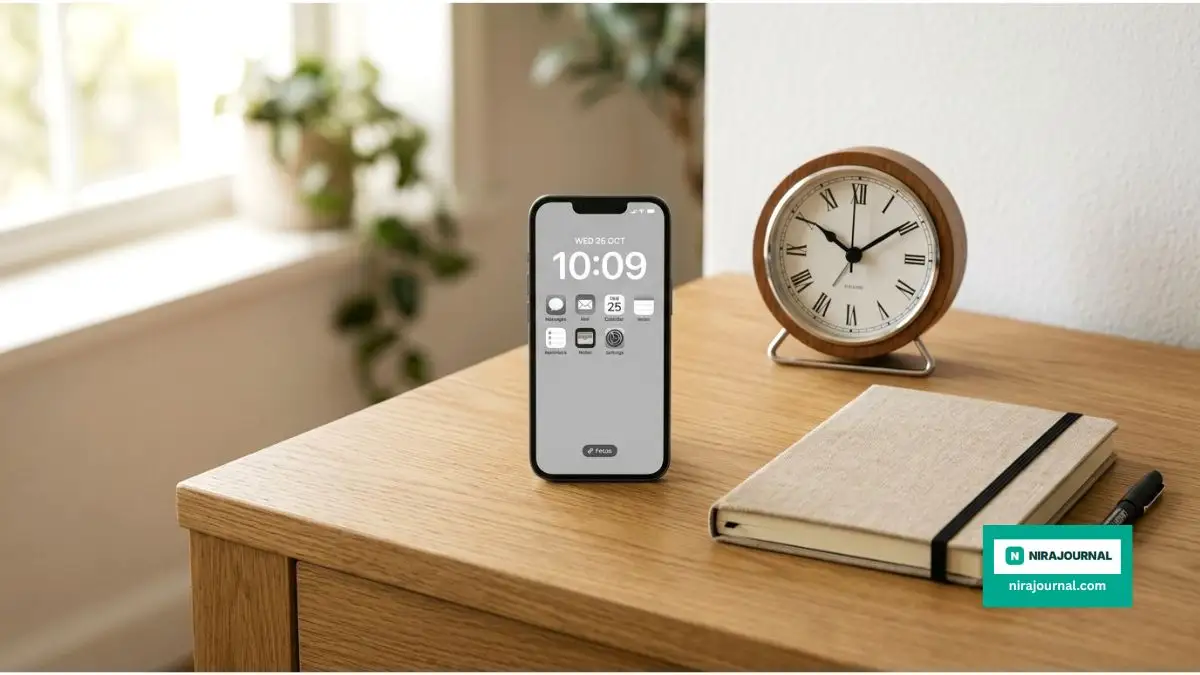
Switching your phone screen to grayscale or black-and-white mode changes everything. Suddenly, those shiny apps look dull, boring, and much easier to ignore. It is amazing how quickly your desire to scroll fades when the colors disappear.
Move all your social media and entertainment apps off the first page of your home screen. Make it physically difficult to open the apps that usually waste your time. If you have to swipe three times and search a folder to find an app, you give your brain a moment to pause.
Pro Tip from my journey: I used to think I needed my phone right next to my pillow for the morning alarm. Once I bought a cheap, physical digital clock and started leaving my phone in the kitchen overnight, my morning anxiety completely disappeared. I actually started looking forward to getting out of bed.
Redesigning Your Daily Digital Routine
Taking control of your digital life does not mean you have to throw your phone in the ocean and live in a cave. It simply means you get to decide when and how you use technology, instead of letting it use you. You need to create specific rules for your daily tech consumption.
Start by defining clear "offline hours" for your household. For example, you can decide that there are absolutely no screens allowed during meals or an hour before bed. This simple rule forces you to talk, think, and engage with the real world around you.
The morning routine is usually where people fail the most. Reaching for your phone the second you open your eyes sets a reactive tone for the entire day. You start your morning worrying about other people's problems instead of focusing on your own goals.
If you are struggling to put your phone down, this incredible visual breakdown will show you exactly how to rewire your brain for focus in just a few days.
Replacing Screen Time with Meaningful Action
Nature hates a vacuum, and so does your brain. If you simply try to stop using your phone without replacing that time with something else, you will eventually fail. You need to find real-world activities that bring you actual joy and satisfaction.
Think about the hobbies you used to love before smartphones existed. Maybe you loved painting, reading physical books, cooking new recipes, or simply going for long walks. Keep a physical book on your coffee table so it is easier to grab than your tablet.
When you feel the sudden urge to check your phone, take a deep breath and wait for exactly two minutes. The urge to scroll usually passes very quickly if you do not immediately give in to it. Go drink a glass of water, stretch your legs, or look out the window instead.
7 Scientific Reasons Multitasking is Destroying Your Focus [Avoid These Mistakes]
The Physical Benefits of Disconnecting
The constant use of digital devices does not just ruin your mental peace; it actively damages your physical health too. Staring at bright screens all day causes severe eye strain, headaches, and terrible posture. We spend hours hunched over, looking down, which puts massive pressure on our neck and spine.
Taking regular breaks away from screens gives your body a much-needed chance to recover. Implementing the 20-20-20 rule is a great way to start taking care of your eyes. Every 20 minutes, look at something 20 feet away for exactly 20 seconds.
The blue light coming from your screens also completely messes up your natural sleep cycle. It tricks your brain into thinking it is still daytime, stopping the production of sleep hormones. Experts at Harvard Medical School have clearly documented how artificial light at night disrupts our natural internal clocks.
Curating Your Information Diet
We consume thousands of pieces of information every single day, and most of it is completely useless to our actual lives. You would never eat junk food for every single meal, yet we feed our brains constant digital junk. It is time to aggressively clean up your information diet.
Go through your social media accounts and unfollow anyone who makes you feel bad about your life. Mute the accounts that constantly post negative news or dramatic updates that drain your emotional energy. Your social media feed should be a tool that inspires you, not a trap that depresses you.
Unsubscribe from all those marketing emails and newsletters you never actually read. A clean email inbox reduces your daily mental load and makes you feel much more organized. The goal is to make sure that when you do use technology, it adds genuine value to your day.
Overcoming the Fear of Missing Out (FOMO)
The biggest excuse people use to stay glued to their phones is the fear of missing out on something important. We worry that if we do not check our messages instantly, people will be angry with us. We fear that missing a trendy news story will make us look foolish in conversations.
The truth is, nothing on social media is ever as urgent as your brain makes it seem. True emergencies happen through direct phone calls, not through Instagram messages or Twitter mentions. When you finally disconnect, you will realize how little you are actually missing out on.
Real friends will not mind if you take a few hours to reply to a casual text message. In fact, setting boundaries commands respect from the people around you. You are teaching others how to treat your time by valuing it yourself first.
Building a Distraction-Free Environment
Your environment plays a massive role in your ability to maintain focus throughout the day. If your phone is sitting face-up on your desk, your brain is actively using energy to ignore it. You have to remove the visual trigger completely if you want to achieve deep work.
When you need to get important things done, put your phone in another room or inside a closed drawer. This physical barrier gives you a mental break from the constant anticipation of a message. You will be shocked at how much faster you can complete tasks when there are zero interruptions.
Create physical spaces in your home that are designated as technology-free zones. The bedroom and the dining room are excellent places to start this practice. Keeping screens out of these areas naturally encourages better sleep and much better conversations with your family.
This lifestyle change will not happen perfectly overnight. You will have days where you accidentally fall back into old habits and scroll for too long. Be kind to yourself when this happens, and simply try again the next day with better boundaries.
Taking Your Focus to the Next Level
Once you have mastered the basic steps of managing your daily screen time, you are ready for a deeper transformation. True digital freedom is not just about blocking apps or turning off notifications. It is about completely changing how your brain reacts to boredom and free time.
Think of your attention span as a muscle that has been resting in a cast for months. When you finally take the cast off, that muscle is weak and needs proper rehabilitation. You have to actively train your brain to focus on one single task at a time again.
Start practicing the art of single-tasking in your everyday life. When you are drinking your morning coffee, simply sit there and drink your coffee. Do not listen to a podcast, do not read the news, and do not scroll through social media. Just experience the quiet moment exactly as it is.
The Power of Intermittent Tech Fasting
You have probably heard of intermittent fasting for physical health and weight loss. You can apply this exact same concept to your technology habits for massive mental clarity. Instead of restricting food, you are restricting the window of time you consume digital content.
For example, you can create a strict rule that you only use social media or entertainment apps between 6 PM and 8 PM. Outside of that specific two-hour window, those apps simply do not exist in your world. This creates a healthy boundary that prevents mindless scrolling throughout your busy workday.
When you limit your consumption window, you actually enjoy the content much more. It feels like a small reward rather than a constant, exhausting distraction. Behavioral experts from the American Psychological Association have noted that setting firm boundaries around technology significantly reduces daily stress levels.
If you are still finding it hard to get started, use this simple "2-Week Digital Reset" plan to build momentum without burning out:
Redesigning Your Digital Environment
Your environment dictates your habits much more than your willpower ever could. If you rely entirely on self-control to avoid your phone, you will eventually fail when you feel tired. You need to design an environment where ignoring your phone is the easiest option.
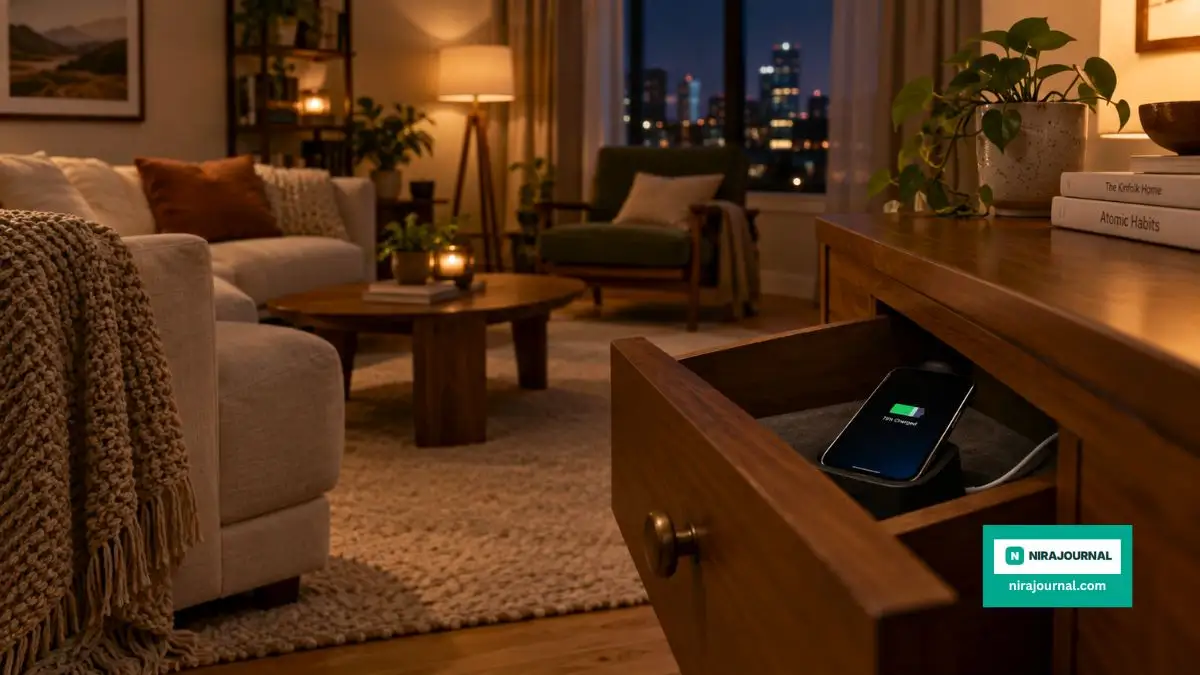
Try creating physical barriers between you and your devices when you are trying to relax. If you are watching a movie with your family, leave your phone charging in the kitchen. If you have to stand up, walk to another room, and unplug the device just to check an app, you probably will not do it.
This simple friction gives your rational brain a few seconds to catch up with your impulsive desires. Those few seconds are usually all you need to realize that checking your phone is a bad idea.
Conducting a Digital Declutter
Every few months, you need to ruthlessly audit your digital life. Go through your smartphone and delete every single app you have not used in the last thirty days. You do not need five different shopping apps or three different weather applications taking up mental space.
Clear out your computer desktop as well. A messy digital workspace creates instant background anxiety the second you open your laptop. Organize your important files into neat folders and delete old documents you no longer need.
When your digital environment is clean and organized, your mind naturally feels calmer. You will spend less time searching for things and more time actually doing meaningful work.
Beyond the Comfort Zone: Simple Shifts to Build Unstoppable Resilience

The Hidden Traps That Will Pull You Back In
The journey to digital mindfulness is rarely a perfect, straight line. Many people start with incredible enthusiasm but quickly fall back into their old, destructive habits. Understanding exactly where things usually go wrong is the best way to protect your new lifestyle.
One of the most dangerous mistakes you can make is trying to quit everything completely cold turkey. If you suddenly delete all your social media, block YouTube, and throw away your gaming console on the same day, you will panic. Your brain is heavily addicted to the dopamine these things provide, and sudden withdrawal usually leads to a massive binge later.
Instead of extreme restriction, aim for gradual, sustainable reduction. Take small, steady steps that you can easily maintain over a long period.
The Illusion of "Productive" Procrastination
This is a trap almost everyone falls into without even realizing it. You tell yourself that you are not wasting time because you are watching educational videos or reading business articles. But spending six hours watching productivity tutorials on YouTube is still just another form of passive consumption.
Consuming information feels good because it gives you the illusion of making progress. However, if you never actually apply that knowledge in the real world, you are just scrolling with a better excuse. Do not let "learning" become a clever disguise for avoiding your actual work.
You have to balance your consumption with creation and action. For every hour you spend reading or watching educational content, spend two hours actively working on your own goals.
Critical Mistakes That Prevent You from Reaching Your Potential
Being Terrified of Boredom
We have conditioned ourselves to view boredom as a terrible disease that must be cured instantly. The second we feel slightly under-stimulated, we reach into our pockets for a digital pacifier. But constantly escaping boredom is actually destroying your natural creativity.
When you never allow yourself to be bored, your brain never gets the chance to wander and process complex thoughts. Some of the greatest ideas in human history were born during quiet moments of absolute boredom. You need to relearn how to sit quietly in a waiting room or on a train without needing a screen in your face.
At first, sitting with your own thoughts will feel strange and incredibly uncomfortable. Your mind will race, and your hands will literally twitch for your phone. But if you push through that initial discomfort, you will discover a deep sense of inner calm on the other side.
Failing to Communicate Your New Boundaries
If you do not tell the people in your life about your new digital boundaries, they will assume you are simply ignoring them. Friends might get angry if you suddenly stop replying to their group chats within five minutes. Family members might panic if you do not answer a non-urgent text message immediately.
Take a few minutes to explain your new lifestyle to the people closest to you. Tell them that you are actively trying to spend less time on your phone for your mental health. Let them know exactly how they can reach you in case of a true, real-life emergency.
Most people will completely understand and might even be inspired by your actions. By setting clear expectations, you remove the guilt of not being available twenty-four hours a day.
Designing a Life Worth Living Offline
Taking control of your screen time is not just about looking at your phone less often. It is about actively creating a real-world life that is far more interesting than anything happening on the internet. When your daily life is filled with engaging offline activities, the digital world naturally loses its strong grip on you.
Think about what you genuinely want to experience in the physical world. Maybe you want to build a garden, learn to play a musical instrument, or simply have deeper conversations with your loved ones. These real-world experiences provide a slow, steady, and lasting satisfaction that quick digital fixes can never match.
Make a concrete list of offline activities you can easily start doing this week. Whenever you find yourself aimlessly staring at a screen, look at that list and pick an activity instead. Over time, you will start preferring these real moments over virtual ones.
Maintaining Your Focus in a Noisy World
There will always be new apps, new social platforms, and new digital distractions trying to steal your attention. The tech industry will never stop finding creative ways to keep you hooked to their platforms. Your job is to build a strong mental defense system that protects your peace and your time.
Regular mindfulness practices can greatly improve your ability to resist these digital temptations. Even ten minutes of quiet meditation a day can strengthen your self-awareness. Researchers at the Greater Good Science Center emphasize that practicing mindfulness helps break the cycle of automatic, mindless behaviors.
Remember that technology is a wonderful tool when you use it with clear intention. Use your devices to learn new skills, connect with distant friends, or organize your busy life. Just do not let those devices become the default master of your precious free time.
Every morning is a fresh opportunity to decide where you will spend your energy. You have the power to choose real human connection, deep focused work, and genuine peace of mind. All you have to do is put the device down and look up at the world around you.
I know firsthand how hard it is to break free from the glowing screen, because I fought that exact same battle and failed many times before finally finding my balance. My biggest realization was that the world does not end when you disconnect; in fact, that is exactly when your real life finally begins. Take that brave first step today, leave the phone in another room, and watch how quickly your mind learns to breathe again.
Common Questions About Finding Digital Balance
Do I need to buy a basic "dumbphone" to succeed?
You do not need to buy a completely basic phone to practice digital minimalism effectively. You can easily turn your current smartphone into a basic tool by deleting distracting apps and turning on grayscale mode. The goal is to change your daily habits, not necessarily your hardware.
How do I manage work messages outside of office hours?
Setting clear boundaries with your boss and coworkers is absolutely essential for your mental health. Turn off your work email notifications the moment you leave the office and remove work chat apps from your personal phone. If an issue is truly a massive emergency, your team will find a way to call you directly.
Will reducing my screen time help with my daily anxiety?
Yes, cutting down on endless scrolling and constant news consumption can massively reduce your daily anxiety levels. Constant notifications keep your nervous system in a state of high alert. When you disconnect, your brain finally gets the quiet space it needs to relax and recover.
What should I do when I feel a strong urge to scroll?
When the urge hits you, try the "two-minute pause" technique before unlocking your screen. Simply take a deep breath and wait for exactly two minutes while asking yourself why you want to check your phone. Usually, you will realize you are just feeling a bit bored or stressed, and the urge will quickly fade away.
How can I gently help my partner put their phone down?
You cannot force someone else to change their habits, but you can lead by being a great example. Suggest a fun, phone-free activity like going for a walk or cooking dinner together without any screens in the room. When they see how relaxed and present you are, they will naturally want to join you in the offline world.
Disclaimer: The information provided in this article is for educational and informational purposes only. It is not intended as professional psychological, medical, or mental health advice. Always consult with a qualified mental health professional or healthcare provider if you are struggling with severe anxiety, depression, or addiction. We may use affiliate links in some of our articles, which means we might earn a small commission if you make a purchase through them, at no extra cost to you. This helps support our website and allows us to continue creating helpful content. Always do your own research before making any lifestyle changes or purchases.
About the Author
Munira Parveen is a dedicated Digital Content Strategist and Lead Researcher with a passion for simplifying complex topics. From navigating personal finance and emerging tech trends to uncovering the best practical lifestyle solutions, she spends her time analyzing data to bring readers highly accurate, actionable, and easy-to-understand guides. Her ultimate goal is to empower everyday people to make smarter, more informed decisions in this fast-paced digital world.
![Are You Sabotaging Your Own Future? [The Ultimate Blueprint]](https://nirajournal.com/storage/uploads/blogs/1787112986_are-you-sabotaging-your-own-future-the-ultimate-blueprint.webp)
![Why You Feel Stuck and How to Break Free [Avoid These Mistakes]](https://nirajournal.com/storage/uploads/blogs/1787057847_why-you-feel-stuck-and-how-to-break-free-avoid-these-mistakes.webp)
![7 Scientific Reasons Multitasking is Destroying Your Focus [Avoid These Mistakes]](https://nirajournal.com/storage/uploads/blogs/1786977316_7-scientific-reasons-multitasking-is-destroying-your-focus-avoid-these-mistakes.webp)