
Quick Summary: How to Master Your Choices
If you are in a hurry, here are the core things you need to know about taking control of your mind:
- Identify the Auto-Pilot: Your brain loves shortcuts (heuristics). Recognizing them is 50% of the battle.
- The 24-Hour Rule: Never make a big life or financial choice while you are feeling high emotions.
- Environment is Key: A messy room leads to a messy mind. Clean your space to clear your head.
- Limit Your Options: Don't look for perfection. Pick the first "good enough" option to save your mental energy for what matters.
The Invisible Architects of Your Everyday Choices
Have you ever felt like your brain is running twenty apps at once, and you can’t figure out how to close a single one? I’ve spent countless hours staring at my laptop screen, feeling completely stuck on the smallest choices. It’s not because we are lazy; it’s because our minds are secretly running on "autopilot" modes that we don't even notice. I want to show you how these hidden patterns affect your work and life, and more importantly, how you can take back control starting today.
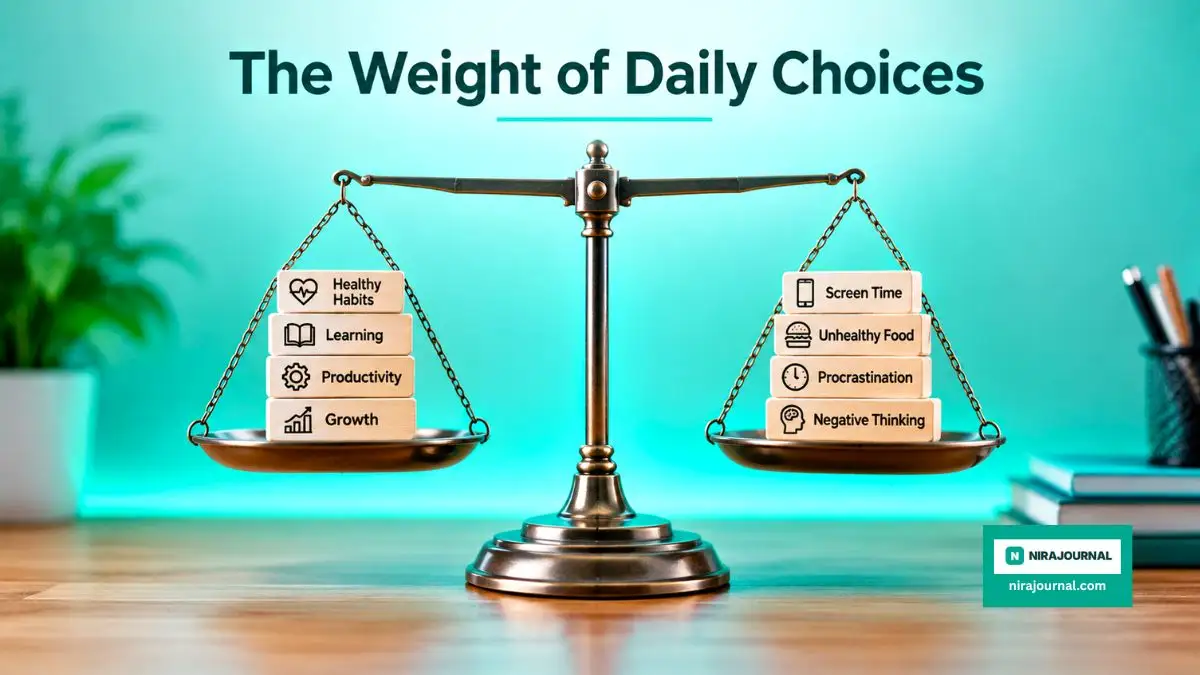
We often believe we are the captains of our own ships, steering through life with pure logic and conscious intent. The reality is much messier, as our minds are constantly using shortcuts to process the mountain of data we face every day. These hidden forces govern everything from the clothes we buy to the career moves we make. When these triggers go unchecked, we find ourselves repeating mistakes, feeling mentally drained by sunset, and wondering where the day went.
Decoding the Shortcuts Your Brain Loves
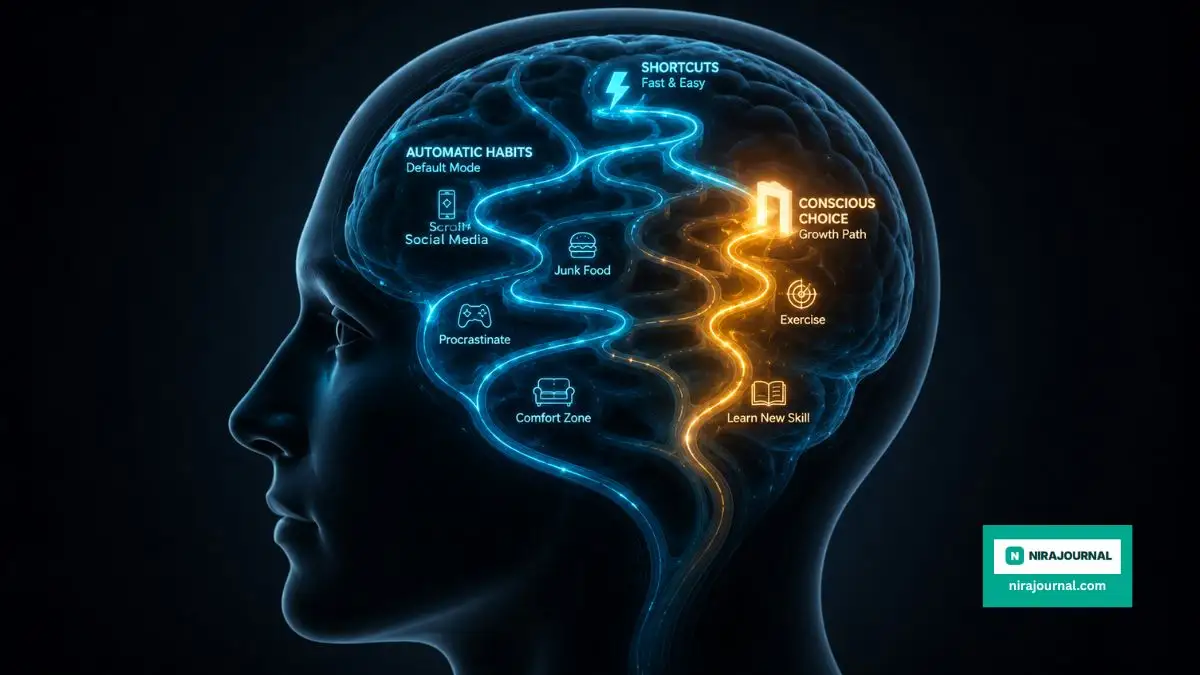
Your brain is designed for survival, not necessarily for modern-day productivity. To save energy, it creates "heuristics," or mental shortcuts, to bypass heavy analysis. While these helped our ancestors avoid predators, they often backfire in a world filled with endless digital distractions. Understanding these mechanisms is the first step toward reclaiming your agency.
Before we go deeper, let's clear up some common myths about how our minds work. You might be surprised at what is actually true.
Decision-Making: Myth vs. Reality
The Pull of Social Proof
We are hardwired to look at what others are doing before we make a move. If you see a line outside a restaurant, you assume the food is good, even if you’ve never tried it. This is Social Proof in action. In our digital lives, this leads us to follow trends or opinions that don't actually align with our values.
When you base your decisions on what the "crowd" is doing, you stop listening to your own intuition. To break this, start asking yourself: "Would I make this choice if no one else were watching?" Practicing this small pause can save you from impulsive commitments. It is a simple way to filter out the noise and focus on what truly matters to you.
Why You Hate Losing More Than You Like Winning
Psychologists call this Loss Aversion. You feel the sting of losing twenty dollars much more intensely than the joy of finding twenty dollars. This leads us to stick with bad habits or stagnant situations because we fear the "loss" of what we already have. We cling to the familiar, even when it no longer serves our growth.
My fear of "wasting" that effort kept me trapped, even though letting go would have opened doors to better opportunities. Why Multitasking is Secretly Sabotaging Your Productivity: A Scientific Breakdown reveals how similar mental traps often hold us back from doing our best work. Recognizing that you are overvaluing the 'sunk cost' is a game-changer for moving forward.
Practical Strategies for Better Decision Making
You don't need a degree in neuroscience to change your habits. By implementing small, intentional shifts, you can override these automatic triggers and start making choices that actually benefit your future.
The Power of the Cooling-Off Period
Most impulsive decisions are driven by high emotion. Whether it's anger, excitement, or anxiety, emotion is the enemy of logic. Whenever you are faced with a significant choice, enforce a 24-hour rule. This gives your prefrontal cortex—the logical part of your brain—time to catch up and evaluate the facts.
I tried a small experiment last month: I stopped making any decisions after 8 PM. If it wasn't a life-or-death situation, it had to wait until morning. My stress levels dropped significantly. This is because your "mental battery" drains throughout the day. By the time evening hits, you are much more likely to make a choice you'll regret. Try setting a "decision cutoff time" for yourself and see how much clearer your head feels the next morning.
By forcing this space, you remove the urge to react immediately. This is particularly helpful when dealing with information overload or pressure from others. If you can't wait a full day, even a ten-minute walk away from the situation can provide enough clarity to change your perspective.
Reframing Your Information Diet
We live in an age where we are constantly consuming. Too much input makes it impossible to think clearly, leading to "decision fatigue." If you find yourself overwhelmed, it is likely because you are trying to process too much at once. A Beginner’s Guide to Mastering Digital Minimalism in a Distracted World can show you how to cut the clutter and regain your focus.
Pro Tip: I started keeping a "Decision Journal" where I write down the choices I struggle with. Looking back at my notes a few weeks later helped me realize that I was making decisions based on temporary moods rather than long-term goals. It was a massive realization that changed how I approach my daily routine.
Understanding the Impact of Context
Your environment influences your brain more than you think. If your workspace is cluttered, your mind will be cluttered. Our brains try to match our surroundings; if you are in a chaotic space, your decision-making will become fragmented and reactive. Keep your physical space clean to maintain a calm, analytical mindset.

You might also be interested in what researchers at Harvard Business Review have noted about how environmental factors shift our cognitive load. Small changes in your environment can lead to massive improvements in your focus. When your surroundings support your intent, you no longer have to fight your own brain to stay productive.
The Art of Simplifying Options
Ever noticed how you feel paralyzed when faced with too many choices? This is the Paradox of Choice. Having too many options leads to anxiety and eventual regret, regardless of what you pick. The secret is to intentionally limit your choices.
Stop looking for the "perfect" solution and start looking for the "good enough" solution. By setting strict criteria for what you need before you even start looking, you cut out the fluff. This preserves your mental energy for the tasks that actually require your creativity and depth.
Embracing the Power of 'No'
Every time you say 'yes' to something that doesn't align with your goals, you are saying 'no' to your own priorities. This is a subtle psychological trigger—the fear of missing out—that forces us to overextend ourselves. Learning to protect your time is the ultimate act of self-respect.
Start small. Say 'no' to one minor request that doesn't serve you today. Notice how it feels to have that extra bit of time and mental space. As you get comfortable with this, you will find it easier to guard your energy against things that don't deserve it.
Balancing Logic and Instinct
While we want to be logical, our intuition has a role to play. Intuition is often just our brain processing patterns we haven't consciously identified yet. When you feel a strong 'gut feeling' about a decision, pause and ask why. Is it based on past experience, or is it just fear disguised as intuition?
If it's based on experience, trust it. If it's based on fear, challenge it with data. Learning to distinguish between the two is a skill that improves with practice. By balancing these two forces, you become a more resilient and effective decision-maker.
Tracking Your Patterns
We are all creatures of habit. If you don't track your decisions, you will never see the patterns that lead to your mistakes. Spend a few minutes at the end of the day reviewing the choices you made. Were they reactive, or were they proactive?
This doesn't need to be a long process. A quick check-in is enough to identify what triggered your choices. Over time, this self-awareness becomes a filter that catches bad decisions before they happen. It turns the 'hidden' triggers into 'visible' ones, putting you in the driver's seat of your own life.
If you are looking to deepen your understanding of how these patterns work, you might want to look into studies published by The National Institutes of Health regarding cognitive load and executive function. These resources provide a scientific foundation for the everyday struggles we all face. Understanding these mechanics makes it easier to forgive yourself for past mistakes and start fresh.
Building Resilience Against Manipulation
We live in a world where many triggers are used against us by marketing and media. By becoming aware of how these systems work, you become 'trigger-proof.' When you notice a sense of urgency, stop. When you feel the need to conform, pause.
This awareness is your best defense. You are not a victim of your biology; you are a learner. Every time you make a conscious decision, you are training your brain to be stronger. The journey to better decision-making is long, but it is worth every step.
Staying Consistent with Your Values
Finally, the most powerful anchor for any decision is your own set of values. When you know what you stand for, decisions become much easier. You no longer have to weigh every option against the crowd; you only have to weigh it against your principles.
Write down your top three values and keep them visible. Whenever you are stuck, look at those values. Usually, the right choice becomes clear very quickly. It turns a complex psychological puzzle into a simple alignment check.
(Insert your requested video introduction here, e.g., "Ready to stop overthinking and start acting with clarity? This quick guide breaks down how your brain makes choices in real-time." )
Conclusion on Conscious Choice
You now have the tools to look past the smoke and mirrors of your own brain. It won't happen overnight, but each small choice is a building block. Keep observing, keep reflecting, and keep prioritizing your own peace of mind. You have the power to change how you think, one decision at a time.
Advanced Strategies to Master Your Decision-Making
We often think that getting better at making choices requires more information. In reality, it often requires filtering what we already have. My biggest breakthrough came when I stopped trying to gather more data and started focusing on the quality of my input. If you want to move from being reactive to proactive, you need to sharpen your internal compass.
Designing Your Personal Decision Framework
The most successful people don’t make thousands of tiny choices every single day. Instead, they create systems for the mundane stuff. If you have to think about what to eat for lunch or what task to do first, you are already wasting precious mental energy.
I suggest creating a "Default Mode" for your daily life. For example, have a set of three pre-planned meals or a fixed order for your morning tasks. When your brain doesn't have to negotiate basic actions, it stays fresh for the big decisions that truly move the needle in your life.
The Art of Negative Visualization
We often look at the best-case scenario and build plans around it. But, what if you looked at the worst? Psychologists sometimes refer to this as a way to build resilience. By anticipating what could go wrong, you remove the element of surprise.
If you know a decision might lead to a specific type of stress, you can prepare for it now. This simple trick transforms anxiety into calculated preparation. It makes you feel grounded because you aren't just hoping for the best; you are ready for whatever comes.
Using External Constraints to Boost Focus
Ever notice how you work best right before a deadline? That isn't just pressure; it's the power of a hard constraint. When you have unlimited time, your brain creates unlimited options, which leads to stall-out.
You can manufacture this feeling by setting artificial deadlines for yourself. If you have a decision to make, give yourself exactly thirty minutes to come to a conclusion. This forces your brain to prioritize the most important factors. You can find more on the biological impact of such focus in studies hosted by The American Psychological Association regarding executive control.
The "Five-Year Rule" for Long-Term Clarity
When I am stuck on a decision, I ask myself if this choice will matter in five years. If the answer is no, I stop spending so much time on it. Most of our daily stressors are temporary blips, but we treat them like life-altering events.
By zooming out, you gain the perspective needed to stop overthinking the small stuff. This Beyond the Comfort Zone: Simple Shifts to Build Unstoppable Resilience is exactly what you need to start viewing challenges as stepping stones rather than roadblocks. Applying this filter turns heavy, paralyzing choices into simple, light tasks.

Hidden Traps That Keep You Stuck
Even with the best intentions, we fall into common patterns that sabotage our progress. Recognizing these pitfalls is half the battle. If you ignore these, you might find yourself working hard but moving in circles.
The Trap of Over-Analyzing
Many of us fall into the trap of thinking that more data equals better results. You might spend hours reading reviews or comparing endless options. This is just procrastination in disguise.
The truth is, after a certain point, more information only adds noise, not clarity. If you aren't careful, you will end up in a state of "analysis paralysis." You might lose sleep and miss out on opportunities just because you couldn't decide.
The Influence of Your Current State
We rarely notice how our physical state influences our mental output. If you are hungry, tired, or even dehydrated, your decision-making abilities drop significantly. I have often made bad choices simply because I was trying to work through a midday slump.
When you notice yourself feeling stuck, stop working. Go get a glass of water, walk for five minutes, or just breathe. A reset of your body often leads to a sudden jump in mental clarity. Ignoring these biological needs is a mistake that will cost you time and quality of work.
Seeking External Validation
Another major pitfall is waiting for someone else's approval before you move forward. You might want to launch a project or change a habit but feel scared of what others will think. This fear is a major roadblock to personal growth.
The reality is that most people are too busy with their own lives to judge yours. If you keep looking for a green light from others, you will never leave the starting line. Critical Mistakes That Prevent You from Reaching Your Potential highlights why relying on others' opinions keeps you trapped in the same old cycles. Trusting your own judgment is the only way to build real momentum.
Neglecting the Power of Rest
We often treat rest as a reward for work rather than a part of the process. If you push yourself to make decisions when you are burnt out, you are essentially gambling with your outcomes. Your brain needs time to disconnect to process the information it collected.
Without this downtime, you will make impulsive, error-prone choices. It is like trying to drive a car with no fuel; it simply won't go far. Always prioritize recovery as part of your decision-making toolkit. Research from The National Library of Medicine often touches on how cognitive depletion impacts our daily judgment calls.
A Path to Clearer Thinking
You don't need a total overhaul of your life to start making better choices. Small, consistent shifts are far more effective than massive, one-time changes. Start by observing your triggers rather than fighting them.
When you notice a moment of hesitation, ask yourself why. Is it fear, or is it a lack of information? Most of the time, it’s just the brain trying to stay in its comfort zone. Challenge that comfort, and you will grow stronger every single day.
Your Action Plan for Tomorrow
- Morning Clarity: Spend the first ten minutes of your day without your phone.
- The One-Decision Rule: Pick one big task you've been avoiding and commit to working on it for just fifteen minutes.
- Review the Day: Before you sleep, write down one decision you were proud of today.
- Simplify: Identify one recurring task and figure out how to automate or delegate it.
I have found that my life started to change the moment I stopped treating my brain like a machine that should always be "on." I started treating myself with more grace, accepting that some days will be harder than others. You are not perfect, and that is okay. Start where you are, and keep going because your future self will thank you for the work you do today.
Common Questions About Decision Making
Why do I always procrastinate when making big choices?
Procrastination usually happens because we are afraid of making the "wrong" choice. Instead of seeing it as a test, try viewing it as an experiment. Even a wrong choice provides data you can use to do better next time.
How can I stop feeling overwhelmed by too many options?
Limit your input. Set a rule for yourself, like only researching three options or giving yourself a set amount of time. Once that time is up, make the choice and move on with your day.
Can my environment really affect how I decide things?
Yes, absolutely. A chaotic environment forces your brain to work harder just to focus, leaving you with less mental energy for the actual decision. Keep your desk and digital space clean to keep your mind sharp.
What should I do if I keep repeating the same mistakes?
Stop and document your process. Write down what happened, why you chose that path, and what the result was. This reflection turns a mistake into a lesson, which is the fastest way to break the cycle.
How do I know if I’m trusting my intuition or just acting on fear?
Fear usually feels like tension or a need to escape. Intuition feels more like a quiet knowing or a pull toward something. If you feel panicked, it’s likely fear; take a break and wait for that feeling to pass.
Disclaimer: The information provided in this article is for educational purposes only and does not constitute professional psychological or medical advice. Always consult with a qualified professional for concerns regarding your mental health or decision-making patterns.
About the Author
Munira Parveen is a dedicated Digital Content Strategist and Lead Researcher with a passion for simplifying complex topics. From navigating personal finance and emerging tech trends to uncovering the best practical lifestyle solutions, she spends her time analyzing data to bring readers highly accurate, actionable, and easy-to-understand guides. Her ultimate goal is to empower everyday people to make smarter, more informed decisions in this fast-paced digital world.
![Are You Sabotaging Your Own Future? [The Ultimate Blueprint]](https://nirajournal.com/storage/uploads/blogs/1787112986_are-you-sabotaging-your-own-future-the-ultimate-blueprint.webp)
![Why You Feel Stuck and How to Break Free [Avoid These Mistakes]](https://nirajournal.com/storage/uploads/blogs/1787057847_why-you-feel-stuck-and-how-to-break-free-avoid-these-mistakes.webp)
![3 Smart Ways to Practice Digital Minimalism [Save Time & Money]](https://nirajournal.com/storage/uploads/blogs/1787026264_3-smart-ways-to-practice-digital-minimalism-save-time-money.webp)