
When Your Safety Net Feels Like a Heavy Weight
I still remember standing in my living room with water up to my ankles after a pipe burst last winter. My heart was racing, and my first thought wasn't about the floor—it was about the years of insurance payments I had made. I felt completely small and alone, wondering if the company would actually help me or just find an excuse to say no. It was one of the most stressful weeks of my life, and that is why I want to share what I learned with you.
Imagine waking up to a flooded basement or a dented car fender. Your heart sinks. You have paid your insurance premiums for years, thinking you are protected. But the moment you think about filing a claim, a new kind of panic sets in.
Many people find the claim process more exhausting than the actual accident. You might feel like a tiny ant trying to talk to a giant mountain. It feels cold, robotic, and designed to make you give up.
I have spoken to so many people who felt defeated before they even started. They worry about saying the wrong thing. They fear their claim will be rejected because of a small typo. This mental load is heavy.
It is not just about the money. It is about the feeling of being ignored when you are most vulnerable. You want someone to say, "We have your back." Instead, you often get a long hold music and a list of confusing forms.
Why does it have to be this hard? The reality is that insurance companies are big businesses. They have their own rules and language. If you don't speak that language, you might feel lost in the woods.
But here is the good news. You are not alone, and you don't have to be an expert to win. You just need a clear map to follow. Let's break down how you can take back control of your peace of mind.
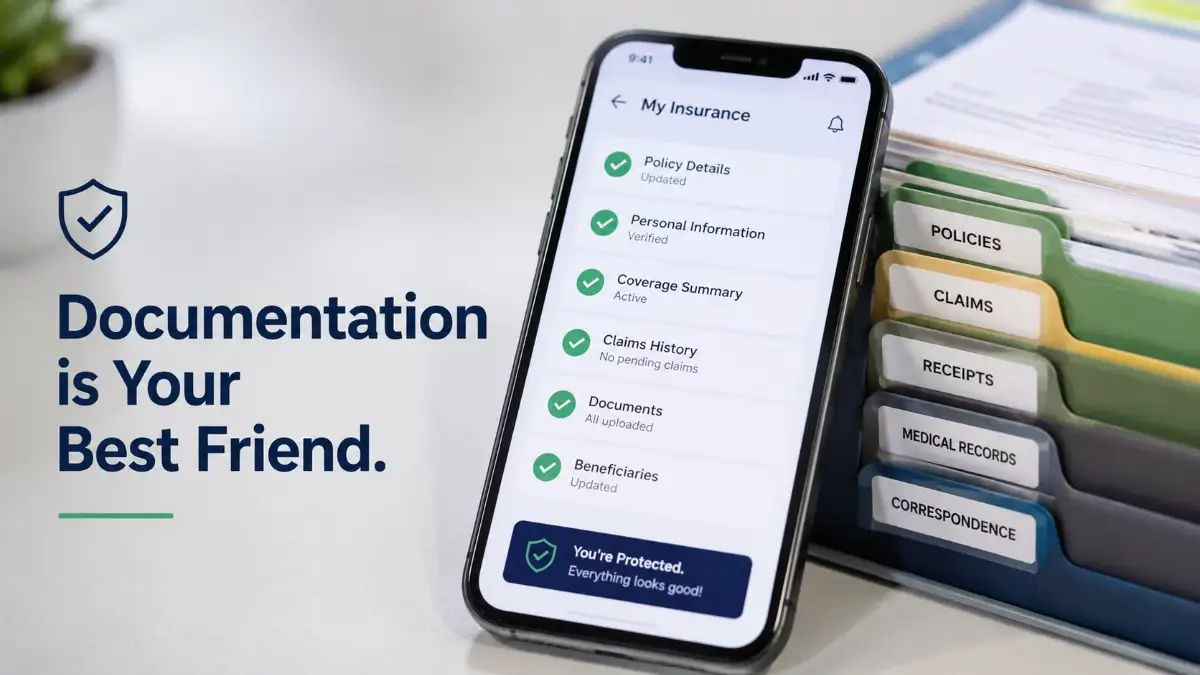
Creating Your Evidence Fortress Before You Call
The biggest mistake people make is calling the insurance company while they are still in shock. Stop and breathe first. Your very first job is to become a detective in your own life.
Think of your claim like a court case. A judge doesn't care about how you feel; they care about what you can prove. You need to build a fortress of evidence.
Grab your phone and start taking photos of everything. Don't just take two or three. Take twenty. Take photos from far away to show the whole scene. Take close-up shots of the tiny details.
If there is water damage, take a video of the water dripping. If there is a car accident, photograph the skid marks on the road. Evidence disappears quickly, so do this immediately.
Keep a small notebook or a digital note on your phone. Write down the exact time and date. What was the weather like? Who was there? Memory is a slippery thing, especially when you are stressed. Writing it down keeps the facts straight.
The Art of the First Conversation
Before you pick up the phone, watch this short video! It shows you the best ways to record damage so the insurance company can't ignore your proof. Seeing these tips in action will make your claim much stronger and give you the confidence to start the process right now.
When you finally pick up the phone, remember one thing: the person on the other end is just an employee. They have a script to follow. Your goal is to be the most organized person they talk to all day.
Stay calm and polite. Being angry might feel good, but it rarely speeds up a check. If you are rude, the person might not go the extra mile to help you.
Ask for the claim number immediately. Write it on a sticky note and put it on your fridge. This number is your "ID card" for this entire journey. Every time you call, lead with that number.
Also, ask for the name and direct extension of the person you are talking to. People work harder when they know you remember their name. It builds a human connection in a corporate world.
Do not guess if you don't know an answer. It is perfectly okay to say, "I am not sure yet, let me check and get back to you." A wrong guess can haunt your claim later.
Organizing Your Digital Paper Trail
I learned the hard way that a quick phone call is never enough to win a claim. One time, I lost out on nearly $500 just because I threw away a broken microwave before the inspector saw it. My big mistake was moving too fast because I wanted the mess gone. Now, I tell everyone: your phone camera is your best friend, so use it to record every tiny thing before you touch a single piece of junk.
In the old days, people had messy folders of paper. Today, your best tool is your email and a cloud folder. Create a specific folder on your computer or Google Drive just for this claim.
Every time you get an email, move it into that folder. Every time you scan a receipt for a repair, upload it there. Digital organization prevents the "lost paper" nightmare.
If you have to mail something physical, always use "Certified Mail." You want a signature proving they received it. It is worth the extra few dollars for the peace of mind.
Insurance companies sometimes say they never received a document. When you have a tracking number or an email timestamp, you can prove them wrong instantly. Proof is your power.
Understanding the "Adjuster" Mindset
The insurance adjuster is the person who decides how much money you get. They are not your enemy, but they are also not your best friend. They are looking for facts that fit their policy.
Think of the adjuster like a busy teacher grading a hundred papers. If your "paper" is messy and missing info, they will give you a low grade. If your paper is neat and has all the answers, they will pass you quickly.
When the adjuster visits your home or looks at your car, be there. You don't need to hover over them, but you should be available to answer questions. Point out the damage they might miss.
Sometimes adjusters are in a rush. They might see the big hole in the roof but miss the water stains on the expensive rug inside. Be your own advocate.
Why Small Details Save Big Checks
Most people lose money because they forget the "invisible" costs. For example, if your kitchen is ruined, you aren't just paying for cabinets. You are paying for takeout meals because you can't cook.
Keep every single receipt. Did you have to buy a tarp to cover a hole? Keep the receipt. Did you have to stay in a hotel for one night? Keep the receipt.
These are often called "Additional Living Expenses." Many policies cover them, but they won't pay if you don't ask. Small receipts add up to big amounts.
Treat these receipts like gold coins. If you lose them, that money is gone forever. Scan them with your phone the moment you get them.
Common Pitfalls to Dodge
One major trap is the "Quick Settlement Offer." Sometimes an insurance company will offer you a check very fast. It might look like a lot of money, but be careful.
Once you sign that check, you often cannot ask for more. What if you find more damage a week later? If you already settled, you might be stuck paying for it yourself.
Wait until you have a full estimate from an independent contractor you trust. Compare their number to the insurance company’s number. If they don't match, ask why.
Never feel pressured to sign anything on the spot. You have the right to think about it. A good insurance company will give you the time you need to be sure.
The Power of Follow-Ups
Insurance companies handle thousands of claims. Sometimes yours might fall to the bottom of the pile. Don't let them forget you.
Set a reminder on your phone to call or email every three days. A simple, "Hi, I am just checking on the status of claim #12345," is enough. The squeaky wheel gets the grease.
Keep a "Communication Log." Write down:
- Date and Time of the call.
- Who you spoke to.
- What they promised to do next.
If they say, "We will call you by Friday," and they don't, call them on Monday morning. Gentle persistence shows them that you are paying attention.
Navigating the Language of Policies
Insurance policies are written by lawyers. They use words that sound like English but have very specific meanings. "Replacement Cost" is not the same as "Actual Cash Value."
"Actual Cash Value" means they pay you what the item was worth before it broke. Think of a 5-year-old TV. It’s not worth much now. "Replacement Cost" means they pay you enough to buy a new version of that TV.
Knowing which one you have changes your expectations. Look at your "Declarations Page." This is the one-page summary at the front of your policy. It tells you your limits and deductibles.
If you don't understand a term, Google it or ask a friend who works in finance. Knowledge is the best tool against confusion.
Building Your Support Team
You don't have to do this alone. Sometimes, if a claim is very large, you might want to hire a "Public Adjuster." These are experts who work for you, not the insurance company.
They take a small percentage of the payout, but they often get you much more money because they know all the tricks. For smaller claims, this isn't needed, but for a house fire or major storm, it can be a lifesaver.
Also, talk to your local repair shops or contractors. They work with insurance companies every day. They often know which companies are easy to work with and which ones are "tough."
Use their experience to your advantage. A good contractor can speak the technical language to the insurance adjuster that you might not know.
Staying Patient but Firm
The claim process is a marathon, not a sprint. It takes time for inspections, reports, and checks to be cut. Frustration is natural, but don't let it ruin your day.
If you feel like things are truly stuck, you can ask to speak to a supervisor. Sometimes a file just needs a fresh pair of eyes to get moving again.
Always stay professional. If you remain the "reasonable person" in the room, you are more likely to get a "reasonable outcome."
Your goal is a fair settlement. You aren't trying to "win the lottery," you are just trying to get back to where you were before the accident. Holding onto that goal helps keep your stress levels low.
The Light at the End of the Tunnel
Filing a claim is a journey through a forest of paperwork. But by following these steps, you are clearing a path. You are moving from a place of "victim" to a place of "manager."
You have the photos. You have the log. You have the receipts. You are checking in regularly. You are doing everything right.
Soon, the repairs will be done. The checks will be deposited. Life will go back to normal. And the next time something happens, you won't be afraid. You will know exactly what to do.
You have the power to handle this. Take it one small step at a time. Your future self will thank you for being so organized and brave today.
Strategies to Maximize Your Payout and Speed Up the Process
Getting your claim filed is only the first half of the battle. The second half is ensuring you actually get the money you deserve without waiting for months.
I want to share a secret that most insurance companies don't talk about openly. They often have a list of "preferred vendors" or "network shops" they want you to use.
While these shops are usually okay, they work for the insurance company, not for you. You have the right to get your own independent estimate from a professional you trust.
If your trusted mechanic or contractor says the repair costs $5,000 but the insurance company says $3,000, don't just give up. Ask your contractor to write down exactly why it costs more.
Usually, it is because the insurance company is suggesting cheaper parts or skipping a step. When you show the adjuster a detailed, line-by-line breakdown from an expert, they often change their mind.
Being prepared with facts makes you a tough negotiator. It shows them that you have done your homework and won't accept a lowball offer.
The Hidden Value of "Loss of Use" Coverage
Many people forget to claim for the daily disruptions caused by an accident. This is often called "Loss of Use" or "Additional Living Expenses."
If you cannot live in your home because of a fire or a flood, the insurance company should help with your extra costs. This isn't just about hotel rooms.
It covers things like the extra gas you spend driving a longer route or even the cost of doing laundry at a laundromat. Keep a log of every extra dollar you spend because of the claim.
I once helped a friend who didn't realize they could claim for the spoiled food in their fridge after a power surge. It was hundreds of dollars of groceries that the insurance company eventually paid for.
By deciphering insurance jargon, you can find these hidden benefits in your policy. Don't leave money on the table just because you didn't know it was yours to take.
Expert Tips for Dealing with Difficult Adjusters
Sometimes, you might get an adjuster who seems like they are trying to block you at every turn. They might be slow to respond or dismissive of your concerns.
If this happens, do not take it personally. They might be overworked or just having a bad week.
Your best move is to keep everything in writing. If you have a phone call, send a follow-up email immediately after.
Say something like, "Just to confirm our talk today, you mentioned that the inspection will happen on Thursday." This creates a paper trail that is hard to argue with later.
If the delay continues, you can calmly ask for a "supervisor review." Often, just asking for a supervisor makes the original adjuster move your file to the top of the pile.
You can also check the Consumer Financial Protection Bureau for resources on your rights as a policyholder. Knowing the rules in your area gives you a lot of confidence during these talks.

The Invisible Mistakes That Can Ruin Your Claim
It is heartbreaking to see a valid claim get rejected because of a tiny, avoidable mistake. One of the most common errors is "cleaning up too soon."
I know it is tempting to throw away that water-damaged sofa or the broken car parts right away. You want your life back to normal.
But if the insurance adjuster hasn't seen it in person, they might say the damage wasn't that bad. Never throw anything away until the adjuster gives you the green light in writing.
If an item is truly a health hazard, take a high-quality video of it from all angles before you move it. Show the mold, the smell, or the rot as clearly as possible.
Another major pitfall is waiting too long to report the incident. Most policies have a "prompt notice" rule.
If you wait two weeks to report a leak, the insurance company might argue that the damage got worse because you waited. They might refuse to pay for the "extra" damage caused by your delay.
This is why the silent mistakes that make insurance companies reject your claim are so dangerous. They seem small at the time, but they give the company an excuse to say no.
The Danger of Guesses and Estimates
When you are filling out forms, you might be tempted to guess the value of an item. Maybe you bought that laptop a few years ago and think it was $1,000.
If you guess and you are wrong, it can look like you are trying to commit fraud. Insurance companies take this very seriously.
Instead of guessing, search your email for old receipts. Look at your bank statements.
If you can't find the exact price, find the current price for a similar model online. Print that out and attach it to your claim.
It is always better to say "I don't have the receipt, but here is a similar model" than to make up a number. Honesty and transparency are your best friends in this situation.
Also, be careful about saying "I'm fine" right after an accident. Sometimes injuries or house damage show up a few days later.
If you tell the insurance company everything is okay, and then you try to change your story later, they will be very suspicious. It is better to say, "I am still assessing the situation."
How to Stay Protected for the Long Term
Once this claim is over, don't just put your policy in a drawer and forget about it. Use this experience to make your life easier next time.
Start a "Home Inventory" today. Walk through your house with your phone and record a video of every room.
Open the drawers. Look inside the closets. Talk out loud about the brands and when you bought the items.
Upload this video to a cloud service like Google Drive or iCloud. If your house ever has a major issue, you won't have to struggle to remember what you owned.
You should also review your coverage every year. Life changes, and your insurance should change with it.
Maybe you bought new jewelry or renovated your basement. If those things aren't on your policy, they aren't protected.
By taking these small steps now, you can don't lose your savings when the unexpected happens. Being proactive is the best way to reduce stress in the future.
Moving Forward with Confidence and Peace
The process of filing an insurance claim can feel like walking through a thick fog. It is confusing, slow, and sometimes a bit scary.
But remember that you have the tools to get through it. You have your photos, your notes, and your persistence.
Every time you follow up or organize a receipt, you are taking a step toward your goal. You are proving that you are a responsible and informed policyholder.
Do not let the big corporate language intimidate you. At the end of the day, an insurance policy is a contract that you paid for.
You are simply asking the company to keep their promise. You deserve to have your life restored to the way it was.
Take a deep breath and take the next step on your list. Whether it is making a phone call or scanning a document, you are making progress.
You have worked hard for what you own. Protecting it is worth the effort.
Stay patient, stay organized, and keep moving forward. Your stress will fade as you see the pieces of your life coming back together.
You have got this, and you are doing a great job.
I went from feeling like a victim of a bad accident to feeling like I was finally in control of my own home. It takes a bit of time, but seeing that final check arrive makes every bit of organizing worth it. You don't have to be an expert to get what you deserve—you just have to stay steady and keep moving forward one day at a time.
Disclaimer: The information provided in this blog post is for educational and informational purposes only. It does not constitute legal or financial advice. Insurance laws and policy terms vary by location and company. Always consult with a licensed insurance professional or a legal expert regarding your specific situation and policy details.
About the Author
Munira Parveen is a dedicated Digital Content Strategist and Lead Researcher with a passion for simplifying complex topics. From navigating personal finance and emerging tech trends to uncovering the best practical lifestyle solutions, she spends her time analyzing data to bring readers highly accurate, actionable, and easy-to-understand guides. Her ultimate goal is to empower everyday people to make smarter, more informed decisions in this fast-paced digital world.