When the Safety Net Breaks: The Quiet Stress of Being Unprotected
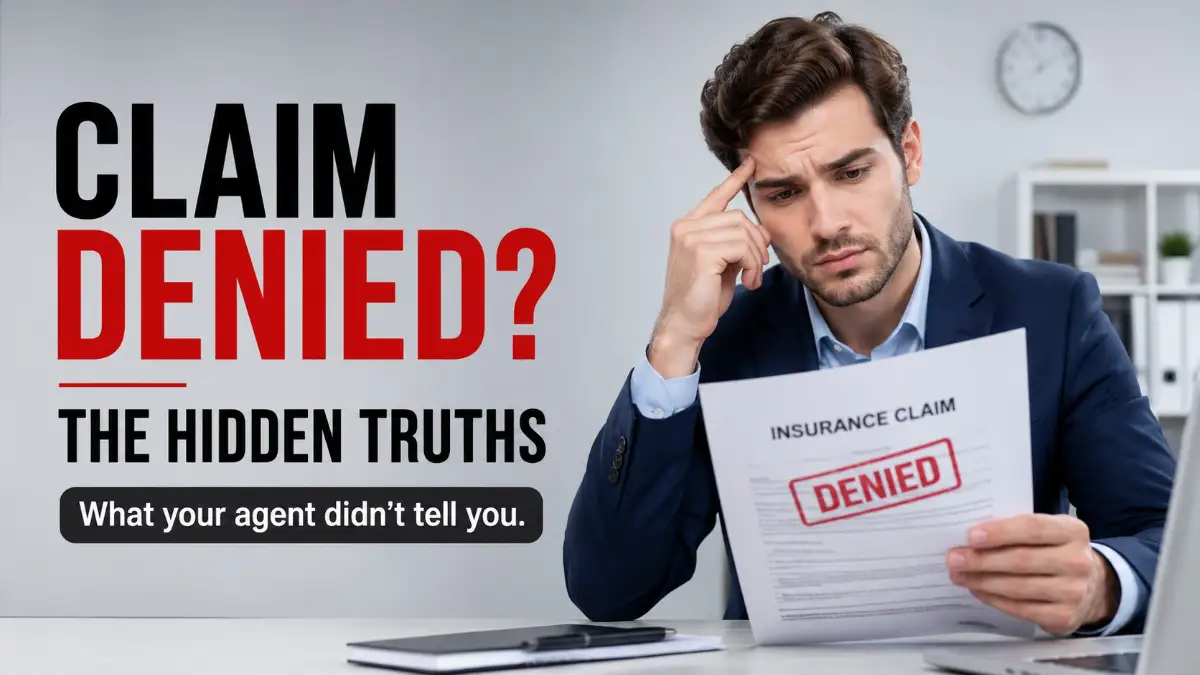
A few years ago, I stood in my kitchen with water up to my ankles after a pipe burst while I was at work. I felt calm at first because I had paid my insurance on time for five years, thinking I was safe. But when the insurance company told me my claim was denied because of a tiny 'maintenance' clause I never read, my heart sank. That $8,000 repair bill came straight out of my pocket, and it changed the way I look at every document I sign.
Imagine waking up to a phone call that changes everything. Maybe it is a burst pipe that flooded your basement, or worse, a medical emergency that requires immediate surgery. You feel a brief moment of relief because you pay your insurance premiums every month. You think, "I am covered."
But then, the adjuster calls back. They use words like "limitations," "exclusions," or "underinsured." Suddenly, that safety net you counted on has a giant hole in it. The money you thought would save you isn't coming. This is the reality for thousands of people who realize too late that they made simple errors when buying their policies.
The stress doesn't just hit your wallet; it hits your heart. You start questioning how you will pay the mortgage or if your kids' college fund will survive this hit. You feel cheated, but often, the mistake was hidden in a document you signed years ago without a second thought.
I have seen families lose their homes simply because they didn't update their coverage after a renovation. I have met people who worked for thirty years, only to see their savings vanish due to a medical bill that their "basic" plan didn't cover.
We often treat insurance like a "set it and forget it" chore. We want the cheapest price, so we click the fastest option online. But cheap insurance is often the most expensive thing you will ever buy if it doesn't pay out when you need it most.
Does your current policy actually protect your lifestyle today, or is it protecting a version of you from five years ago? If you aren't sure, you are already standing on shaky ground. Let's change that right now.
The Silent Danger of "Estimated" Value
One of the biggest traps people fall into is underestimating the value of what they own. This happens most often with home and renters insurance. You might have bought your furniture and electronics years ago.
If you had to buy everything new today, the cost would be much higher. Many people choose a coverage limit based on what they think their stuff is worth, not what it costs to replace it.
If a fire destroys your living room, your insurance company won't just give you a blank check. If you told them your belongings were worth $20,000 but they actually cost $50,000 to replace, you are stuck with a $30,000 bill.
I learned this the hard way after a small kitchen fire. I tried to list my belongings from memory, but I forgot half the things in my cabinets and ended up losing thousands in the payout. Now, I make it a habit to film a quick video of my house every time I buy something new. It takes two minutes but gives me the proof I need to make sure the insurance company plays fair.
Pro Tip: Take your phone and walk through your home right now. Record a video of every room and open every drawer. This simple video is your best proof during a claim.
Ignoring the "Fine Print" Exclusions
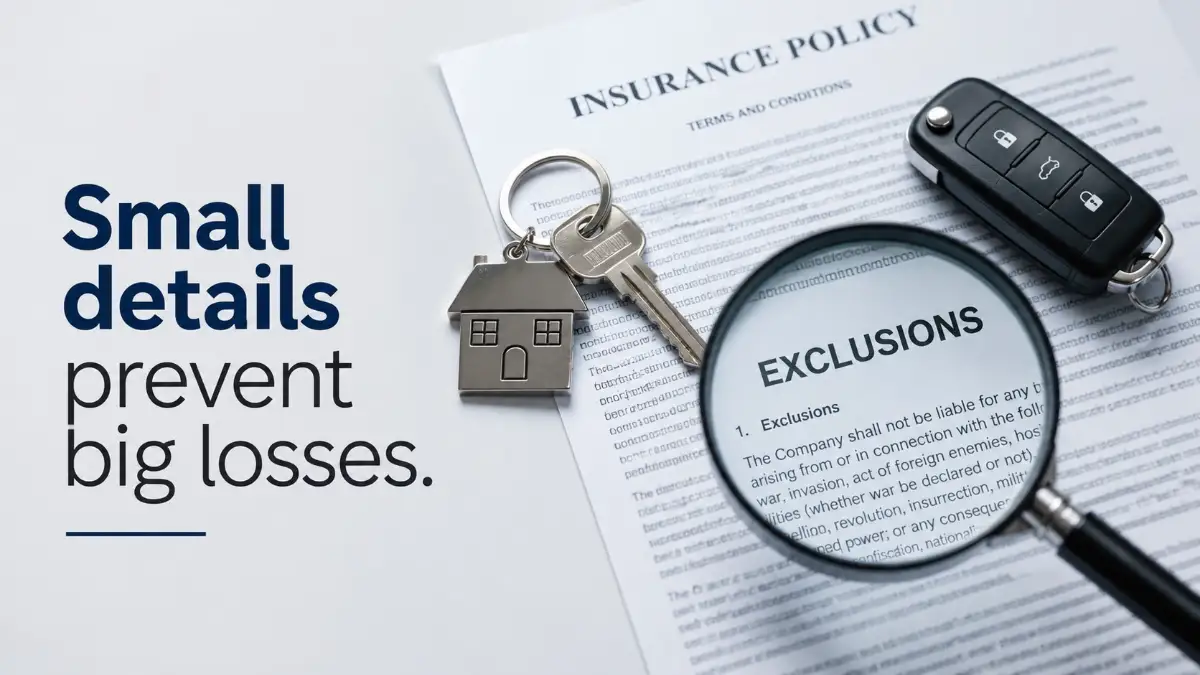
We all do it. We scroll past the twenty pages of legal text and just look at the monthly price. However, the most dangerous common insurance mistakes live in those ignored pages.
Every policy has exclusions. For example, many standard home insurance plans do not cover floods or earthquakes unless you buy a separate rider.
If you live near a small creek that has never overflowed, you might think you are safe. But weather patterns change. If that creek floods your kitchen and you don't have flood insurance, you pay for every cent of that repair yourself.
Check your policy for these common exclusions:
- Sewer backups
- Mold damage
- Professional equipment used at home
- High-value jewelry or art
If you see something missing, call your agent. Adding a "rider" for these items is usually very cheap, but it saves you thousands later.
Setting Your Deductible Too High for Your Savings
A high deductible is a great way to lower your monthly premium. It sounds like a smart financial move. You pay less every month, and you only pay the deductible if something goes wrong.
But here is the catch: Can you actually afford that deductible today? If you have a $2,500 deductible on your car insurance to save $20 a month, but you only have $500 in your bank account, you are not truly insured.
If you get into an accident, your car will sit in the shop until you find that $2,500. This creates a cycle of debt. You might have to take out a high-interest loan just to get your car back so you can go to work.
Think about this: Your deductible should never be higher than what you have in your emergency fund. If your savings are low, pay a little more each month for a lower deductible. It is a form of forced savings that protects your peace of mind.
Forgetting That Life Moves Fast
Life changes, but our insurance policies often stay frozen in time. This is a massive mistake. Think about what has happened in your life over the last two years.
Did you get married? Did you have a baby? Did you start a side business from your garage? Did you buy a new expensive laptop or a piece of jewelry?
Every major life event requires a policy update. If you get married and don't add your spouse to your auto policy, a claim could be denied if they are driving your car during an accident.
If you start a business at home and a client trips on your stairs, your standard home insurance might not cover the legal fees. They will say it was a "business activity," which is excluded from a personal policy.
Set a "Policy Birthday": Pick one day a year—maybe your actual birthday or New Year's Day—to review every insurance document you own. It takes thirty minutes but can save your entire financial future.
The Myth of "Full Coverage"
Confused about what your car insurance actually covers? Watch this quick breakdown to see the 'hidden gaps' in most policies so you don't get stuck with a bill your insurance won't pay!
In the world of auto insurance, people love to say, "I have full coverage." Here is a secret: "Full coverage" does not actually exist. It is a marketing term, not a legal one.
Usually, when people say this, they mean they have liability, collision, and comprehensive insurance. But that doesn't mean you are protected against everything.
What happens if an uninsured driver hits you? If you don't have "Uninsured Motorist Coverage," you might be left paying your own medical bills. What if your car is totaled and you owe more on the loan than the car is worth? Without "Gap Insurance," you are still paying a bank for a car that is in a junkyard.
Don't rely on labels. Ask your agent for a list of what is not covered. That list is much more important than the list of what is covered.
Why "Price Shopping" Every Year Can Backfire
We are told to always look for the lowest price. While saving money is good, jumping from company to company every twelve months can actually hurt you.
Many insurance companies offer "Loyalty Discounts" or "Longevity Credits." These kick in after you have been with them for three to five years.
More importantly, if you have been a loyal customer for ten years and you have one small accident, a company is much more likely to be lenient. They might have "Accident Forgiveness" or they might choose not to raise your rates.
If you are a new customer who joined last month and you file a claim, they see you as a high-risk "shopper." They have no reason to help you out, and they might even cancel your policy at the next renewal.
The Strategy: Shop around every three years, not every year. Compare the total value, including customer service ratings, not just the dollar amount.
Neglecting Disability Insurance: Your Biggest Asset
Most people insure their car, their house, and their life. But they forget to insure the one thing that makes all of those things possible: Their ability to earn a paycheck.
Your "human capital" is your most valuable asset. If you are 30 years old and earn $50,000 a year, you will earn millions before you retire.
If you get sick or injured and cannot work for six months, how do you pay for the house and the car insurance? Social Security disability is extremely hard to get and takes a long time.
Short-term and long-term disability insurance is often overlooked, but it is the foundation of a solid financial plan. It ensures that even if you can't work, your family's lifestyle doesn't collapse.
Busting the Lies: What You Believe vs. The Reality
We often hear "advice" from friends or family that sounds true but is actually a dangerous myth. Let’s set the record straight on a few things that might be clouding your judgment.
The Work-Policy Trap
Many people feel safe because their employer provides life insurance. It feels like a great perk, but it is rarely enough. These plans usually only cover one or two years of your salary. If you have a family, they likely need at least ten times your income to stay truly secure.
The Red Car Legend
You might have heard that driving a red car makes your insurance price go up. This is a total myth. Insurance companies don't care about the color of your paint. They care about your driving record and the safety features of the car, so go ahead and pick the color you love.
The Home Insurance Flood Gap
This is a mistake that ruins lives every year. Many homeowners assume their standard policy covers water damage. While it might cover a burst pipe, it almost never covers a flood from rising outdoor water. For that protection, you almost always need a separate policy.
The Old House Price Surprise
Some believe that an older, smaller home will be cheaper to protect. In the insurance world, old means risky. Outdated electrical systems or old plumbing pipes can leak or cause fires easily. Because of these hidden dangers, insuring an older home often costs more than a brand-new one.
Thoughts on Building Your Shield
Insurance isn't just a monthly bill. It is a contract that stands between you and financial ruin. Avoiding these common insurance mistakes isn't about being paranoid; it's about being prepared.
You work hard for your money. You spend years building a home and a life for your family. Don't let a small oversight or a "cheap" policy take it all away in a single afternoon.
Take the time to read your documents. Ask the "dumb" questions. Be honest with your agent about your life and your assets. When you do that, you aren't just buying a policy; you are buying the ability to sleep soundly at night, knowing that no matter what happens, you and your loved ones are truly protected.
Wait! There is more to learn. In the next part of this guide, we will look at specific health insurance traps and how to handle a claim so the insurance company doesn't underpay you. Stay tuned.
Mastering the Fine Art of Total Protection
Now that we have covered the basics of policy limits and deductibles, let’s look at how the pros handle their money. Many people think they are safe just because they have a folder full of insurance papers. But true safety comes from knowing how these pieces fit together.
One of the smartest moves you can make is looking into an Umbrella Policy. Think of this as a "backup shield" for your entire life. If you are in a massive car accident and the damages are more than your car insurance limit, who pays the rest? Without an umbrella policy, the lawyers might come for your house or your future earnings.
An umbrella policy kicks in when your standard home or auto limits are reached. It is surprisingly cheap because the chance of needing it is low. But if you do need it, it keeps you from losing everything you have worked for. Many legal experts at the American Bar Association suggest that anyone with significant assets should consider this extra layer.
Another secret is understanding Replacement Cost vs. Actual Cash Value. If your five-year-old laptop is stolen, "Actual Cash Value" gives you what a used laptop is worth today—maybe $200. "Replacement Cost" gives you enough money to buy a brand-new version of that same laptop. Always check your policy for these two terms. Spending a few extra dollars for replacement cost coverage is a massive win when disaster strikes.
The Hidden Trap of Health Insurance Networks
Health insurance is where most people get hit with the biggest surprise bills. You might go to a hospital that is "in-network," but the specific doctor who sees you might be "out-of-network." This is a nightmare scenario that can lead to thousands of dollars in debt.
Before any planned surgery, you must ask the hospital: "Are every doctor, anesthesiologist, and lab tech in my insurance network?" If they say yes, get it in writing. If you find the legal terms confusing, you might want to spend some time deciphering insurance jargon to know exactly what to ask.
Why You Should Bundle (And Why You Shouldn't)
We see the ads everywhere: "Bundle and Save!" Usually, putting your car and home insurance with the same company is a great idea. It simplifies your life and gives you a discount.
But sometimes, a company that is great at insuring cars is terrible at insuring homes. For example, if you live in an area prone to wildfires, a "general" insurance company might charge you a fortune for home coverage. In this case, it might be cheaper to keep them separate and find a specialist for your home.
Don't just look at the discount. Look at the total cost. Sometimes the "multi-policy discount" is just a way to stop you from noticing that one of the policies is overpriced.
Mastering the Claim Process Before It Happens
The best time to learn how to file a claim is right now, while everything is fine. Most people wait until they are in a panic. When you are stressed, you make mistakes.
Keep a digital folder with photos of your car and your house. Store it in a cloud service like Google Drive or Dropbox. If your house burns down, your physical documents are gone. Having digital copies allows you to start the claim process from your phone while standing on the sidewalk.
You should also know that insurance companies often use independent adjusters. These people are hired by the company, but they don't always have your best interest at heart. If you feel like their offer is too low, you have the right to hire your own "Public Adjuster." They work for you and fight to get you the maximum payout.
Professional Tips for Long-term Success
- Review your credit score: In many places, your credit score affects your insurance rates. A better score means you pay less for the exact same coverage.
- Install safety tech: Smoke detectors, security cameras, and water leak sensors can lower your premiums. They also stop a small problem from becoming a total loss.
- Be your own advocate: If an insurance agent seems like they are rushing you, slow them down. It is your money and your future.

The Dangerous Mistakes That Can Ruin Your Claim
We have talked about what to do, but we also need to talk about what not to do. Some mistakes are so bad that they can lead to your policy being canceled immediately.
The biggest mistake is Material Misrepresentation. This is a fancy way of saying "lying on your application." You might think telling the insurance company that your car is parked in a garage (when it is actually on the street) is a small lie to save $10.
But if your car is stolen from the street, the company can look at your application and say you lied. They can then refuse to pay for the car and cancel your policy. This leaves you with no car and a "black mark" on your record that makes your next insurance policy much more expensive.
Ignoring the "Non-Owner" and "Secondary Driver" Risks
Do you let your roommate drive your car? Do you have a teenager who just got their license but isn't on your policy yet? This is a ticking time bomb.
If an "unlisted" driver has an accident in your car, the insurance company can argue that you hid this information from them. They might cover the first accident as a "courtesy," but they could also deny the claim entirely. This is one of those silent mistakes that make insurance companies reject your claim before you even realize you did anything wrong.
The "My Job Covers Me" Misconception
Many people rely entirely on the insurance provided by their employer. This is a huge risk. What happens if you get a serious illness and can't work?
If you lose your job because you are too sick to work, you often lose your insurance at the same time. This is exactly when you need it most. Relying only on group life or disability insurance is like building a house on someone else's land.
Always try to have a small personal policy that you own. This policy stays with you no matter where you work. It is your personal safety net that no boss can take away from you.
Treating Home Insurance Like a Maintenance Plan
Your home insurance is for sudden, accidental damage. It is not for things that wear out over time. If your roof is twenty years old and starts leaking because it is old, the insurance company will likely say no to your claim.
They expect you to maintain your home. If you try to file claims for every little thing—like a broken fence or a small leak—the company will eventually see you as a "high-risk" customer. They might raise your rates so high that you can't afford them, or they might just stop insuring you.
Only file claims for the big stuff. Pay for the small repairs yourself. This keeps your "claims history" clean and your rates low.
The Problem With Auto-Renewal
We love convenience. Most of us set our insurance to "auto-renew" and forget about it. But insurance companies often raise prices slowly every year. They call this "price optimization." They bet that you are too busy to check the price.
If you don't look at your renewal notice, you might be paying 20% more this year for the exact same service. Always spend ten minutes comparing your renewal price to other companies. If you find a better deal, call your current company and ask them to match it. They often will just to keep your business.
Your Roadmap to a Secure Financial Future
Protecting your finances isn't a one-time event. it is a habit. You don't need to be an expert to get this right. You just need to be honest, curious, and a little bit skeptical of "too good to be true" prices.
Insurance is the foundation of your entire financial plan. Without it, your savings, your investments, and your home are all at risk. If you have struggled with money in the past, you know how hard it is to get back on your feet. Understanding these risks is as important as knowing why banks say no to a loan. Both involve managing your risk profile.
The 48-Hour Protection Challenge
I want you to do something today. Don't wait until next week. Take 48 hours to complete these three simple steps:
- The Digital Walkthrough: Use your phone to record a video of every room in your house. Save it to your email.
- The Deductible Check: Look at your car and home insurance. Do you have enough in your savings account to pay that deductible right now? If not, lower the deductible.
- The "What's Missing?" Call: Call your agent and ask: "What is the one thing I think is covered but actually isn't?"
You have worked too hard for your money to let a simple paperwork error take it away. By fixing these common insurance mistakes, you aren't just saving money. You are buying yourself the most valuable thing in the world: True peace of mind.
Start today. Your future self will thank you for the day you decided to stop guessing and start knowing that you are truly protected.
"Fixing these mistakes was the biggest weight off my shoulders I’ve ever felt. You don’t need to be an expert to protect your family; you just need to take that first step today. Once you have that real safety net in place, you’ll sleep much better knowing your hard work is finally safe from the unexpected."
Disclaimer: The information provided in this article is for educational and informational purposes only. It does not constitute legal, financial, or professional insurance advice. Insurance laws and policy terms vary by region and company. Always consult with a licensed insurance professional or legal advisor before making decisions about your coverage.
About the Author
Munira Parveen is a dedicated Digital Content Strategist and Lead Researcher with a passion for simplifying complex topics. From navigating personal finance and emerging tech trends to uncovering the best practical lifestyle solutions, she spends her time analyzing data to bring readers highly accurate, actionable, and easy-to-understand guides. Her ultimate goal is to empower everyday people to make smarter, more informed decisions in this fast-paced digital world.