
The Reality of the Founder's Trap: Why I Almost Burned Out Trying to Do It All
I remember sitting at my desk at 3 AM, staring at a logo design that just didn't feel "right." My eyes were red, my back ached, and I had a pile of emails from clients waiting for my reply. I was the CEO, the designer, the customer support, and the janitor all at once. I felt like if I let go of even one small piece, the whole ship would sink.
My vision was my baby, and I didn't trust anyone else to hold it. But that night, I realized something painful. By trying to control every single detail, I was actually killing the very thing I loved. I was tired, grumpy, and my business wasn't growing.
Maybe you feel this way right now. You have a big dream, but you are stuck doing small tasks that don't move the needle. You want to scale, but the thought of someone else "messing up" your work keeps you awake. It is a lonely and scary place to be.
We often think that doing it ourselves is the only way to keep the quality high. We tell ourselves, "It’s faster if I just do it." But that is a lie that keeps us small. It ruins our mental peace and stops our teams from growing.
I had to learn the hard way that true leadership isn't about doing the work. It is about making sure the work gets done through others while the vision stays clear. It took me months of trial and error to figure out how to let go without losing my mind.
In this guide, I want to show you how I moved from being a tired "do-it-all" founder to a leader who trusts. We will look at why we struggle to hand over tasks and how to fix it. You don't have to lose control to find freedom.
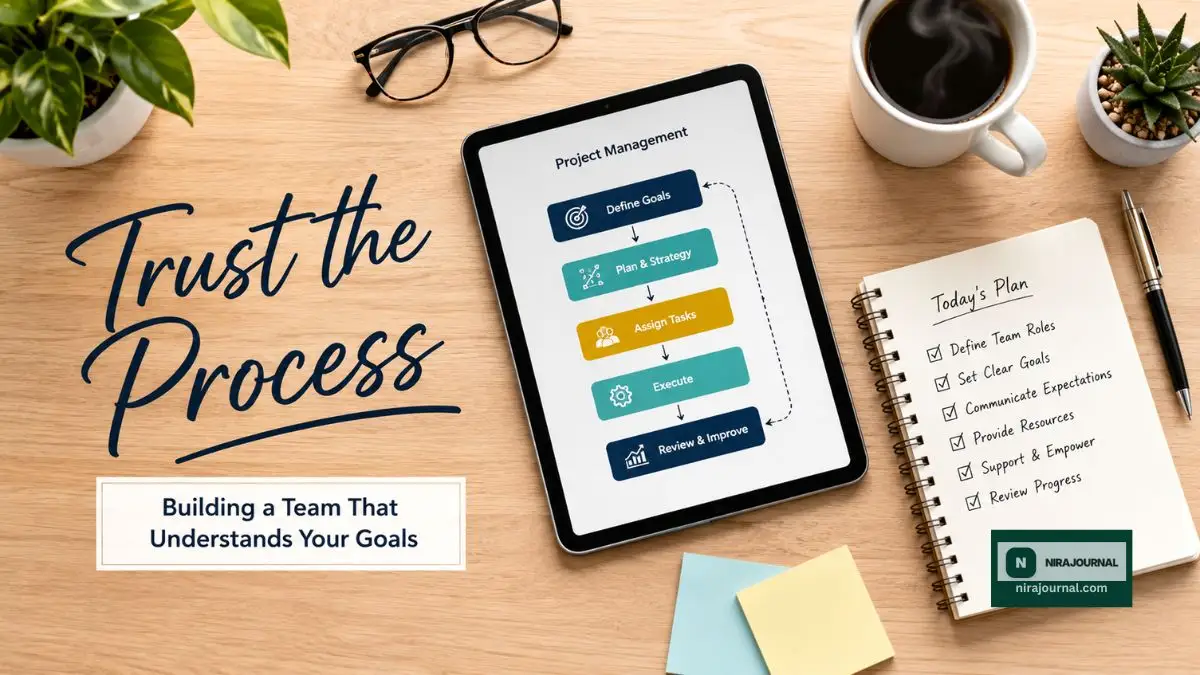
Why We Grip So Tightly: The Fear Behind Control
I used to think my need for control was a strength. I thought it showed how much I cared about my brand. But when I looked closer, I realized it was actually just fear.
I was scared that if a team member made a mistake, my reputation would be ruined forever. I was worried that "good enough" wasn't enough. Many of us feel this way because our business is part of our identity.
When you hand over a task, you are handing over a piece of your dream. It feels risky. You might worry about 7 Brutal Reasons Why Side Hustles Fail So Fast [Reality Check] because you think mistakes lead to instant failure.
But here is a truth I learned: your vision is bigger than a single task. A typo in a blog post or a slightly different shade of blue on a graphic won't kill your company. What will kill it is you being too tired to lead.
According to a study by the American Psychological Association, high levels of stress from overworking lead to poor decision-making. When you are exhausted, you can't see the big picture. You start making mistakes that are much worse than the ones you are trying to prevent.
Sorting Your Tasks: The "Keep or Toss" Method
Before you can give tasks away, you need to know what you are actually doing. I spent a week writing down every single thing I did. From opening mail to signing big contracts.
I found out I was spending 70% of my time on things that didn't require my specific brain. These were "low-value" tasks. They were important for the business, but they weren't my "zone of genius."
I like to use a simple filter. I ask myself: "Am I the only person on Earth who can do this?" If the answer is no, then that task is a candidate for delegation.
You have to be honest with yourself here. Are you doing certain tasks because you enjoy the "busy" feeling? Sometimes we do easy tasks to avoid the hard, scary work of growing a business.
This is where understanding your resources comes in. You need to know if you are trading your time for pennies when you should be looking at the big numbers. I learned a lot about this by Profit vs. Cash Flow: The Secret Blueprint Every Founder Needs [Step-by-Step], which helped me see where my time was best spent.
Finding the Right Hands for Your Tasks
Once I knew what to give away, I had to find people I could trust. This was the scariest part for me. I didn't want to hire someone who just "did a job." I wanted someone who cared.
I started small. I didn't hand over my whole marketing plan on day one. I started with one small, repeatable task. I wanted to see how they handled the small things before I gave them the big ones.
When hiring, don't just look for skills on a paper. Look for someone who asks questions. A person who asks "Why are we doing it this way?" is often better than someone who just says "Okay."
Pro Tip: When I hired my first assistant, I actually gave them a task with a small, intentional mistake in the instructions. I wanted to see if they would catch it and tell me. This helped me know right away if they were paying attention or just following orders blindly.
You want partners, not just robots. If you treat people like robots, you will have to watch them like a robot. That is just more work for you.
The Secret to Clear Instructions
The biggest reason delegation fails is bad communication. I used to say, "Hey, can you make this look better?" That is a terrible instruction. "Better" means something different to everyone.
Now, I use a simple "Goal, Tool, and Boundary" framework. I tell them what the final result should look like. I tell them which tools to use. And I tell them what they absolutely cannot do.
I started recording my screen while I did a task. I would talk through my thoughts while I worked. This way, they didn't just see what I did, they saw why I did it.
This "why" is the bridge to your vision. If they understand the "why," they can make good decisions even when you aren't there. This is how you stop being a bottleneck.
If you want to see how a professional team handles these complex workflows, check out this great breakdown of team management systems.
Watch this video to see how to set up a workflow that runs without you.
The "Trust but Verify" System
Delegation does not mean "disappearing." You still own the vision, so you still have to check in. But there is a big difference between checking in and micromanaging.
I set up weekly "pulse checks." Instead of asking every hour "Is it done?", we have one meeting where we look at the progress. This gives my team space to breathe and work.
It also gives me a safety net. If things are going off track, we catch it early. I don't wait until the deadline to see the final result. I look at the drafts along the way.
According to a report from Harvard Business Review, the best leaders are those who provide the "what" and "why" but let the team figure out the "how." This creates a sense of ownership.
When your team feels like they own the task, they work harder. They start to protect your vision as if it were their own. This is the moment you finally start to get your time back.
Letting Go of Perfectionism
I had to accept that 80% done by someone else is better than 100% done by me (while I’m dying of stress). Perfectionism is just a fancy word for being stuck.
If someone does a task 80% as well as you, that is a huge win. You can use that extra time to find new clients or create new products. That 20% gap is the price of your freedom.
Over time, that person will get better. They might even get to 110% and do it better than you ever could. That is when the magic really happens in a startup.
I stopped looking for "perfect" and started looking for "progress." This changed the whole energy of my office. People weren't afraid to try new things because they knew I wasn't going to explode over a small error.
We focus on the big wins now. We focus on where the company is going. By letting go of the small things, I finally had the energy to lead the big things.
Creating a Culture of Accountability
You can't just give a task and walk away. You have to make sure the person knows they are responsible for the outcome. I started asking my team, "What do you think the next step should be?"
Instead of giving answers, I started asking questions. This forced them to think like me. It helped them align with my vision without me having to dictate every move.
When someone makes a mistake—and they will—I don't take the task back. If you take it back, you teach them that they don't have to be responsible. I sit with them, and we fix it together.
This builds a strong bond. They know I have their back, but they also know I expect them to learn. This is how you build a team that can run your business while you are on vacation.
Scaling a business is about building systems, not just working harder. If you are the only system, your business will never grow beyond your own energy levels. And trust me, your energy will run out eventually.
The Mental Shift: From Doer to Leader
The hardest part of this whole journey wasn't the software or the meetings. It was my own brain. I had to stop identifying as "the person who does everything."
I had to start seeing myself as a conductor of an orchestra. The conductor doesn't play the violin. They make sure the person playing the violin is in sync with the person playing the drums.
This shift takes time. You might feel guilty at first when you aren't "busy." You might feel like you aren't working because you aren't the one typing the report.
But your job has changed. Your job is now to think, to plan, and to inspire. That is much harder than typing a report. It requires a clear, rested mind.
Once I embraced this, my business tripled in size in one year. I wasn't working three times harder. I was just letting three times more work get done through other people.
A Quick Look at Our Progress So Far
To recap what we have covered so far, delegation is a skill you must practice. It starts with facing your fears and identifying which tasks are holding you back.
You must find people who share your values and give them clear, "why-focused" instructions. Then, you create a system to check on progress without hovering over their shoulders.
Most importantly, you have to let go of the idea that everything must be perfect. Growth is messy, and that is okay. As long as the core vision is protected, the details will fall into place.
In the next part of this guide, we will look at the specific tools that make this easier and how to handle it when things go wrong. Because things will go wrong, and how you react will define your leadership.
Remember, you started this business to have more freedom, not less. It is time to start acting like the leader your vision deserves. Stop being the bottleneck and start being the visionary.
Mastering the Shift: Turning Your Team into Vision Protectors
I want to talk about something that changed my business life forever. Once you start handing off small tasks, you might feel a bit lost. You have more time, but you still worry if the "soul" of your work is getting lost. This is where most founders get stuck. They delegate the "doing" but they keep all the "thinking."
To really grow, you have to move past just giving out to-do lists. You need to build a system where your team thinks like you do. I used to spend hours every day answering "quick questions" from my staff. I thought I was being helpful, but I was actually training them to stop thinking for themselves.
I had to change my approach. I started using a method called "The Commander’s Intent." This is a concept used by leaders to make sure everyone knows the main goal even when things go wrong. Instead of telling someone exactly how to write an email, I told them how I wanted the customer to feel after reading it. This simple shift changed everything.
When your team knows the feeling and the goal, they don't need to ask you for every small detail. They become the guards of your vision. They start making decisions that match your brand because they finally understand the "heart" of the business. It takes more time at the start to explain this, but it saves you hundreds of hours later.
Building an Ecosystem of Autonomy and Trust
If you want to stay in control without holding every string, you need a new set of rules. I call this "Level-Based Delegation." Not everyone on your team is ready for full freedom on day one. You have to move them through levels of trust based on their performance and understanding of your goals.
Level one is simply "Do as I say." This is for brand new tasks or new hires. Level five is "Decide and act on your own." Your goal as a leader is to get as many people to level five as possible. I found that when I explained these levels to my team, they were excited to "level up." It made their jobs feel like a path to growth, not just a list of chores.
You should also create what I call a "Culture of Documentation." I used to hate writing manuals. It felt like I was back in school. But then I realized that a manual is just a recorded version of my brain. Now, whenever I do a task for the last time, I record a video of myself doing it and explain my thought process.
I don't just show where to click. I explain why I am clicking there. For example, if I am checking a new business idea, I explain the logic behind it. You can learn more about this by reading 7 Proven Ways to Validate Your Business Idea for Free [Step-by-Step]. This helps my team see the patterns in my thinking.
To keep the quality high, you need a feedback loop that doesn't feel like a lecture. I started using the "What went well / What could be better" approach. After a project, we spend ten minutes talking about those two things. It keeps the focus on the work, not on blaming people. This keeps the environment positive and helps everyone improve.
According to a study by the Society for Human Resource Management (SHRM), clear communication from leaders is the number one driver of employee engagement. When people are engaged, they care more about your vision. They stop seeing the business as "yours" and start seeing it as "ours."
Scaling Your Impact with Smart Systems
I once heard a quote that stuck with me: "If your business depends on you, you don't own a business—you own a job." To break free, you must use tools that help your team stay aligned. We use simple project boards where every task is linked to a big-picture goal.
If a task doesn't clearly help us reach a main goal, we ask why we are doing it. This keeps the team focused on what matters. It also helps me see at a glance if my vision is being followed. I don't have to read every email; I just have to look at the project board.
You should also give your team a "Mistake Budget." This sounds scary, I know. But I told my team they are allowed to make mistakes that cost less than a certain amount of money, as long as they learn from them. This removed the fear of "messing up" my vision.
When the fear was gone, their creativity exploded. They started finding better ways to do things than I ever could. This is the real secret of the world's best leaders. They don't just find people to follow them; they find people to lead with them.

The Quiet Mistakes That Break Your Vision
Even with the best plan, it is easy to fall back into old habits. I call these the "silent killers" of delegation. The first one is what I call "Upward Delegation." This happens when you give a task to someone, they hit a small problem, and they give it right back to you to solve.
If you solve it for them, you have failed. You are now doing the work again. Instead, when they bring a problem, ask them, "What are three ways you would solve this?" Make them do the thinking. This is how you protect your time and your mental energy.
Another big trap is the "Comparison Curse." I used to look at what my assistant did and think, "I would have done that differently." Of course I would! We are different people. But "different" is not always "wrong."
If the result is good and the customer is happy, let it go. If you keep forcing everyone to do things exactly like you, you will end up with a team of robots. Robots can't handle a crisis, and they certainly can't help you scale a vision.
You also have to be careful about The Silent Killers of New Startups: Common Pitfalls Entrepreneurs Overlook because poor delegation is right at the top of that list. If you don't give enough authority with the task, your team will feel powerless. Powerless people don't care about your vision. They just wait for the clock to hit five so they can go home.
I also see many founders who "dump" instead of "delegate." They wait until they are totally overwhelmed and then throw a pile of work at someone without any training. This is a recipe for disaster. The person will fail, you will get angry, and you will say, "See? I have to do everything myself!"
This cycle is hard to break, but it starts with being honest about your own failures. Most of the time, when a team member fails, it is because the leader didn't provide the right map. You have to be the one who draws the map clearly.
If you are struggling with this, you might find some useful tips in this guide on management and organizational behavior from OpenStax. It explains how to set clear expectations and build a structured environment where people can actually succeed.
Embracing the Leader You Are Meant to Be
Looking back at my 3 AM sessions, I realize that I wasn't just working hard—I was working poorly. True growth happened when I stopped trying to be the hero of every story. I started becoming the mentor instead.
Your vision is a living thing. It needs room to grow and breathe. If you keep it in a small box under your desk, it will eventually wither away. But if you share it, nurture it, and let others help it grow, it can become something bigger than you ever imagined.
Start today by picking one thing—just one—that you can hand off. Don't pick your most important task. Pick the one that drains your energy the most. Explain the "why," set the boundary, and then walk away.
You might feel an itch to check in every five minutes. Don't do it. Go for a walk, read a book, or work on a big idea. Give your team the space to surprise you. You might find that they care about your vision just as much as you do.
The path to a successful business isn't paved with more hours of your own sweat. It is paved with the trust you build in others. When you let go of the small things, you finally have the hands free to reach for the stars.
I used to think that letting go meant I was losing my business. Now I know that letting go was the only way to actually save it. I feel more in control now than I ever did when I was doing everything myself. My mind is clear, my team is happy, and my vision is reaching more people than ever before.
I want you to feel that same peace of mind because you deserve to enjoy the business you built. Take that first step today, even if your hands are shaking a little bit. I promise you, the view from the leader's chair is much better when you aren't buried under a pile of paperwork.
Common Questions About Task Delegation
How do I know which tasks I should delegate first?
I always suggest starting with the tasks that are repetitive and have clear steps. If you can write down the steps on a piece of paper, someone else can do it. Focus on the things that "drain" your battery instead of "charging" it.
What should I do if a team member keeps making mistakes?
First, check your instructions. Are they as clear as you think they are? If the instructions are good, sit down with the person and ask where they are getting stuck. If they still can't get it right after extra training, they might be in the wrong role.
Isn't it faster to just do the task myself?
It is faster to do it yourself once. But if you have to do that task every week for a year, it takes much longer. Spending two hours training someone now will save you fifty hours over the next year. Think of it as an investment, not a loss of time.
How can I stay updated on progress without micromanaging?
Use a shared project management tool or a simple weekly update email. This way, the information is there for you to see whenever you want, and you don't have to interrupt your team’s workflow to get it.
What if I can't afford to hire someone yet?
You don't always need a full-time employee. You can start with a freelancer for just five hours a week. Or, you can use automation tools to handle simple things like scheduling or sorting emails. Small steps still lead to big changes.
Disclaimer: This article is for informational purposes only and does not constitute professional business, legal, or financial advice. Every business is unique, and results may vary based on your specific industry and team structure. Always consult with a qualified professional before making major organizational changes.
About the Author
Munira Parveen is a dedicated Digital Content Strategist and Lead Researcher with a passion for simplifying complex topics. From navigating personal finance and emerging tech trends to uncovering the best practical lifestyle solutions, she spends her time analyzing data to bring readers highly accurate, actionable, and easy-to-understand guides. Her ultimate goal is to empower everyday people to make smarter, more informed decisions in this fast-paced digital world.

![Profit vs. Cash Flow: The Secret Blueprint Every Founder Needs [Step-by-Step]](https://nirajournal.com/storage/uploads/blogs/1785486728_profit-vs-cash-flow-the-secret-blueprint-every-founder-needs-step-by-step.webp)
![7 Brutal Reasons Why Side Hustles Fail So Fast [Reality Check]](https://nirajournal.com/storage/uploads/blogs/1785472996_7-brutal-reasons-why-side-hustles-fail-so-fast-reality-check.webp)