The Silent Stress of the Monthly Utility Bill
I still remember opening my electricity bill last August and almost dropping my coffee mug in pure shock. The number was so high I honestly thought the power company made a mistake, and I spent the rest of the week stressing out and warning my family to turn off every single light. That sick, helpless feeling in my stomach is exactly what finally pushed me to figure out how to generate my own power.
Imagine opening your mailbox on a scorching summer afternoon. You pull out the monthly envelope from your utility company, and your stomach instantly drops. The electricity bill is staring back at you, and the number is almost double what you expected.
You immediately start thinking about how to cut back on your usage. Should you turn off the air conditioner and just sweat it out? Keep the kids from watching their favorite shows? Maybe stop running the washing machine during the day?
This is the exhausting cycle millions of homeowners face every single month. We feel completely powerless against rising utility rates. You try doing everything right by switching to LED bulbs, adjusting the thermostat, and turning off lights in empty rooms.
Yet, the bill keeps climbing, eating into your hard-earned savings. It feels incredibly frustrating to essentially rent your power from a giant monopoly. You pay and pay, but you never actually own the energy you use.
The constant worry about seasonal rate hikes silently steals your peace of mind. Instead of enjoying a comfortable, well-cooled home during the summer, you find yourself acting like the family energy police. You constantly remind everyone to shut the doors and turn off the fans.
Deep down, you know there has to be a better way to manage your home. You want a home that takes care of your family, rather than a house that constantly drains your bank account. The idea of generating your own clean power sounds like a dream.
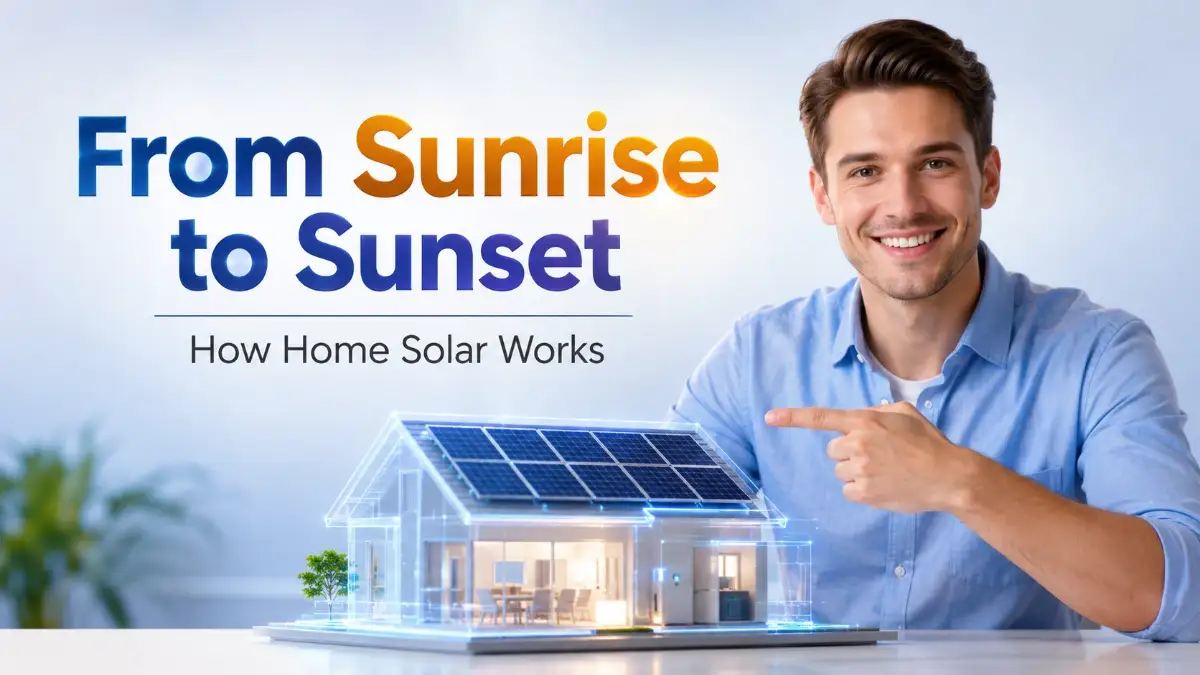
However, the technology often seems highly complicated and intimidating. You might wonder what actually happens on your roof when the sun comes up. Let us walk through exactly what happens, breaking down the complex science into a simple, everyday journey.
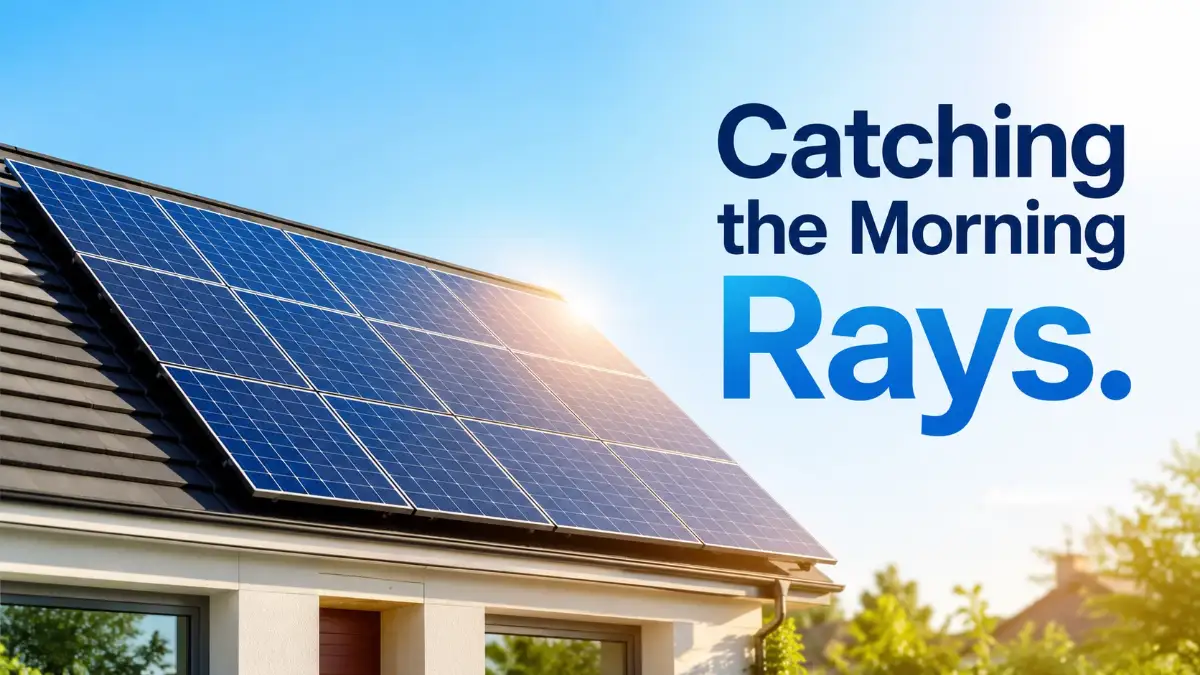
The Morning Wake-Up Call: Catching the First Rays
The entire magic of your home energy setup starts the moment the sun peeks over the horizon. As the first rays of morning light hit your roof, your system quietly wakes up. There is no loud engine starting, no smoke, and no moving parts to make a racket.
Your rooftop setup is made up of dozens of individual panels. Think of these panels as giant, high-tech sponges. Instead of soaking up water, these unique sponges are designed to soak up pure sunlight.
Inside each panel are tiny components called photovoltaic cells. When sunlight hits these cells, it knocks tiny particles of light, called photons, into electrons. This microscopic collision creates an electrical charge.
Pro Tip: Your panels do not need extreme heat to work efficiently. In fact, they only need visible light, meaning they still generate power on cold, crisp winter mornings!
This newly created energy is called Direct Current, or DC power. It flows steadily in one single direction, much like water flowing through a straight garden hose. However, there is a slight catch with this raw power.
Your home appliances, like your coffee maker, television, and refrigerator, cannot use DC power. They run on something called Alternating Current, or AC power. If you try to plug your television straight into a solar panel, nothing would happen.
This is where the brain of your entire setup steps in to save the day. Before that raw sunlight can brew your morning coffee, it has to go through a very special transformation. Before jumping into massive system upgrades, you might want to look into Easy Ways to Reduce Household Energy Waste Before Going Solar to ensure your home is as efficient as possible.
The Magic Box: Translating Raw Energy
If you are having a hard time picturing how raw sunlight actually powers your indoor appliances, watch this quick video below to see the magic happen in real time. Once you see how incredibly simple this translation process is, keep reading to discover how this exact setup can actually force your utility meter to spin backward!
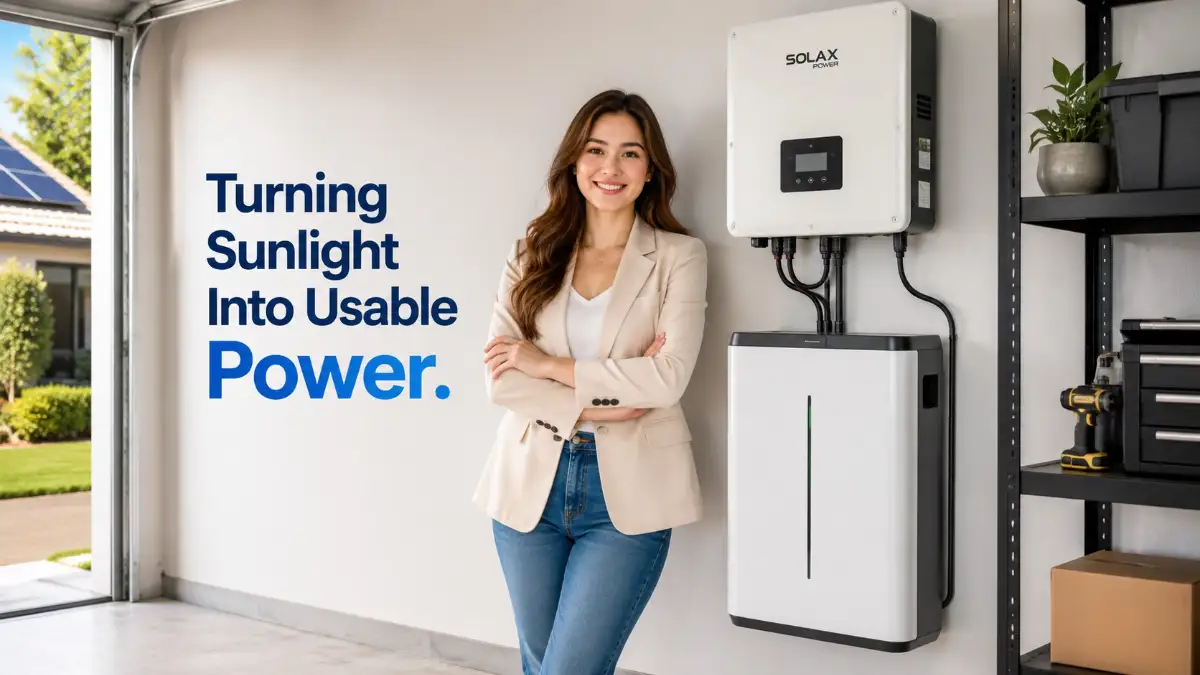
Right next to your electrical panel, usually in your garage or on the side of your house, sits a medium-sized metal box. This box is called the solar inverter. You can think of the inverter as a highly skilled language translator for your home.
The raw DC power comes rushing down from your roof speaking a "foreign language" that your appliances do not understand. The inverter takes that raw energy and instantly translates it into the local language. It changes the DC power into usable AC power.
Once the inverter does its job, the electricity is exactly the same as the power you normally buy from the utility company. It is completely safe, highly stable, and ready to be used. From the inverter, this freshly translated power flows directly into your home's main electrical breaker box.
This breaker box acts like a traffic cop for your electricity. It directs the solar power exactly where it needs to go at that exact moment. If you are making toast, the power goes to the kitchen.
If your air conditioner is running, the power is routed straight to your HVAC system. Your home will always use your free, self-generated power first before asking the utility company for even a single drop of electricity. This instant prioritization is exactly how you start seeing your utility bills drop immediately.
Midday Peak: The Power Overload Advantage
As the morning turns into noon, the sun reaches its highest point in the sky. This is when your rooftop system enters maximum production mode. During these bright midday hours, a fascinating scenario often happens.
Your panels are soaking up so much sunshine that they produce way more electricity than your home actually needs. You might be at work, the kids might be at school, and the house is mostly empty. So, where does all this extra, unused power go?
It certainly does not just evaporate into thin air. If you do not have a home battery installed, this excess energy flows backward out of your house. It travels through your utility meter and goes straight out onto the public power grid.
When this happens, your utility meter literally spins backward. Your local utility company receives this extra power and sends it to your neighbors. In exchange for providing them with free energy, the utility company gives you energy credits on your account.
This brilliant give-and-take system is known as net metering. According to the Department of Energy's guide on net metering, this billing mechanism is one of the biggest financial benefits for modern homeowners. It allows you to store the financial value of your midday sunshine to use later.
Myth vs Reality: Cloudy Days
There is a common misunderstanding that your system completely shuts down when clouds roll in. While production does slow down during heavy rain, your panels still collect scattered ambient light. It is just like getting a sunburn on a cloudy day at the beach; the UV rays are still working.
If your system happens to produce slightly less power than your home needs on a very dark afternoon, you will not lose power. Your home simply pulls the missing electricity from the public grid seamlessly. You will never even notice a flicker in your lights. If you are worried about common misunderstandings, you should read up on Stop Believing These Home Solar Energy Myths: What First-Time Homeowners Must Know.
Sunset and Beyond: Keeping the Lights On
As late afternoon arrives, the sun slowly begins to set. Your rooftop panels gradually produce less and less electricity as the sky darkens. Eventually, the sun goes down completely, and your panels go to sleep for the night.
Obviously, you still need electricity to cook dinner, watch movies, and keep the refrigerator running overnight. Since your panels are no longer producing power, your home automatically shifts back to using energy from the public grid. This transition is completely silent and automatic.
This is exactly where those credits you earned during the midday peak come to the rescue. You use the credits you built up during the sunny hours to pay for the power you use at night. It is basically like putting money into a savings account during the day and withdrawing it after dark.
Many smart homeowners are now choosing to skip the public grid entirely by adding a solar battery to their setup. A home battery acts like a giant bucket that catches all your extra midday power. Instead of sending that excess energy to the utility company, you store it directly in your own garage.
When the sun sets, your house simply pulls its energy from your full battery instead of the public grid. This setup gives you total energy independence around the clock. If the neighborhood loses power during a severe midnight storm, your house will stay brightly lit because you have your own private reserve.
Understanding this daily rhythm brings a massive sense of relief. You finally realize that generating your own electricity is not magic, but rather brilliant engineering. You are no longer just a passive consumer paying whatever the monopoly demands.
You become an active owner of your own mini power plant. You start to view sunny days differently, knowing that clear blue skies literally translate to money staying in your pocket. The technology quietly works in the background, requiring almost zero maintenance from you.
Once the system is securely mounted and switched on, your only real job is to let the sun do the heavy lifting. The panels withstand rain, wind, and snow, reliably waking up every single morning to start the process all over again. Every sunrise becomes a fresh opportunity to power your life on your own terms.
Mastering Your Mini Power Plant: Advanced Daily Strategies
Getting your new home energy system installed is just the beginning of your journey. To truly maximize your savings and shorten your payback period, you need to slightly adjust how you run your household. You do not have to sacrifice comfort, but you do need to be smart about your timing.
The biggest secret to massive utility savings is understanding your daily power curve. Think of your rooftop panels as a massive water tank that only fills up between 10 AM and 2 PM. If you want to use that free energy, you should run your most heavy-duty appliances during those peak hours.
For example, many homeowners habitually run their pool pumps, dishwashers, and washing machines late at night. Before you went solar, this might have been a good idea to avoid afternoon heat. However, running heavy machines at midnight means you are pulling expensive electricity straight from the public grid.
When I first got my system installed, I made the huge mistake of doing all my family's laundry late at night out of pure habit. I suddenly realized I was paying full price for night-time power while completely wasting my own free midday sunshine! Once I caught on to my mistake and changed my routine, my monthly savings literally doubled overnight.
Instead, use the delay timer on your washing machine and dishwasher. Set them to start running right around noon when your roof is producing maximum energy. This simple habit ensures your biggest energy-hogging appliances are powered completely by the sun.
Another excellent strategy involves pre-cooling your home during the afternoon. If you know your utility company charges high rates during the evening, turn your air conditioning down a few degrees around 2 PM. Your house will act like a giant thermal battery, holding onto that cool air generated by free midday sunlight.
By the time evening rolls around, your home is already comfortably chilled. You can then raise the thermostat slightly so your AC does not have to work as hard when the sun goes down. This single habit can shave a massive amount off your evening energy usage.
Keeping Your Hardware Happy and Healthy
While residential systems are incredibly low maintenance, they are not completely maintenance-free. Your panels live outside in the harsh elements all year round, facing dust, pollen, bird droppings, and exhaust soot. Over time, this thin layer of grime can significantly reduce your daily power output.
Many people assume that a good rainstorm will wash the panels perfectly clean. Think about your car's windshield after a light rain; it usually looks dirtier and streaky, not perfectly clear. Your roof requires a bit more care to perform at its absolute best.
If you live in a dusty area or near heavily trafficked roads, you should plan to clean your array at least once or twice a year. You can hire a professional service, or safely do it yourself from the ground using a specialized soft-bristle water pole. Just a quick gentle wash can instantly boost your energy production by up to ten percent.
Beyond physical cleaning, you must monitor the temperature environment around your equipment. A fascinating scientific fact from the National Renewable Energy Laboratory (NREL) on solar performance explains that electronic components actually lose efficiency in extreme heat. Your panels generate electricity from light, not from hot temperatures.
If your main inverter box is installed outside, make sure it is on the shaded side of your house. If it gets blasted by afternoon heat, it has to work much harder to translate that direct current into usable power. Giving your equipment a little bit of shade keeps the internal computers running smoothly and extends their lifespan.
You must also consider where you place the system from the very beginning. A poorly placed array will struggle to perform, no matter how much you clean it. For a deep dive into perfect placement, read through A Practical Guide to Choosing the Right Location for Solar Panels on Your Property.
The Silent Savings Killers: Traps Homeowners Fall Into
Upgrading your home to run on renewable energy is incredibly exciting, but this excitement often leads to a false sense of security. The most common trap new owners fall into is the "infinite free power" mindset. They see the panels on the roof and instantly start treating their electricity like an unlimited resource.
Suddenly, family members start leaving the television on all day in empty rooms. The thermostat gets dropped to freezing temperatures during the middle of summer. People start taking longer, hotter showers, assuming the roof will just cover the cost.
This behavior is a guaranteed way to receive a massive, unexpected bill at the end of the year. Your roof only produces a specific, limited amount of electricity each day based on its physical size. If your family starts using twice as much power as they used to, your system simply will not be able to keep up.
Before you start adding massive new electrical loads like an electric vehicle or a hot tub, you have to do the math. You cannot just expect a standard roof setup to handle unlimited appliances. To truly understand these limitations, you should review Can Solar Panels Power an Entire House? Factors That Make the Biggest Difference.
The Danger of the Forgotten Wi-Fi Connection
Almost every modern setup comes with a highly detailed smartphone monitoring app. This app is your window into the health of your home, showing you exactly how much energy you make and consume. During the first few weeks, most homeowners check this app multiple times a day because it is new and exciting.
However, as the months go by, life gets busy and people stop checking the numbers. This is where a tiny technical glitch can turn into a massive financial disaster. Your inverter box communicates with your phone and your solar company using your home Wi-Fi network.
If you change your internet provider or update your router password, your inverter will immediately disconnect from the internet. When it disconnects, it stops reporting its energy production data. The system might still be working, but you have no way to verify it.
Even worse, what if a squirrel chews through a main wire on your roof, shutting the whole system down? If you are not checking your app, you might go three or four months without generating a single drop of solar power. You will only realize the system is broken when the utility company sends you an enormous energy bill.
Make it a solid habit to open your monitoring app at least once a week. Treat it exactly like checking your bank account balance. A quick five-second glance is all it takes to confirm that the green lights are glowing and everything is running perfectly.
The Shading Creep Phenomenon
Another major pitfall is ignoring the slow, steady growth of the nature around your property. When your array was first installed, the installation team made sure the roof was completely bathed in direct sunlight. They carefully measured the angles to ensure no shadows would ruin your production.
But trees do not stop growing just because you installed new technology. Over the span of two or three years, that small oak tree in your side yard might grow a massive new branch. That single branch might start casting a long, dark shadow across your panels every afternoon at 3 PM.
You might think a small shadow is no big deal, but you would be heavily mistaken. Because of how the electrical circuits are wired together, a shadow on just one single panel can drag down the performance of the entire group. It is exactly like putting a kink in a garden hose; the flow stops for everything behind it.
You need to walk out to your driveway a few times a year, especially in the spring and fall, and look up at your roof. Look for any new branches, excessive leaf buildup, or even overgrown vines. Keeping a clear, unobstructed path to the sky is absolutely essential for maximum financial return.
Understanding the True Grid Relationship
Finally, a very painful mistake is misunderstanding how your equipment interacts with the local utility grid during an emergency. Many buyers assume that having their own power plant means they are completely safe during a neighborhood blackout. They think they can just keep watching TV while the rest of the street goes dark.
Unless you specifically purchased and installed a large home battery backup unit, your system will instantly shut down the second the public grid fails. This is an intentional, hardwired safety feature designed to protect utility workers. When a storm knocks down power lines, technicians have to physically climb those poles to fix the wires.
If your home was still actively pushing extra sunlight power back onto those broken lines, it would instantly electrocute the utility workers trying to make repairs. Therefore, standard grid-tied inverters are legally required to shut off completely during a blackout. If you want to understand more about how utility integration works, the U.S. Department of Energy provides excellent guides on grid-tied systems.
If continuous backup power is your main goal, you must budget for a smart battery system. A battery completely separates your house from the grid during an outage, creating a safe, isolated micro-grid just for your family. Setting the right expectations about what your equipment can and cannot do will save you from bitter disappointment during the next severe storm.
Your Action Plan for True Energy Independence
Taking control of your home’s power supply is one of the smartest financial decisions you can ever make. It transforms a frustrating, never-ending monthly expense into a valuable physical asset that pays you back every single day. You are literally turning empty roof space into a personal financial engine.
To make sure you get the absolute best results from your investment, you need to stay slightly engaged with the process. You do not need an engineering degree, just a few smart daily habits. Shift your heavy chores to the middle of the day to soak up that free midday sunshine.
Keep a watchful eye on your home's environment, trimming back aggressive trees and gently washing away heavy summer dust. Most importantly, stay connected to your technology by checking your mobile app regularly. Treat your new setup with the same care and attention you would give to a brand-new car.
By applying these simple, practical strategies, you will protect your investment for decades to come. You will dramatically shrink your carbon footprint while simultaneously padding your savings account. Enjoy the amazing feeling of watching the sun rise, knowing that every ray of light is working directly for your family.
Stepping away from the traditional power company felt really scary to me at first, but opening my near-zero utility bill today makes all that initial worry totally worth it. You really do not have to be stuck renting your electricity forever. Take that first step today to look into your local options, because having true energy independence is a completely life-changing feeling!
Disclaimer: The information provided in this article is for educational and informational purposes only. It should not be considered professional electrical, financial, or legal advice. Every home has unique energy requirements and local utility regulations. Always consult with a certified, licensed solar installation professional and your local utility provider before making any major modifications to your home energy system.
About the Author
Munira Parveen is a dedicated Digital Content Strategist and Lead Researcher with a passion for simplifying complex topics. From navigating personal finance and emerging tech trends to uncovering the best practical lifestyle solutions, she spends her time analyzing data to bring readers highly accurate, actionable, and easy-to-understand guides. Her ultimate goal is to empower everyday people to make smarter, more informed decisions in this fast-paced digital world.