The Moment I Realized the Streets Weren't as Friendly as They Looked
I remember landing in a massive city at 2 AM. The airport was cold, and the neon lights were blinding. I felt a knot in my stomach as I stepped out of the taxi. The hotel was tucked away in a dark alley I didn't recognize.
My phone battery was at 4%. I stood there, clutching my bag, feeling like a bright target in a sea of shadows. Every shadow seemed to move. I didn't know the language, and I didn't have a plan.
That night, I didn't sleep at all. I sat by the window, watching the street, wondering why I chose to travel alone. It was the first time I truly understood the weight of being solo in a place that doesn't know your name. My fear was real, and it almost made me book a flight back home the next day.
But I stayed. I learned. I realized that safety isn't about luck. It is about how you move, how you think, and how you prepare for the unknown.
The Hidden Weight of Worry on a Solo Journey
Walking through a new city should feel like a dream. But for many solo travelers, it often feels like a test of nerves. The constant "what if" games play in your head. What if I get lost? What if someone follows me? What if I lose my wallet?
This mental stress is exhausting. It takes away the joy of seeing the Eiffel Tower or the busy markets of Bangkok. Instead of looking at the beautiful buildings, you are busy checking over your shoulder. You start to see everyone as a potential threat.
This anxiety can ruin your physical health too. You stop eating because you are too nervous to sit in a restaurant alone. You avoid leaving your room after the sun goes down. Your dream vacation slowly turns into a lonely prison of your own making.
Many people don't talk about this part of solo travel. They post pretty photos, but they don't show the shaking hands or the racing heart. The truth is, being alone in a strange city is hard. It tests your spirit in ways you never expected.
I have talked to so many travelers who felt this same way. They feel guilty for being scared. But your fear is actually a tool. It is your body telling you to be smart. The problem is when fear takes control.
When you don't have a strategy, you make mistakes. You look at your map for too long in the middle of a crowd. You walk with your head down. You look like you are lost, and that is exactly what attracts the wrong kind of attention.
Learning how to manage this stress is just as important as booking your hotel. You need to reclaim your peace of mind. You deserve to feel the wind on your face without worrying about who is standing behind you.
Building Your Personal Safety Shield Before You Land
Staying safe starts way before you zip up your suitcase. I used to think I could just "wing it," but that was a huge mistake. Now, I spend hours learning the layout of a city before I even arrive.
You should know which neighborhoods are safe and which ones are best to avoid. Use Google Street View to look at the area around your hotel. Does it have streetlights? Are there shops nearby that stay open late? Knowing these small details can save you from a lot of stress.
One of the best things I ever did was start using The Ultimate Blueprint for a Stress-Free International Tourist Visa Application to make sure my paperwork was perfect. When your documents are in order, you have one less thing to worry about at the border. This allows you to focus 100% on your surroundings the moment you step outside.
You should also have a digital backup of everything. I keep photos of my passport, ID, and hotel address in a hidden folder on my phone. I also print them out and keep them in a separate bag. If my phone dies or gets stolen, I am not stranded.
It is also smart to look into local transport. Does the city have a safe ride-sharing app? Is the subway system reliable at night? Understanding these things helps you move with purpose. A person who moves with purpose is rarely bothered by others.
Master the Art of the "Confident Wanderer"
The way you walk tells a story to everyone around you. If you look confused, you look vulnerable. Even if you are completely lost, never stop in the middle of the sidewalk to look at your phone.
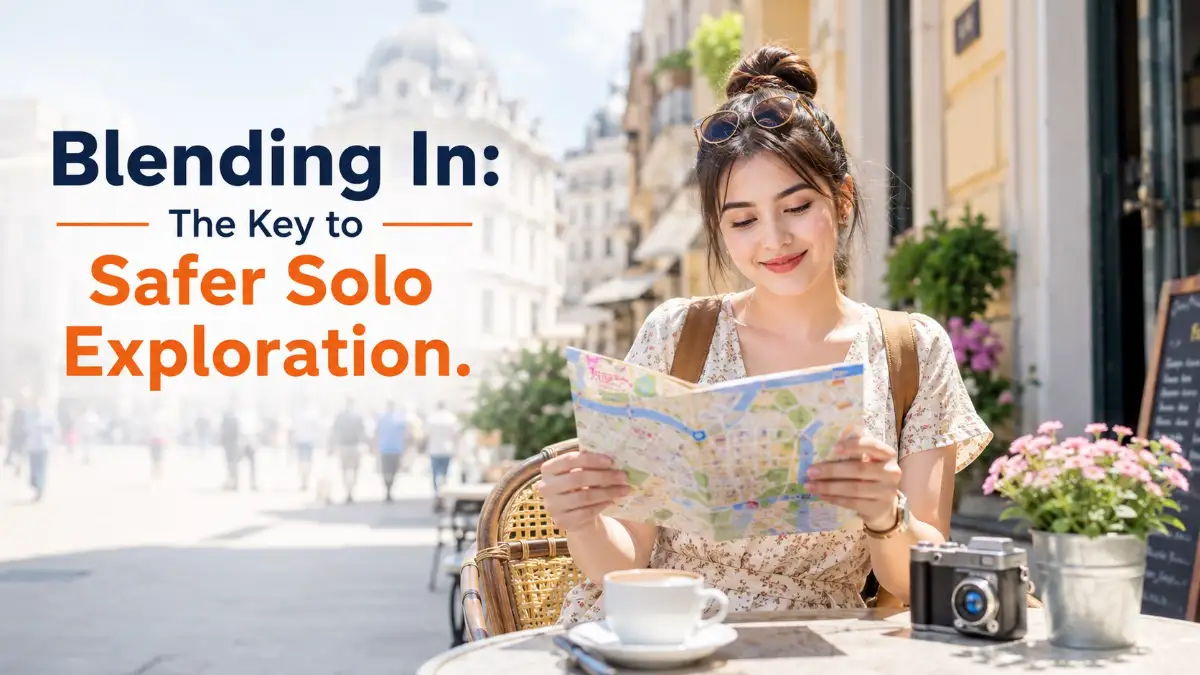
Instead, walk into a shop or a cafe. Sit down, buy a drink, and check your map there. This makes you look like a local taking a break rather than a tourist who is stuck. I call this the "Fake it 'til you make it" rule of travel.
I always try to match the local style of dress. If everyone is wearing muted colors, don't wear your brightest tourist shirt. If people dress formally, try to step up your style a bit. Blending in is like wearing an invisibility cloak.
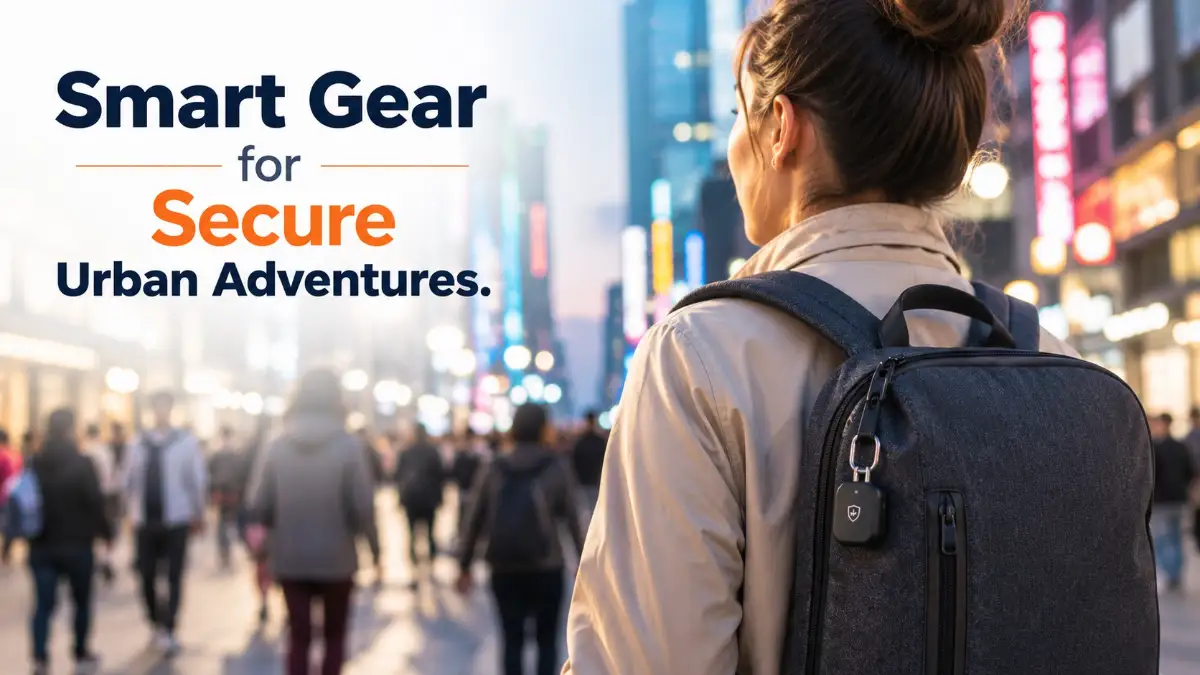
Another big tip is to keep your electronics hidden. Don't walk around with a thousand-dollar camera hanging from your neck. Keep it in a plain, non-branded bag. Use one earbud for GPS directions instead of two, so you can still hear the world around you.
Pro Tip: I once found myself in a very crowded market where I felt I was being watched. I immediately pulled out a small, cheap "decoy" wallet filled with just a few dollars and some old business cards. I kept my real money and cards in a hidden belt under my clothes. This simple trick gave me so much confidence because I knew that even if I were picked, I wouldn't lose anything important.
Digital Tools That Act as Your Invisible Bodyguard
Technology is your best friend when you are alone. But you have to use it the right way. I always share my live location with a trusted friend back home. They might be thousands of miles away, but knowing they can see where I am gives me a sense of security.
Google Maps is great, but offline maps are even better. You can download a whole city map so you don't need data to find your way back. This is huge if you lose your signal in a strange neighborhood.
You should also look into Beginner’s Roadmap to Understanding Different Types of International Travel Insurance Coverage to ensure you are protected against any unexpected events. Having the right insurance isn't just about money; it’s about having a professional team to call if things go wrong.
You need to see how these apps work in real-time to truly master them.
Check out this expert breakdown of the top safety apps that every solo traveler needs on their phone right now.
After watching that, you will realize that your phone is more than just a camera. It is a lifeline. Just make sure you carry a portable power bank. A dead phone is a solo traveler's biggest nightmare.
Understanding and Avoiding Common City Scams
Every major city has its own set of "tricks." In some places, it’s a "free" friendship bracelet. In others, it’s someone spilling a drink on you to "help" clean it up while they grab your wallet.
The best way to handle these is to be politely firm. You don't have to be rude, but you must be assertive. A simple "No, thank you" while keeping your pace is usually enough. Don't feel obligated to stop and talk to everyone who approaches you.
I remember a guy in Rome who tried to hand me a rose. He kept saying it was a gift. I knew if I took it, he would demand money. I kept my hands in my pockets and just kept walking. It felt mean for a second, but it kept me out of a bad situation.
You can find official travel advisories on sites like the U.S. Department of State's Travel Site which gives you the latest on common scams in specific countries. Staying updated on these lists is a great way to stay one step ahead of the bad guys.
The Power of Your Own Intuition
This is the most important part of safety, yet it is the hardest to teach. Your gut feeling is a million years of evolution trying to protect you. If a street looks "wrong," don't walk down it. If a person makes you feel uneasy, leave the area.
I have ignored my gut a few times, and I always regretted it. Once, I got into a taxi that didn't have a meter. The driver seemed nice, but my stomach felt tight. I asked him to pull over at the next light and I got out. I paid a small fee, but I felt so much better.
Never worry about being "polite" over being safe. If someone is making you uncomfortable in an elevator, get out at the next floor. If a restaurant feels sketchy, don't stay. You don't owe anyone an explanation for your safety.
There is a great study on the Psychology of Intuition that explains how our brains pick up on tiny danger signals before we even realize it. Trusting that "weird feeling" is often the best defense you have.
Setting Up Your "Safe Base"
Your hotel or hostel should be your sanctuary. When I check in, I always grab a business card from the front desk. It has the address and phone number in the local language. If I get lost or my phone dies, I can just show that card to a licensed taxi driver.
I also make it a point to talk to the staff. I ask them, "Is it safe to walk to the main square from here at night?" They live there. They know the reality of the streets better than any guidebook.
I always check the locks on my door and windows the moment I enter the room. I also carry a small rubber doorstop. I wedge it under the door at night. It is a tiny piece of plastic, but it gives me huge peace of mind knowing no one can open that door from the outside.
Navigating Public Transportation Like a Pro
Public transit is the heartbeat of a city, but it can also be a hotspot for pickpockets. When I'm on a bus or train, I always keep my bag in front of me. I wrap my arm through the straps.
Try to avoid empty train cars. Sit near the driver or in a car with other families and groups. If someone starts acting strange, move to another car at the next stop.
I also try to arrive in new cities during daylight hours. Navigating a new subway system is ten times harder and scarier at 11 PM than it is at 11 AM. If my flight is late, I always pre-book a reputable car service rather than trying to figure out the bus in the dark.
Staying Social Without Lowering Your Guard
Solo travel doesn't mean you have to be alone all the time. Meeting people is one of the best parts of the journey! But you have to be smart about it.
I love joining walking tours. It is a great way to meet other travelers and see the city in a safe group. Plus, the guides often give the best safety tips for that specific city.
If you meet someone at a hostel or a cafe, that’s great. But never tell a stranger exactly where you are staying or that you are traveling completely alone. You can say, "My friends are meeting me later," or "I'm staying near the city center."
Always watch your drink. This is a rule for everyone, everywhere. If you go to a bar, never leave your glass unattended. It only takes a second for someone to drop something in it.
The Importance of an "Exit Strategy"
Every time I go into a new building or a crowded event, I look for the exits. It sounds paranoid, but it’s just good habit. In a fire or an emergency, people panic. Knowing where to go can save your life.
I also have an "emergency fund" hidden in my luggage. This is enough cash for a last-minute hotel or an emergency flight. I hope I never have to use it, but knowing it is there makes me feel like a professional traveler.
Safety is not about being afraid of the world. The world is a beautiful, amazing place filled with kind people. Safety is simply about being prepared so you can enjoy that beauty without the weight of worry.
By following these steps, you aren't just protecting yourself; you are giving yourself the freedom to truly explore. You can walk the streets of Tokyo, Rome, or Mexico City with your head held high, knowing you are ready for whatever comes your way.
Going Beyond the Basics: Professional Moves for Modern Explorers
Once you have your bags packed and your hotel booked, you might think you are ready. But there is a huge difference between being a tourist and being a smart solo traveler. The way you handle yourself in the middle of a busy city center can change everything.
I learned the hard way that looking like you belong is a full-time job. It starts with your physical presence. When you are walking down a street in a city like Istanbul or New York, your pace matters. Locals walk with a specific rhythm. They aren't looking at the tops of buildings every five seconds.
If you need to check your surroundings, do it with your eyes, not your whole head. Try to keep a steady speed. If someone tries to stop you for a "survey" or to sell you something, just keep moving. A small nod or a simple "No" is enough. You don't have to be mean, but you must be firm.
Managing your money is another area where pros act differently. I never keep all my cash in one place. I use the "three-spot rule." Some goes in my wallet for small daily needs. Some goes in a hidden pouch under my clothes. The rest stays in the hotel safe.
This way, if my wallet ever goes missing, my whole trip isn't ruined. It sounds like a lot of work, but it becomes a habit after a few days. It takes away that constant fear of "what if I lose everything?" because you know you have a backup.
Staying Connected Without Giving Away Your Privacy
We all love our smartphones. They are our maps, our translators, and our connection to home. But in a strange city, your phone can also be a magnet for trouble.
I always suggest getting a local SIM card as soon as you land. Relying on public Wi-Fi is risky. Not only is it slow, but it’s also not very secure. Having your own data means you can call a ride-share or check a map anywhere, at any time.
When you are using your phone on the street, try to step inside a shop or lean against a wall. Don't stand in the middle of the sidewalk with your head down. This makes it too easy for someone to grab the phone and run.
I also make sure my phone is set up to be tracked if it gets lost. Both iPhone and Android have great "find my device" tools. Make sure you know how to log in from a computer or another phone. This simple step can save you hours of stress.
You should also be careful about what you post on social media. I know it’s tempting to share that amazing sunset live. But telling the world exactly where you are while you are still there is not a good idea. Wait until you have left the location before you post those photos.
Staying safe is also about being healthy. Sometimes, travelers forget that their bodies need a different kind of care in a new climate. I always check the International Association for Medical Assistance to Travellers to see what health risks I should look out for. Knowing if the water is safe or what local bugs to avoid is a big part of staying safe.
The Power of Being a "Quiet" Traveler
Being loud is like wearing a neon sign that says "I am not from here." In many global cities, locals are more reserved. If you are talking loudly on your phone or shouting to a friend across the street, you are drawing attention.
I try to observe the people around me. Are they quiet on the train? Then I am quiet too. Is the restaurant a place where people talk softly? I follow their lead. This isn't just about being polite; it’s about blending in.
When you blend in, you are much less likely to be targeted by scammers. They look for the people who stand out. By being a "quiet" traveler, you move under the radar. You get to see the city in a much more authentic way because people treat you like you belong there.
I also try to learn at least ten basic words in the local language. "Hello," "Please," "Thank you," and "Help" are the big ones. People appreciate the effort. Even if you say it wrong, it shows you respect their culture. This tiny effort can often turn a tense situation into a friendly one.
The Trapdoor: Blunders That Can Ruin Your Adventure
One of the biggest mistakes I see people make is trusting too quickly. It is wonderful to meet new people, but remember that you don't really know them. I have seen travelers go off with "new friends" they met ten minutes ago at a bar.
This is how people end up in situations they can't control. It is okay to be friendly, but keep your personal details to yourself. Don't tell them where you are staying or what your plans are for the next day. If they are truly good people, they won't mind if you are a bit private.
Another common mistake is being too polite to say "No." Some people are trained to be "nice" all the time. But on the streets of a massive city, "nice" can be dangerous. If someone is making you feel uncomfortable, you have every right to walk away.
I remember a time when a group of people tried to surround me to "show me a magic trick." I felt my heart race. Instead of being polite and watching, I shouted "No!" and stepped into a nearby store. It felt awkward for a second, but it kept my wallet safe.
Many people also fail to plan their first few hours in a city. They land at night without a clear plan on how to get to their hotel. This is when you are most tired and most likely to make a mistake. I always suggest reading about Critical Mistakes Travelers Often Make When Booking International Flights for the First Time so you can plan your arrival for broad daylight.
Arriving during the day changes everything. You can see the neighborhoods, find your hotel easily, and feel the "vibe" of the city while it is busy and bright. It makes that first night so much less scary.
The Danger of the "All-in-One" Bag
We often carry everything in one big backpack. Our laptop, our camera, our passport, and our extra cash. This is a huge risk. If that one bag is stolen or lost, your entire life is gone.
I always suggest breaking your gear up. Keep your most important items on your person. A slim money belt or a hidden pocket is perfect for this. Your big bag should only have things that are replaceable, like clothes or snacks.
I have talked to travelers who lost their passports because they left them in a backpack that was grabbed off a chair. It is a nightmare that can take days or weeks to fix. You should always have a plan for what to do if the worst happens.
If you find yourself in a situation where your documents are gone, you need to act fast. Checking out Emergency Protocols to Follow if Your Passport or Legal Documents Are Lost in a Foreign Land will give you a clear map of what to do next. Knowing the steps before you need them is the best way to stay calm in a crisis.
Your New Life as a Confident Global Citizen
Walking through a new city shouldn't feel like a battle. It should feel like a celebration. When you follow these steps, you aren't just staying safe. You are building a new version of yourself. A version that is strong, aware, and ready for anything.
Solo travel is one of the best gifts you can give yourself. It teaches you that you are capable of handling big problems. It shows you that the world is mostly good, even if you have to be careful. You will come home with stories that change your life.
The fear you feel at the start is normal. Every traveler feels it. But as you move through more cities, that fear turns into respect. Respect for the places you visit and respect for your own ability to navigate them.
You have the tools. You have the knowledge. Now, all you need is the courage to take that first step out of the airport and into the bright lights of a new world.
I want you to remember that you are never truly alone. There is a whole community of solo travelers out there who are doing exactly what you are doing. We are all learning together, and we are all rooting for you.
I really believe that the more we see of this world, the better people we become. So don't let a little worry stop you. Use it to make your trip better. Take the leap, stay smart, and enjoy every single moment of your journey.
Real Talk: Answers to Your Top Travel Safety Worries
Is it safe to walk alone at night in most global cities?
It really depends on the specific neighborhood. In many cities, the main tourist areas are very safe because they are well-lit and have many people around. However, it is always a good idea to ask your hotel staff which streets to avoid after dark. If you feel uneasy, taking a licensed taxi or a ride-share is always the better choice.
What should I do if I feel like someone is following me?
If you feel like someone is behind you, do not go back to your hotel. Instead, go to a public place with lots of people, like a busy cafe, a hotel lobby, or a police station. You can also pretend to be on a phone call with a friend, saying "I see you, I'm right here!" This often scares away anyone who was looking for an easy target.
How do I handle money without looking like a target?
Never pull out a huge roll of cash in public. Keep small bills in an easy-to-reach pocket and your larger bills hidden away. If you need to use an ATM, try to use one that is inside a bank or a well-lit shopping mall. Always cover your hand when you type your PIN.
What if I get lost and my phone is dead?
This is why carrying a physical business card from your hotel is so important. You can just show the card to a taxi driver. Also, most major cities have "information hubs" or police officers who are happy to point you in the right direction. Don't be afraid to ask for help in a shop or a restaurant.
Should I tell people I meet that I am traveling alone?
It is usually better to imply that you are meeting up with friends or family later. You don't have to lie, but you don't have to share your whole story either. Keeping a little bit of mystery is a great way to stay safe while still being social and making new acquaintances.
I know how scary that first solo trip can feel, but I promise it is worth every bit of effort. I have grown so much more as a person by walking these global streets alone than I ever did sitting in my comfort zone at home. You have everything you need to be safe and happy, so go out there and see what the world has to showcase!
Disclaimer: This article is for informational purposes only. Travel safety depends on many factors, including personal choices and changing local conditions. We are not responsible for any incidents that may occur during your travels. Always check your local government's travel advisories and use your best judgment.
About the Author
Munira Parveen is a dedicated Digital Content Strategist and Lead Researcher with a passion for simplifying complex topics. From navigating personal finance and emerging tech trends to uncovering the best practical lifestyle solutions, she spends her time analyzing data to bring readers highly accurate, actionable, and easy-to-understand guides. Her ultimate goal is to empower everyday people to make smarter, more informed decisions in this fast-paced digital world.
![The Ultimate Recovery Blueprint for Lost Passports in a Foreign Land [Save Your Trip]](https://nirajournal.com/storage/uploads/blogs/1785387684_the-ultimate-recovery-blueprint-for-lost-passports-in-a-foreign-land-save-your-trip.webp)