
That One Night in Rome That Changed Everything I Knew About Travel
I remember sitting on a cold, hard floor in a Roman hospital at 2:00 AM, holding my head in my hands. My bank account was already screaming at me because I had just paid three thousand dollars upfront for a simple emergency procedure. I thought I was invincible. I thought "accidents happen to other people," not to me.
I had spent months planning my "dream trip" through Italy. I booked the best Airbnbs and found the cheapest flights. But I skipped the one thing that actually mattered. I skipped travel insurance because I wanted to save fifty bucks.
That fifty-dollar "saving" turned into a debt that took me two years to pay off. My heart sank every time I saw my credit card statement. I felt foolish, scared, and completely alone in a country where I barely spoke the language.
That night was my wake-up call. I realized that traveling without knowing your coverage isn't "brave." It is just risky. Since then, I have spent hundreds of hours reading the fine print so you don't have to go through what I did.
The Quiet Stress of the "What If" Scenario
Most of us travel to escape stress, not to find more of it. But let’s be honest for a second. Deep down, there is always that tiny voice in the back of your head.
What if my flight gets canceled? What if my expensive camera gets stolen in a crowded market? What if I get food poisoning and need a doctor right now?
This constant "what if" game ruins the joy of your trip. You stop looking at the beautiful architecture and start clutching your bag tighter. You stop trying new foods because you are scared of a medical bill you can't afford.
This mental weight is heavy. It drains your energy and makes your vacation feel like a chore. I’ve seen people lose their entire life savings because of a single accident abroad. It isn't just about the money; it's about the heartbreak of a dream turning into a nightmare.
You deserve to walk through the streets of Paris or hike the trails of Peru with a light heart. You deserve to know that if things go wrong, someone has your back. That is why understanding insurance isn't just a "good idea"—it's your ticket to true freedom.
Making Sense of the Medical Safety Net
When you are far from home, the local clinic isn't going to care about your insurance card from back home. Most regular health plans stop working the moment you cross the border. This is the biggest shock for most beginners.
Travel medical insurance is different. It is built for the "right now" moments. It covers things like hospital stays, surgery, and even emergency dental work.
I once met a guy in Thailand who slipped on a wet floor. He needed three stitches. Because he had basic medical cover, he didn't pay a dime. Without it, he would have been out hundreds of dollars in a foreign currency.
When you look at medical coverage, check the "Maximum Limit." You want a number that feels safe—usually at least $50,000 to $100,000 for international trips.
If you are planning to do something active, like Solo Travel Safety: How to Navigate Unfamiliar Global Cities Without Fear, you need to make sure your medical plan covers local transport to a hospital too.
What Happens When Your Plans Fall Apart?
We have all been there. You are packed and ready, and then—boom—something happens. Maybe you get sick, or there is a family emergency back home.
Trip Cancellation coverage is your financial bodyguard. It steps in when you have to cancel your trip for a "covered reason." This usually includes things like illness, injury, or even a sudden job loss.
But here is the catch. It doesn't cover "I just don't feel like going anymore." For that, you need something special called "Cancel for Any Reason" (CFAR) insurance.
I learned this the hard way when I tried to cancel a trip because of a minor local protest. My basic insurance said "No." I lost my flight money. Now, I always check if my trip costs are "non-refundable." If they are, I get cancellation protection every single time.
For more information on staying safe while planning your trip, check out the official World Health Organization (WHO) travel advice page to see what risks you might face.
Protecting Your Gear and Your Gifts
Your suitcase is more than just clothes. It has your laptop, your camera, and those expensive hiking boots you bought just for this trip.
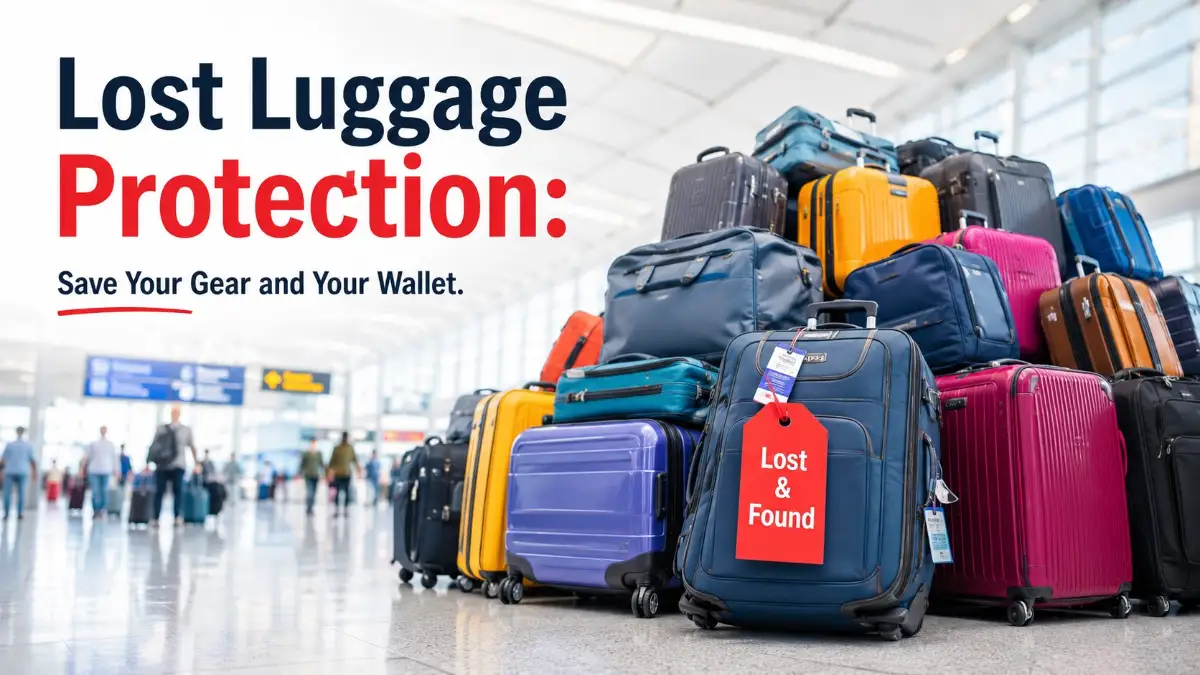
Baggage insurance covers you if your stuff is lost, stolen, or damaged. But don't just assume everything is covered for its full price. Most policies have a "per-item limit."
If your $2,000 MacBook is stolen, but your limit is $500 per item, you are going to be disappointed. I always tell my friends to take photos of their packed bags. It makes the claim process so much faster if you have proof of what you owned.
Pro Tip: I once lost my bag for three days in London. I didn't realize my insurance gave me $200 for "essential items" while I waited. I could have bought clean clothes and a toothbrush for free! Always check for "Baggage Delay" benefits in your policy.
The Most Expensive Ride You Never Want to Take
Imagine you are hiking in a remote area and you break your leg. A regular ambulance can't reach you. You need a helicopter.
In the world of travel, this is called Emergency Medical Evacuation. This is the part of the insurance that saves you from a $50,000 or $100,000 bill. It pays to get you to the nearest "adequate" hospital or even back to your home country if needed.
Many people think this is overkill. It’s not. According to data from the U.S. Department of State, medical evacuations can easily cost more than a mid-sized house.
If you are visiting a developing country where the hospitals might not be top-tier, this is the most important part of your roadmap. You want to know that if things get really bad, you aren't stuck in a place that can't treat you.
Understanding the "Excluded" List
Before you buy, you have to look at what the insurance won't do. This is where most people get frustrated.
Most basic plans won't cover "High-Risk Activities." This includes things like skydiving, scuba diving, or even mountain biking. If you are an adrenaline junkie, you need to add an "Adventure Sports" rider to your plan.
Another big one is "Pre-existing Conditions." If you are already treating a heart condition or a back injury, the insurance might not cover it unless you get a specific waiver.
I once saw a couple lose their claim because they didn't mention the husband's asthma. It felt unfair, but that is how the legal side works. Always be 100% honest when you sign up. It is better to pay a few extra dollars now than to have a claim denied later.
Why watching a real-life breakdown of these plans helps you choose faster:
Learn the secrets of choosing the right plan by watching this expert breakdown that simplifies everything for beginners.
The Breakdown of Trip Interruption
What if you are already on your trip and something goes wrong? Maybe you are five days into a ten-day tour of Japan and you get a call that your basement flooded back home.
Trip Interruption coverage helps pay for your flight back home early. It also refunds the part of the trip you didn't get to use.
This happened to my sister. She was in Bali when she got a severe infection. She had to fly home early. Her insurance paid for the new last-minute flight and gave her back the money for the five hotel nights she missed.
Without this, she would have been out an extra two thousand dollars. It is like a "reset button" for your finances when life gets messy.
Is Annual or Single-Trip Coverage Better for You?
This is a question I get asked a lot. If you only travel once a year for a week, a "Single-Trip" policy is perfect. It is cheap and covers just those specific dates.
But if you are a "weekend warrior" or someone who travels for work, an "Annual Multi-Trip" policy is a game-changer. You pay one price for the whole year, and you are covered every time you leave home (usually more than 100 miles away).
I switched to an annual plan three years ago, and it saved me so much time. I don't have to think about insurance every time I find a cheap flight. I just grab my bags and go.
If you are currently working on your travel documents, you might also want to look at The Ultimate Blueprint for a Stress-Free International Tourist Visa Application to make sure your paperwork is as solid as your insurance.
How to Read a Policy Without Getting a Headache
I know, reading insurance documents is about as fun as watching paint dry. But you don't have to read every single word. Focus on the "Summary of Benefits" page.
Look for these four things:
- The Deductible: This is the amount you pay out of pocket before the insurance kicks in. A $0 deductible is great but makes the plan more expensive. A $250 deductible is common and keeps the monthly cost low.
- The Effective Date: Make sure the coverage starts the moment you leave your house, not just when you land.
- 24/7 Assistance: Does the company have a phone number you can call at any time? This is vital when you are in a different time zone.
- Primary vs. Secondary: Primary insurance pays first. Secondary insurance asks you to try your home insurance first, which is a huge hassle. Always aim for "Primary" coverage if you can find it.
The Reality of Travel Insurance Costs
You might be wondering, "How much is this going to cost me?" Generally, you should expect to pay between 4% and 10% of your total trip cost.
If your trip costs $3,000, your insurance will likely be between $120 and $300. When you think about it, that is a small price for the peace of mind it brings.
I used to think of insurance as an "extra" cost. Now, I view it as a fixed part of my travel budget, just like my flight or my hotel. If I can't afford the insurance, I can't afford the trip. It is that simple.
Dealing with the "Fine Print" Myth
A lot of people think insurance companies are out to get them. While some are better than others, most "denied claims" happen because the traveler didn't follow the rules.
For example, if your bag is stolen, you must file a police report within 24 hours. If you wait until you get home, the insurance company will say no.
I always keep a digital folder on my phone with my policy number, the emergency contact line, and photos of my receipts. Being organized is the secret to getting paid quickly.
Finding the Right Fit for Your Style
Every traveler is different. A backpacker staying in hostels needs different coverage than a family staying at a five-star resort.
If you are staying in luxury hotels, your "Trip Cancellation" limit needs to be much higher. If you are a digital nomad, your "Baggage" limit needs to cover your tech gear.
Take five minutes to think about your biggest "financial risk" on this specific trip. Is it the expensive flights? Is it your health? Is it your gear? Once you know what you are most afraid of losing, picking a plan becomes easy.
I remember helping my mom pick a plan for her first trip to Europe. She was worried about her heart condition. We found a plan that specifically covered "Pre-existing conditions" if bought within 14 days of her first trip deposit. She felt so much safer knowing she was covered for her specific needs.
Final Thoughts on Starting Your Journey
The world is a big, beautiful place waiting for you. Don't let the fear of "what if" keep you from seeing it. By taking the time to understand these different types of coverage, you are already ahead of 90% of other travelers.
You aren't just buying a piece of paper; you are buying the right to enjoy your coffee in a plaza or your hike in the mountains without a care in the world.
Pack your bags, check your policy, and go explore. You’ve got this. I’ll see you out there on the road!
Master Strategies for Navigating Complex Travel Protection
Now that we have covered the basic building blocks of what insurance is, we need to talk about how to actually use it like a pro. Most people buy a policy, tuck it into an email folder, and forget about it. That is a huge mistake.
I learned this during a three-week trip through Southeast Asia. I had my basic policy, but I didn't understand how to bridge the gap between my credit card perks and my standalone insurance.
Many high-end credit cards offer some form of travel protection. It sounds great on paper, but when you look closer, the limits are often very low. My card covered $500 for baggage, but my camera alone was worth $1,200.
This is where the "Layering Strategy" comes in. You should use your credit card for the small things, like a four-hour flight delay. But for the big, life-changing risks like a medical emergency, you need a dedicated international policy.
Think of it like wearing a raincoat over a sweater. The sweater keeps you warm, but the raincoat keeps you dry. You need both to stay comfortable when the weather turns bad.
Another secret that seasoned travelers use is checking the "Schengen Visa" requirements, even if they aren't going to Europe. Many countries now require proof of $30,000 or more in medical coverage just to let you through customs.
I always keep a physical copy of my "Visa Letter" from my insurance company in my carry-on bag. It saves so much time at border crossings when the officials see you are prepared and covered.
Staying Ahead with Long-Term Travel Planning
If you are planning to be away for more than a month, the rules change. Regular policies often have a 30-day limit. If you stay day 31 without an extension, you might lose all your coverage.
I once met a digital nomad in Bali who thought his "annual" policy covered his entire six-month stay. It didn't. His policy only covered individual trips up to 45 days each.
Because he stayed longer without flying home, he was essentially uninsured for the last four months. Luckily, he didn't have an accident, but he was living on the edge without even knowing it.
When you plan a long journey, look for "Global Health" or "Nomad Insurance" instead of just "Travel Insurance." These are designed for people who live out of a suitcase.
They often allow you to buy the policy even if you have already left your home country. This is a lifesaver if you realize halfway through your trip that your initial coverage was too weak.
To see what health risks you might need to cover in specific regions, I highly suggest looking at the CDC Yellow Book for travel health recommendations. It gives you a clear picture of what medical issues are common in your destination.
The Secret of the Digital Paper Trail
The biggest headache in insurance isn't buying the policy; it's getting paid when something goes wrong. To make this easy, you need a "Digital Paper Trail."
Every time I buy something for my trip—a bag, a jacket, a portable charger—I take a photo of the receipt and upload it to a private folder. If my bag is stolen, I don't have to struggle to remember how much I paid for those boots three months ago.
I also take a "Bag Selfie" before I check my luggage at the airport. I take a photo of the outside and a quick photo of the inside showing the contents.
This is undeniable proof for the insurance company. It shows exactly what was in the bag and what condition it was in right before it went missing.
If you are worried about more than just your bags, like your legal papers, you should definitely read about Emergency Protocols to Follow if Your Passport or Legal Documents Are Lost in a Foreign Land. Being prepared for document loss is just as important as having insurance.

Hidden Traps That Could Ruin Your Financial Safety
There is a dark side to travel insurance that most companies don't talk about in their big, shiny ads. They have "Exclusion Clauses" that can catch even the smartest travelers off guard.
One of the most common traps is the "Alcohol and Drugs" clause. I once heard about a traveler who tripped on a sidewalk after having two cocktails at dinner.
Because the medical report mentioned he had been drinking, the insurance company denied his $5,000 hospital claim. They argued that his "judgment was impaired," even though it was a simple accident.
It feels incredibly unfair, but it is a standard rule. If you are in a situation where an accident happens, be very careful about how it is reported.
Another trap is the "Unattended Baggage" rule. If you leave your bag on the seat next to you at a cafe and walk five feet away to grab a napkin, and it gets stolen, you are likely not covered.
The insurance company expects you to have your bags "under your control" at all times. If you leave them in a shared hostel room without a locker, they will call it negligence.
I know it sounds strict, but knowing these rules helps you act differently. You become more aware, and that awareness is what keeps your money safe in the long run.
Why Lying on Your Application is a Disaster
When you are filling out the forms, it's tempting to "forget" about that minor surgery you had last month or the fact that you take blood pressure medication. You think it will make the price cheaper.
This is a dangerous game. Insurance companies are experts at digging into medical records once a big claim is filed.
If they find out you hid a pre-existing condition, they won't just deny that one claim. They might cancel your entire policy. You will be stuck in a foreign country with a massive bill and no protection at all.
I always tell my friends to be painfully honest. If the price goes up by $20, pay it. It is much better to pay $20 now than to be stuck with a $20,000 bill because of a small lie.
This honesty also applies to your activities. If you think there is even a 1% chance you might go zip-lining or jet-skiing, add the "Adventure Sports" cover.
Don't wait until you are standing at the top of a mountain to realize you aren't covered for the hike down. That kind of stress is the last thing you want on your vacation.
If you find yourself making these kinds of mistakes early in the planning phase, check out our guide on Critical Mistakes Travelers Often Make When Booking International Flights for the First Time to keep your entire trip on track.
The "Report it Now" Rule You Can't Ignore
Timing is everything when it comes to travel claims. Most people wait until they get home to start the paperwork. By then, it is often too late.
Almost every policy requires you to report a theft or loss to the local authorities within 24 hours. If you don't have a police report with a date and time stamp, your claim is basically dead on arrival.
I know it’s a pain to find a police station in a city like Mexico City or Bangkok. It can take hours. But those hours are what save your $1,000 laptop claim.
The same goes for medical issues. You need to call your insurance company's emergency line before you agree to a major surgery or a long hospital stay.
They want to talk to the doctors. They want to make sure the hospital is charging a fair price. If you do it all without telling them, they might only pay a small part of the bill.
For more data on how airlines handle these issues and what your rights are, you can check the U.S. Department of Transportation (DOT) air travel consumer reports. It shows you what you can expect from the airline before your insurance even kicks in.
A Fresh Path Toward Fearless Exploration
Taking the leap to travel the world is one of the best things you will ever do for yourself. Yes, the insurance part is a bit boring and technical, but it is the foundation that everything else sits on.
When you have the right roadmap for your coverage, you stop being a "tourist" who is worried about everything. You become a "traveler" who is ready for anything.
You can walk into that spicy food market or book that remote mountain cabin with confidence. You know that no matter what life throws at you, you have a plan to handle it.
I want you to take one small action today. Open your email or your filing cabinet and look at your current insurance options. Don't wait for your next trip. Just look at what is available.
Knowledge is power. The more you know about these rules, the less they can hurt you. Your future self, standing on a beach or a busy city street, will thank you for being so smart today.
I have seen so many people let fear stop them from traveling. But with a solid roadmap and the right coverage, that fear disappears. Go out there and see the world—it is waiting for you!
Essential Questions About Global Coverage
Can I buy travel insurance after I have already started my trip?
Most traditional companies require you to buy the policy before you leave your home country. However, there are modern companies that specialize in "Nomad Insurance" which allow you to start a policy even if you are already abroad. Just be aware there is usually a 2-3 day "waiting period" before the coverage becomes active.
Does my home health insurance cover me while I am in another country?
In most cases, the answer is no. Standard health plans usually only cover "urgent care" within your own borders. Even if they offer some coverage, they rarely pay for medical evacuation or repatriation, which are the most expensive parts of a travel emergency.
Is travel insurance worth it for a short, cheap weekend trip?
It depends on your risk level. If you have non-refundable hotel bookings and you are flying, a basic plan is still a good idea. The medical portion is the most important part—even on a two-day trip, an accident can happen, and a $20 policy is better than a $10,000 hospital bill.
What should I do if my insurance claim is denied?
Don't panic. You have the right to appeal the decision. Ask the company for a clear explanation of why they said no. Often, it is just a missing document or a misunderstanding. Provide the missing proof, stay polite but firm, and many times the decision can be reversed.
Disclaimer: This article is for informational purposes only and does not constitute professional legal or financial advice. Travel insurance policies vary greatly by provider and region. Always read your specific policy's "Certificate of Insurance" and "Terms and Conditions" before making a purchase. The author and website are not responsible for any financial losses or denied claims resulting from the use of this information.
About the Author
Munira Parveen is a dedicated Digital Content Strategist and Lead Researcher with a passion for simplifying complex topics. From navigating personal finance and emerging tech trends to uncovering the best practical lifestyle solutions, she spends her time analyzing data to bring readers highly accurate, actionable, and easy-to-understand guides. Her ultimate goal is to empower everyday people to make smarter, more informed decisions in this fast-paced digital world.
![The Ultimate Recovery Blueprint for Lost Passports in a Foreign Land [Save Your Trip]](https://nirajournal.com/storage/uploads/blogs/1785387684_the-ultimate-recovery-blueprint-for-lost-passports-in-a-foreign-land-save-your-trip.webp)