The Hidden Anxiety of Bringing Your First EV Home
I still remember the exact moment I drove my very first electric car into the garage. The excitement of the smooth, quiet ride quickly faded into a sudden wave of panic. I looked at the charging cable that came in the trunk, then looked at my standard wall outlet, and realized I had no actual plan for keeping this car running. My battery was sitting at 14 percent, and I had a long morning commute waiting for me the next day. I felt completely overwhelmed by the confusing electrical terms, the fear of doing something wrong, and the immediate dread of running out of power. It took me weeks of frustrating research and trial-and-error to finally figure out how to set up a safe, reliable home charging routine.
For most first-time owners, the transition from gas stations to a home power setup is entirely unfamiliar territory. You are suddenly expected to understand voltage, amps, and circuit breakers just to get to work the next morning. This lack of clear information often causes massive daily stress. People constantly check their battery percentage on their phones, worrying if their car will have enough juice for an unexpected trip to the grocery store.
This ongoing fear is widely known as range anxiety, but for new owners, it is actually "charging anxiety." It completely ruins the peaceful experience of owning an electric vehicle. Waking up to find out your car only gained a few miles of range overnight is incredibly frustrating. You start mentally calculating every single detour, terrified of getting stranded on the side of the highway.
Families end up fighting over who forgot to plug the car in. The mental peace you thought you would get from never visiting a gas station again is quickly replaced by confusing internet forums and expensive quotes from electricians. We buy these cars to make our lives easier and save money on fuel. However, without a proper setup, that daily charging struggle turns into a major source of emotional exhaustion.
But you do not have to live with this daily stress. Understanding how to build a reliable charging routine changes everything. You just need a clear, actionable plan that takes the guesswork out of the process.
Escaping the Guesswork: Your Actionable Power-Up Plan
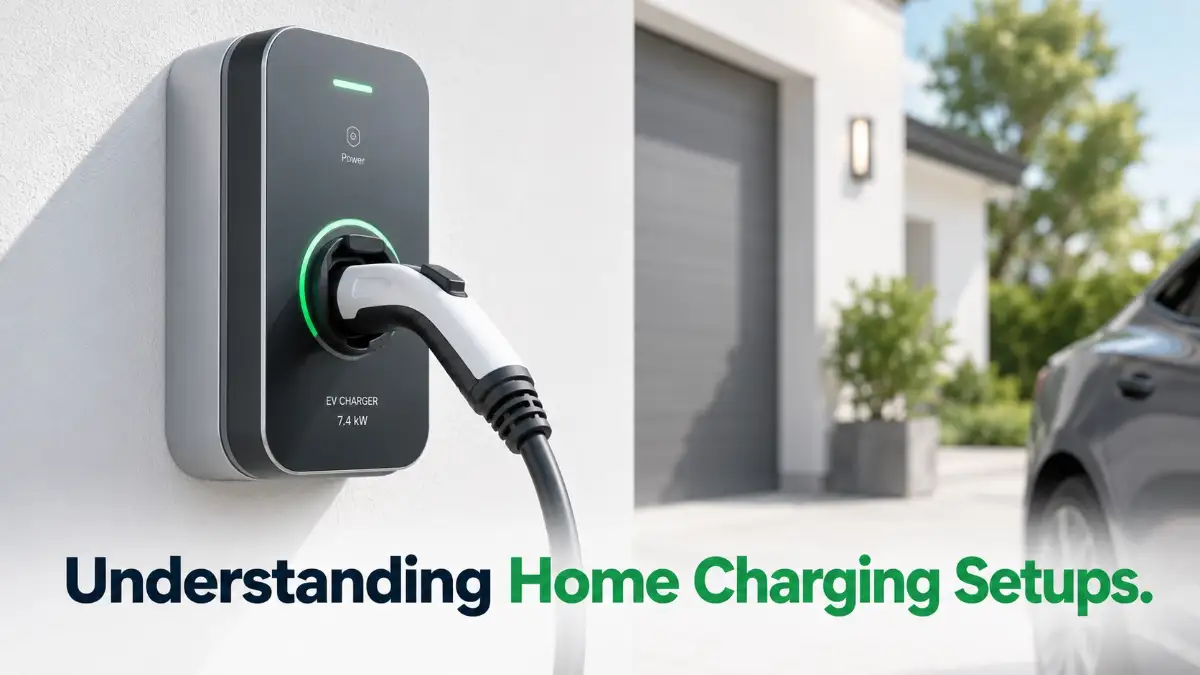
Solving the home charging puzzle is actually much easier than most people think once you break it down into simple, logical pieces. Think of electricity like water flowing through a hose. Once you understand how wide your hose needs to be, you can easily fill up your battery pool without any unnecessary stress. Let us walk through the exact steps you need to take right now to build a safe, permanent solution in your garage.
Step 1: Identifying Your Actual Driving Needs and Daily Power Use
Before you buy expensive equipment, you must figure out exactly how much power you truly use on an average day. Many people assume they need the fastest, most expensive charger available on the market. In reality, most daily commuters only travel about 30 to 40 miles a day.
If you just drive to the office, drop the kids off at school, and come back home, your battery is barely emptying out. You do not need to replace a completely empty battery every single night. You just need to top off what you used that specific day. Understanding this simple fact will save you thousands of dollars.
Take a piece of paper and track your actual daily mileage for a week. Multiply your average daily miles by three to account for extremely cold weather or unexpected heavy traffic. This final number gives you a highly realistic view of what your home charging system actually needs to handle on a daily basis.
Step 2: Choosing Between Level 1 and Level 2 Systems
Now that you know your daily driving distance, you can decide which type of electrical "hose" you need. Your car likely came with a basic charging cord that plugs directly into a standard 120-volt wall outlet. This is known as Level 1 charging.
Level 1 charging is basically like filling a swimming pool with a garden hose. It will give you roughly 3 to 5 miles of range for every hour it is plugged in. If your daily commute is extremely short, and your car sits in the garage for 12 hours every night, this basic setup might actually be completely fine for your lifestyle.
However, if you drive more than 40 miles a day, you will absolutely need to upgrade to a Level 2 charging station. A Level 2 system uses a 240-volt connection, which is the exact same type of heavy-duty plug used by large electric clothes dryers. This acts like a massive fire hose, delivering between 15 and 30 miles of range per hour.
With a Level 2 setup, you can plug your car in with a nearly empty battery at 10 PM and wake up to a completely full tank at 6 AM. This is where true mental peace happens. Knowing you will always wake up to maximum range completely eliminates the daily charging anxiety.
If you want to know how charging habits impact your battery lifespan over time, read this: The Ultimate Beginner's Guide to EV Battery Health and Range.
Step 3: Evaluating Your Home's Electrical Panel Capacity
This is the part where most new owners get entirely stuck, but it is actually highly logical. Every home has an electrical panel, usually located in the basement, garage, or on an exterior wall. This metal box contains all the circuit breakers that control the electricity flowing through your house.
Open the panel door and look for the main breaker switch at the top or bottom. It will have a number printed on it, usually 100, 150, or 200. This number tells you the total amount of amps your house can handle at one single time.
If you live in an older home with only a 100-amp panel, running your air conditioning, an electric oven, and a Level 2 car charger all at once might overload your system and trip the main breaker. A modern Level 2 system usually requires a dedicated 40-amp or 50-amp circuit all to itself.
If your home only has 100 amps total, you might need an electrician to perform a panel upgrade before installing a fast charger. Upgrading your electrical panel makes your entire home safer and heavily increases your property value. You can always check the [U.S. Department of Energy guidelines on charging plug standards] for specific safety ratings before you buy any hardware.
I actually learned this lesson the hard way during my first month of ownership. I tried running my microwave while my car was plugged into a shared garage circuit, and everything instantly went dark. My pro tip: Always label your garage breakers clearly with a marker, so you know exactly which outlets share the same power line.
Step 4: The Absolute Rules of Charging Safety
When dealing with continuous, high-voltage electricity, safety cannot be ignored. A car charger pulls a massive amount of power for many hours continuously. Standard wall outlets in older homes were never designed to handle this kind of constant heat and stress.
Never, under any circumstances, use a standard extension cord to charge your electric vehicle.
Extension cords are simply not built to handle the intense heat generated by hours of continuous electrical draw. They can easily melt, spark, and cause serious electrical fires in your garage. If your cord cannot reach the car, you must move the car closer or have an electrician install a new outlet in a better location.
Furthermore, you must ensure the outlet you use is properly grounded. If you are using a standard 120-volt wall outlet for Level 1 charging, it should ideally be a GFCI (Ground Fault Circuit Interrupter) outlet. These are the specific outlets with the little "Test" and "Reset" buttons on them, designed to instantly cut power if they detect a dangerous electrical surge or water exposure.
Step 5: Hiring a Qualified Electrician
Unless you are a professionally trained electrician, you should never attempt to wire a 240-volt Level 2 charging station yourself. The risk of serious injury or starting a home fire is simply too high. You need to hire someone who completely understands local building codes and load calculations.
When calling local electricians for quotes, specifically ask if they have experience installing Electric Vehicle Supply Equipment (EVSE). A qualified professional will pull the proper local permits required by your city. Pulling permits means a city inspector will double-check the work to ensure everything meets strict fire safety standards.
Do not go with the cheapest quote if the person refuses to pull a permit. An unpermitted electrical job can void your homeowner's insurance policy if a fire ever happens. Paying a little extra for a licensed, insured, and permitted professional guarantees you can sleep peacefully while your car charges.
Before investing in expensive equipment, make sure you know what is true and what is false about battery degradation here: Myth or Fact? The Ultimate Truth About EV Batteries Exposed.
Step 6: Picking the Right Hardware for Your Garage
If you decide to go with a Level 2 charging station, you will need to buy the actual wall unit. The market is flooded with hundreds of different brands, which can feel highly confusing. You generally have two main choices: hardwired units or plug-in units.
A hardwired unit is permanently connected straight into your home's electrical wiring by the electrician. These units look incredibly clean on the wall and can often deliver slightly faster charging speeds. Because there is no visible plug to pull out, they are also highly weather-resistant if you need to install the charger outdoors in your driveway.
A plug-in unit requires the electrician to install a heavy-duty NEMA 14-50 outlet on your wall first. Then, you simply mount the charging box and plug it into that new outlet. The huge benefit here is portability. If you ever move to a new house, you simply unplug your expensive charger, pack it in a box, and take it with you.
When shopping for the unit itself, always look for the UL Listed safety mark on the box. This certification means an independent safety organization has rigorously tested the charger to ensure it will not overheat or cause electrical shorts.
Step 7: Managing Electricity Costs and Off-Peak Charging
Many new owners are terrified of their first electric bill after bringing their car home. They assume their monthly energy costs will skyrocket out of control. While your electric bill will indeed go up, it is almost always significantly cheaper than what you used to spend on liquid fuel every month.
The secret to saving massive amounts of money is understanding your local utility company's pricing structure. Many utility companies offer special "Time of Use" rate plans. This means electricity is highly expensive during the day when everyone is running air conditioners and factory machines.
However, deep in the middle of the night, power is incredibly cheap because overall demand is so low. You can easily program your car's internal computer, or your smart charging station, to only pull power between midnight and 6 AM.
Smart Charging Will Save Your Wallet
Check out this quick breakdown of how setting a charging schedule actually works in real life:
By simply telling your car to wait until midnight to start drawing power, you can literally cut your fuel costs in half without doing any extra manual work. You just plug the car in when you get home from work at 5 PM. The smart charger keeps the power paused until the cheap electricity window opens up while you are sleeping.
You should absolutely call your local power provider and ask if they have specific rebates for electric vehicle owners. Many utility companies will actually give you hundreds of dollars in statement credits just for installing a Level 2 charger, and they might even offer a completely separate, cheaper billing meter just for your car. You can also review the [National Fire Protection Association safety codes] to ensure your new meter installation follows residential guidelines.
Overcoming Weather Challenges and Battery Chemistry
It is highly important to understand how outside temperatures affect your home charging routine. Batteries are essentially chemical boxes, and they heavily prefer being at comfortable room temperature. Extreme cold makes the chemical reactions inside the battery move much slower.
If you live in a region with freezing winters, your car will take significantly longer to fill up overnight. A large portion of the wall power is initially used just to heat up the battery pack itself before it can actually store any driving energy. This is a very normal scientific process, but it catches many beginners off guard.
If your car is parked outside in the freezing snow, a basic Level 1 wall outlet might not even provide enough power to warm the battery and charge it at the same time. The car might literally use all the provided electricity just to keep the battery from freezing, leaving you with zero new driving miles in the morning.
This is exactly why having a powerful Level 2 system is so highly recommended for people who experience rough winters. The 240-volt connection supplies more than enough energy to comfortably heat the battery pack while simultaneously pushing fresh driving range into the car.
During extreme summer heat waves, the process flips. The car uses electricity to run cooling fans underneath the vehicle while plugged in. Do not be alarmed if you hear loud fan noises coming from your garage while the car is turned off and charging. It is simply the computer actively protecting your expensive battery from heat damage.
Keeping your vehicle plugged in during extreme weather, even when the battery is completely full, allows the car to use wall electricity to manage its temperature. This prevents the car from draining its own battery just to stay cool or warm. By managing these small details, your daily experience becomes incredibly smooth, predictable, and stress-free.
Mastering Your Daily Power Station for Maximum Battery Life
Setting up your home charging equipment is only the first part of the journey. If you want to keep your car running perfectly for a long time, you need to understand how to maintain the system itself. Many new owners simply plug their cars in and walk away, completely ignoring the basic health of their hardware.
Just like you take care of your smartphone to keep it running smoothly, your electric vehicle needs a few specific habits to stay healthy. Building these habits early on will save you from extremely expensive repairs down the road. Let us look at a few highly advanced strategies that experienced owners use to protect their batteries and equipment.
The Magic of the Eighty Percent Rule
One of the biggest secrets to long-term battery health is understanding exactly how much power your car actually wants. Batteries are basically tiny chemical factories, and they absolutely hate being stuffed completely full. Think about how you feel after eating a massive holiday dinner; you feel stretched, sluggish, and uncomfortable.
Your car battery feels the exact same way when it is forced to hold a 100 percent charge every single night. The internal cells undergo massive physical stress when packed completely full of energy. The [National Renewable Energy Laboratory research on lithium-ion cells] clearly shows that keeping a battery constantly maxed out dramatically reduces its overall lifespan.
To avoid this unnecessary stress, you should go into your car's main computer screen and set the daily charge limit to 80 percent. This leaves comfortable breathing room inside the battery cells. You will still have plenty of driving range for your normal daily commute without causing any internal chemical damage.
Of course, if you are planning a massive road trip tomorrow morning, it is perfectly fine to slide that limit up to 100 percent for the night. You just do not want the car sitting in your garage completely stuffed with energy for days on end. Managing this daily limit is the easiest way to ensure your battery outlasts the car itself.
Protecting Your Physical Equipment
Your charging cable is the main lifeline of your entire electric driving experience. Despite its thick rubber exterior, the inside is filled with highly sensitive copper wires that can easily snap under pressure. Many people lazily drop the cable on the hard garage floor and accidentally run over it with their heavy tires.
Every time a tire crushes that cord, tiny internal wires begin to break and fray. Eventually, the cable will overheat, stop working entirely, or even cause a dangerous electrical short circuit. You must build a strict daily habit of neatly coiling the cable and hanging it on a proper wall mount.
Keep the connector nozzle completely clean and dry at all times. Dust, dirt, and dead bugs can easily find their way inside the little plastic holes of the plug. If these metal contact points get dirty, the electricity cannot flow smoothly, and the handle will become dangerously hot during the night.
Leveraging Smart Software Updates
Your electric car and your smart home charger are essentially giant rolling computers. They constantly receive wireless software updates through your home Wi-Fi network. These updates often include massive improvements to how the car manages electricity and protects its battery cells.
Many beginners never connect their charging station to their home internet router. Because of this simple oversight, they completely miss out on free performance upgrades and highly important safety patches. Always make sure your garage has a strong enough Wi-Fi signal to reach your charging equipment.
If your internet router is too far away, consider buying a simple Wi-Fi extender and plugging it into a nearby wall. This guarantees your car and charger can always communicate directly with the manufacturer. You might wake up one morning and find your car actually drives further than it did the day before, just from a quick software patch.
Curious about how different hardware actually impacts your speed? Why Some Electric Cars Charge Faster Than Others and the Key Factors Behind It.
The Hidden Traps That Can Ruin Your Daily Driving Routine
Even with the best intentions, new electric vehicle owners easily fall into a few highly damaging traps. These mistakes usually happen because people apply old gas-station logic to their brand-new electric hardware. The consequences of these basic errors range from highly annoying morning surprises to severely dangerous garage fires.
Learning exactly what to avoid is just as important as knowing what to do right. I have seen too many excited new owners ruin their expensive equipment simply because they tried to cut corners. Let us break down the most dangerous pitfalls you must avoid at all costs.
The Cheap Adapter Trap
The internet is absolutely flooded with cheap, unbranded electrical adapters that promise to make charging easier. You might find a heavy-duty plug converter on a random website for a fraction of the cost of a name-brand unit. Buying these completely untested devices is the absolute biggest mistake you can possibly make.
These cheap adapters rarely carry any official safety certifications. They are built with highly inferior metals that cannot safely handle the intense heat generated by a car pulling massive amounts of electricity. When you plug them into the wall, they can literally melt into a dangerous puddle of plastic within a few hours.
The [Electrical Safety Foundation strongly warns against uncertified heavy appliances] because they are a leading cause of sudden residential fires. Always stick to equipment provided directly by your car manufacturer or highly reputable, certified electric brands. Saving fifty dollars on a cheap internet cord is never worth risking your entire home and family.
Ignoring the Pre-Conditioning Feature
Many new drivers complain that their driving range magically disappears during the freezing winter months. They unplug their cold car in the morning, turn on the heater, and watch their battery percentage drop like a rock. This happens because they completely ignore their vehicle's built-in "pre-conditioning" feature.
Pre-conditioning allows you to schedule a specific departure time on your smartphone app. The car will use the electricity flowing straight from your house to warm up the battery and heat the cabin before you even open the door. Because the car uses wall power instead of battery power, you drive away with a warm car and a completely full tank.
If you forget to use this feature, the frozen battery has to work twice as hard just to heat itself up while you are driving down the highway. This simple mistake can easily cost you twenty to thirty miles of actual driving range on a cold morning. Always let the wall electricity do the heavy lifting before you pull out of the driveway.
The Shared Circuit Disaster
Garages are usually filled with random appliances like extra freezers, power tools, and heavy-duty space heaters. Many older homes have all of these garage wall outlets wired into one single electrical circuit. This means they all share the exact same limited pool of available power.
If you plug your car into a standard outlet that is sharing a circuit with a large basement freezer, you are asking for trouble. When the freezer's massive cooling compressor kicks on in the middle of the night, the sudden spike in electricity will instantly trip the circuit breaker.
You will wake up the next morning, get dressed, and walk into the garage only to realize your car has zero new driving miles. The power stopped flowing hours ago because the breaker successfully prevented a massive electrical overload. Always ensure your charging equipment has its own completely dedicated power line, completely separated from your heavy household appliances.
Want to know what else might be secretly hurting your battery? Common EV Charging Mistakes That Can Slow Down Performance Over Time.
Stepping Into Your Stress-Free Electric Future
Transitioning to electric driving should entirely remove the stress of hunting for dirty, overpriced gas stations. Building a solid, reliable power station right inside your own garage puts you in complete control of your daily routine. You now have the exact knowledge needed to make this transition incredibly smooth and highly rewarding.
The fear and confusion you felt on your very first day will quickly become a distant memory. Once your equipment is properly installed and your software is scheduled, the entire process becomes entirely invisible. You simply arrive home, plug in the cord, and completely forget about it until the next morning.
You will save a massive amount of money on fuel, skip the long lines at public fast chargers, and enjoy the true luxury of electric ownership. Treat your battery with respect, keep your cables perfectly clean, and always prioritize electrical safety above everything else.
By applying these simple daily habits, your vehicle will reward you with thousands of miles of quiet, extremely reliable performance. Take the time to get your setup right today, so you can spend your weekends actually enjoying the open road.
My mornings completely changed once I got this system running properly and safely. I no longer wake up in a sudden panic, and my car is always fully prepared for whatever unexpected trips the day throws at me. You absolutely deserve that exact same peace of mind, so take action today and set your garage up the right way.
Everyday Questions New Electric Car Owners Ask
Can I leave my electric car plugged in all the time?
Yes, it is actually highly recommended to leave your vehicle plugged in whenever you are parked at home. The car's internal computer is incredibly smart and will automatically stop pulling power the exact second the battery reaches your set limit. Staying connected simply allows the car to use wall power to keep the battery warm or cool without draining your driving range.
Will charging my car every single night ruin the battery?
Charging every night is completely safe as long as you do not force the battery to hold a full 100 percent charge every time. If you set your daily limit to roughly 80 percent, you can safely plug it in every single evening without causing any internal damage. Treating it like your smartphone and keeping it comfortably topped off is actually the best habit you can build.
Is it safe to charge my electric car while it is raining outside?
Absolutely. Both the vehicle's charging port and the heavy-duty cable are completely weather-sealed and specifically designed to handle heavy rain and thick snow. The system undergoes rigorous safety testing and will immediately cut the power if it detects even a single drop of water inside the actual electrical connection.
What happens if the power goes out while my car is charging?
If your neighborhood experiences a sudden power outage, the charging process will safely pause immediately without harming your vehicle. Once the electricity is eventually restored to your home, the car will automatically detect the power and resume charging on its own. You do not need to walk out to the garage in the dark to reset the system or unplug the cable.
Can I wash my car while it is plugged into the wall?
While the charging connection is heavily waterproofed, it is generally best practice to unplug the vehicle before breaking out the soap and heavy water hose. You do not want high-pressure water directly hitting the connection point for long periods of time. Simply unplug the heavy cord, securely close the plastic charging door, and wash your car normally.
Disclaimer: The information provided in this article is for educational and informational purposes only. Electrical installations carry significant safety risks and should only be performed by certified, licensed professionals. Always consult your vehicle's official manual, local building codes, and a qualified electrician before making any changes to your home's electrical system. We do not assume any liability for property damage or personal injury resulting from the application of this information.
About the Author
Munira Parveen is a dedicated Digital Content Strategist and Lead Researcher with a passion for simplifying complex topics. From navigating personal finance and emerging tech trends to uncovering the best practical lifestyle solutions, she spends her time analyzing data to bring readers highly accurate, actionable, and easy-to-understand guides. Her ultimate goal is to empower everyday people to make smarter, more informed decisions in this fast-paced digital world.