The Frustrating Wait: My Personal Wake-Up Call at the Pump
I clearly remember sitting at a public charging station on a freezing, rainy morning, completely staring at my dashboard in disbelief. The glowing screen confidently told me it would take another two full hours to reach an 80% charge. I felt completely trapped inside my own vehicle.
Meanwhile, a guy pulled up next to me in a totally different electric vehicle. He casually plugged his car in, walked over to get a cup of coffee, and drove away just twenty minutes later. I sat there with a mix of jealousy and pure confusion. Why was his car drinking electricity so fast while my car seemed to just sip it slowly?
My mind started racing with questions. Was I doing something wrong? Was the charging station broken? I realized right then that buying an electric vehicle comes with a massive learning curve. I spent the next few weeks trying to figure out exactly why my charging experience was so painfully slow compared to others on the road.
If you own an electric vehicle, or if you are planning to buy one soon, you have probably felt this exact same anxiety. Range anxiety and charging times are the biggest mental roadblocks for everyday drivers today. People just want to get to work, drop their kids at school, or head out on a weekend road trip without planning their entire day around a power outlet.
When you do not understand how charging speeds actually work, owning an electric vehicle feels more like a burden than a fun experience. You might find yourself sitting in dark parking lots late at night, watching the battery percentage crawl up by a single digit every five minutes. It completely ruins your mental peace. You start regretting your purchase and missing the old days of simply pumping gas in two minutes.
The fear of getting stuck with a dead battery on the highway is a very real emotion. You constantly check your phone apps, trying to find the best public stations, only to arrive and realize your car refuses to accept the station's top speed. This lack of clear information leaves ordinary drivers feeling helpless.
But you do not have to feel helpless anymore. Once you understand the hidden rules of battery power, everything changes. You can finally take control of your time, plan your trips perfectly, and actually enjoy the smooth, quiet ride of your electric vehicle without the constant stress of the battery meter.
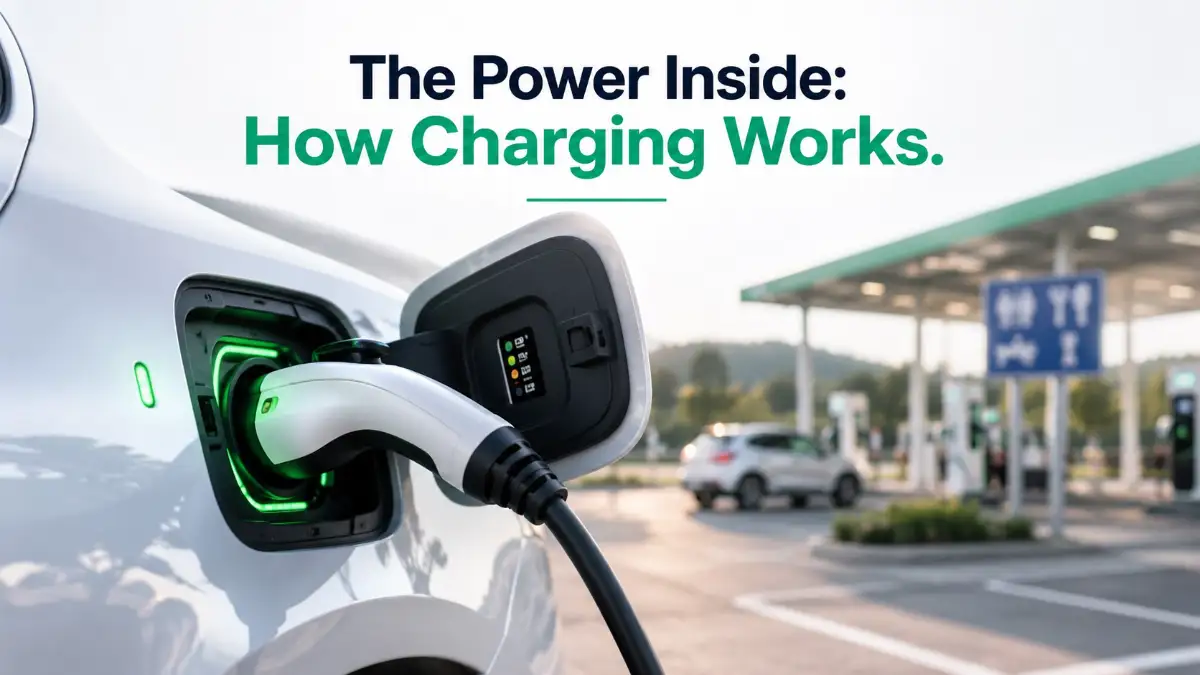
The Secret Language of Batteries: How to Speed Up Your EV Experience
Understanding why one car finishes charging while another takes hours requires looking under the hood. It is not magic. It is simply a matter of chemistry, engineering, and the way you treat your vehicle daily. You can actually make smarter choices starting today to improve your daily driving routine. Let us break down the exact reasons behind different charging speeds so you never have to guess again.
The Brain of the Operation: Your Car Controls the Speed, Not the Charger
One of the biggest myths in the electric vehicle world is that a faster public station guarantees a faster charge for your car. People think if they plug into a massive 350kW super-station, their car will finish in ten minutes. This is completely false. Your car is the boss, and it dictates exactly how much power it can safely swallow.
Every electric vehicle has an internal maximum charging capacity set by the manufacturer. If your specific model has a maximum DC fast charging limit of 50kW, plugging it into a 350kW station will not make it charge any faster. The station will simply lower its power output to match what your car can handle.
Think of it like drinking water from a fire hydrant through a tiny plastic straw. The fire hydrant has massive power, but the straw can only let a little bit of water through at a time. The physical hardware inside your vehicle acts exactly like that straw.
I used to make this exact mistake all the time. I would drive miles out of my way to find the most powerful, expensive charging station in the city, thinking I was saving time. I quickly learned the hard way that feeding a low-capacity car from a high-power station only drains your wallet, not your charging time!
If you understand your car's specific hardware limits, you can stop wasting time hunting for ultra-fast chargers that your car cannot even use. This also applies when you are plugging in inside your own garage. The Ultimate Beginner's Guide to Charging an Electric Car at Home You need to match your home equipment perfectly to your car's internal limits to get the best results.
The Power Pipeline: Understanding Vehicle Architecture
If you want to know why luxury electric cars power up so quickly, you have to look at their electrical architecture. Most standard electric vehicles run on what is called a 400-volt system. These systems are reliable, safe, and relatively cheap to produce. However, they naturally limit how fast energy can travel into the battery pack.
Newer, premium models use an 800-volt architecture. This is a total game-changer. By doubling the voltage, engineers can push twice as much power into the battery without overheating the wires. This is the exact reason why that guy at the charging station was able to leave after twenty minutes while I was stuck waiting.
An 800-volt system allows the car to accept well over 200kW of power effortlessly. This means you can add hundreds of miles of range in the time it takes to use the restroom and buy a snack.
Watch this breakdown of how voltage changes your driving experience forever.
According to detailed research on electric infrastructure by the Alternative Fuels Data Center, higher voltage vehicles are the primary reason we are seeing a massive drop in highway waiting times. When a car has an 800-volt system, the internal cables can actually be thinner and lighter. This reduces the overall weight of the vehicle, which ironically helps the car drive further on a single charge.
So, when you are comparing two different cars, the one with the higher voltage system will almost always win the race at the public station. It is a fundamental difference in how the vehicle is built from the ground up.
The Goldilocks Rule: Why Temperature is Everything
Batteries are incredibly sensitive to the weather. They are basically like humans; they do not like being too hot, and they absolutely hate being too cold. If you try to force high-speed electricity into a freezing cold battery, the internal chemical reactions physically cannot keep up.
To protect itself from permanent damage, a cold battery will automatically slow down the incoming power flow. This is why a session that takes 30 minutes in the summer might take an hour and a half in the middle of winter.
Preconditioning is the secret weapon that smart drivers use to save time. Most modern electric cars have a feature that warms up the battery before you even arrive at the plug. If you put the charging station into your car's navigation system, the car will secretly start heating up the battery while you are driving.
By the time you pull into the parking lot, the battery is at the perfect "Goldilocks" temperature. It is not too hot, and it is not too cold. Because the temperature is perfect, the car can immediately start pulling in electricity at maximum speed.
If you ignore temperature management, you will slowly damage the internal cells over time. The Ultimate Beginner's Guide to EV Battery Health and Range Taking care of the temperature is the single best way to ensure your vehicle lasts for hundreds of thousands of miles without degrading.
The Movie Theater Analogy: Explaining the Charging Curve
Many new drivers get angry when their car charges rapidly for the first 15 minutes, and then suddenly slows down to a crawl. They think the public station is trying to scam them out of their money. In reality, this slow-down is a completely normal, highly protective software feature called the "charging curve."
Imagine a large movie theater that is completely empty. When the doors open, a huge crowd of people can run inside and find empty seats instantly. This represents a completely empty battery (from 0% to 50%). The electricity flows in incredibly fast because there is plenty of open space inside the battery cells.
Now, imagine the theater is 80% full. People entering the theater now have to walk very slowly, look down the rows, and carefully squeeze past other people to find a single empty seat. This perfectly explains why charging from 80% to 100% takes so ridiculously long.
The car's computer intentionally slows down the electricity flow as the battery gets full to prevent heat buildup and fire risks. According to battery safety guidelines published by the U.S. Department of Energy, forcing maximum power into a nearly full battery can cause severe chemical stress.
This is why experienced electric vehicle owners rarely charge all the way to 100% at a public station. It is a massive waste of time. The smartest strategy is to plug in when your battery is low, charge it up to 80% very quickly, and then hit the road. You can easily do the slow top-off charge later when you are safely parked in your own driveway overnight.
Battery Size Matters: The Big Tank vs Small Tank Reality
Sometimes, the answer to why one car charges faster than another is just simple math. A vehicle with a massive 100 kWh battery pack simply has more physical space to store energy than a smaller car with a 50 kWh pack.
Even if both cars are charging at the exact same speed, the larger battery will take much longer to reach 100%. However, because the larger battery holds more energy overall, a 20-minute charge might give the big car 150 miles of driving range, while the same 20-minute charge only gives the small car 80 miles.
You have to stop looking at the percentage number and start looking at the miles added. The goal is not to have a completely full battery every time you stop. The goal is simply to get enough miles to reach your next destination safely.
When you shift your mindset from "I need 100%" to "I need enough miles to get home," the whole experience becomes completely stress-free.
The Hidden Software Limitations
Sometimes, the physical hardware is perfectly fine, but the car's computer is holding you back. Car manufacturers frequently release over-the-air software updates that change how the vehicle manages power.
A company might realize that their original charging speeds were causing too much heat, so they quietly send an internet update to lower the maximum speed. On the flip side, they might find a way to optimize the battery chemistry and send an update that actually makes your car charge faster overnight!
Always make sure your car is connected to Wi-Fi while parked at home. I once ignored a software update notification for a month, only to discover later that the update contained a massive improvement for cold-weather fast charging.
Your car is essentially a giant computer on wheels. Keeping the software fresh ensures you are getting the absolute best performance that the factory engineers intended.
Making the Right Choice at the Station
The next time you pull up to a row of public chargers, pay close attention to the labels on the machines. You will often see numbers like 50kW, 150kW, or 350kW printed clearly on the front.
If your car's maximum capability is 150kW, do not block the 350kW machine if a 150kW machine is open next to it. Leave the ultra-fast machine for the cars that actually have an 800-volt architecture. This kind of charging etiquette helps everyone get back on the road faster.
Learning the unique personality of your electric car takes a little bit of patience. Every model behaves slightly differently depending on the brand, the software, and the physical battery size.
Once you memorize your car's maximum speed limit, master the art of battery preconditioning, and follow the 80% rule, you will never feel trapped at a station again. You will confidently plug in, grab your coffee, and drive away long before the person next to you has even figured out why their screen says they have a two-hour wait. Take control of your daily routine and enjoy the true freedom of electric driving!
Mastering the Art of Efficient Power Management
One of the most powerful things you can do is learn how to plan your stops before you even leave your driveway. Many new owners just drive until the battery is low and then look for the nearest plug. This is a recipe for frustration and long wait times.
Instead, you should look for chargers that match your car's peak performance. If you know your car can only handle 150kW, do not waste time or money at a 350kW station if a 150kW one is available. You are essentially paying for a service your car cannot even use.
I learned this the hard way during a long trip across the state. I kept stopping at the most expensive "ultra-fast" stations, only to see my car stay at a steady, slow pace. I was throwing money away while waiting just as long as I would have at a cheaper station.
You should also look into apps that provide real-time data on charger health. Sometimes a station says it provides 250kW, but if three other cars are plugged in next to you, that power might be split. This is known as "power sharing," and it can cut your charging speed in half instantly.
Before you plug in, check if the station is "balanced" or "dedicated." Dedicated stations give you the full power regardless of who else is around. This simple check can save you thirty minutes of sitting in your car staring at the rain.
The Secret Strategy of "Buffer Charging"
Expert drivers rarely talk about how much they charge; they talk about the "buffer." This means keeping your battery between 20% and 80% as much as possible. This range is where your car is the happiest and most efficient.
When you stay within this "sweet spot," the battery cells can move energy around with very little resistance. It is like a wide-open highway with no traffic jams. Once you go above 80%, the "traffic" inside the battery becomes a nightmare, and everything slows down.
If you are on a long road trip, it is actually faster to stop twice for 15 minutes each than to stop once for an hour. This sounds like it makes no sense, but the math proves it. Two quick sessions at high speed will get you more miles than one long session that crawls at the end.
This approach also protects the long-term health of your vehicle. Charging to 100% every single day puts a lot of stress on the chemical components inside. If you want your car to stay fast for many years, you need to treat the battery with respect.
Learning these habits early will make your life so much easier. Myth or Fact? The Ultimate Truth About EV Batteries Exposed is a great place to learn more about how these chemical reactions actually work over time. You will find that most of the "rules" people tell you are just old myths from the days of cell phone batteries.
Planning for the "Vampire Drain"
Have you ever parked your car at night with 50% and woken up to find it at 48%? This is what the community calls "vampire drain." Your car is a computer that never truly sleeps. It is always checking for updates, monitoring the temperature, and staying ready for your next command.
To minimize this, you should try to keep your car plugged into a standard home outlet if you are leaving it for a long time. Even a slow "trickle charge" can keep the computer running without draining the main battery. This ensures that when you are ready to go, your car has the maximum amount of energy available.
If you live in an area with very high or very low temperatures, this is even more important. The car will use its own battery power to keep itself from freezing or overheating. By staying plugged in at home, the car uses the house's power instead of its own "fuel."
According to research by the International Energy Agency, managing these small energy losses is key to making electric cars work for the average person. It is all about those small, daily habits that add up over a month.

The Costly Errors That Drain Your Battery and Patience
Many drivers fall into the trap of "Full Tank Syndrome." This is the habit of wanting your car to be at 100% every time you leave the house. While this was great for gas cars, it is actually a mistake for electric ones.
If you insist on reaching 100% at a public fast charger, you are going to spend a lot of time and money for very little gain. The last 10% of a charge can take as long as the first 50%. It is a frustrating experience that leads to "charger rage" and a bad mood.
I once sat behind a driver who was waiting for their car to go from 98% to 100%. They sat there for twenty minutes just to get those last two percentage points. In that same time, they could have driven fifteen miles toward their destination.
Another major mistake is ignoring your tire pressure. It might seem unrelated to charging, but low tire pressure creates more friction on the road. This means your car has to work harder and use more energy to move.
When your car uses energy faster, you have to charge more often. This creates a cycle where you feel like the car is always "thirsty" for power. Keeping your tires at the perfect setting is the easiest way to "speed up" your charging by simply needing to do it less often.
The Hidden Danger of "Cold Starts" at the Plug
One of the biggest mistakes you can make in winter is driving straight to a fast charger without warming up the battery. As we discussed in the first part, a cold battery is a slow battery. If you pull up to a charger "cold," the car will spend the first twenty minutes just warming itself up.
You will see the screen showing a very low charging speed, and you might think the station is broken. In reality, the car is protecting you. It is refusing to take the power because it knows the cold cells could be damaged.
Always use your car's built-in navigation to find the charger. Even if you know exactly where the station is, tell the car you are going there. This "tricks" the car into starting the pre-conditioning process so the battery is warm and ready the moment you plug in.
This is a common issue that leads to many people regretting their purchase. Common EV Charging Mistakes That Can Slow Down Performance Over Time provides a deeper look into why these habits can eventually lead to a permanent loss of range. You want to avoid these traps to keep your car feeling like new for as long as possible.
Ignoring the Power of Software Updates
Your car is not a static piece of metal; it is a living software platform. Many people ignore the "Update Available" notification on their dashboard because they are in a hurry. This is a massive mistake that can cost you hours at the pump.
Engineers are constantly finding new ways to make the battery accept power more safely and quickly. A single software update could potentially shave ten minutes off your charging time. If you skip these updates, you are literally driving a slower version of your car.
I remember a specific update that changed how my car handled the cooling fans during a charge. Before the update, the fans were loud and the charging was slow. After the update, the car stayed much cooler and finished the session much faster.
The software also helps the car communicate better with different brands of charging stations. Not all chargers "speak" the same language. Software updates act like a translator that helps your car get the best possible service from every plug you encounter.
The Importance of High-Quality Home Equipment
While public charging is what people worry about most, your home setup is where you spend most of your time. Using a cheap, uncertified charging cable can be a slow and dangerous mistake. If the cable gets too hot, the car will automatically slow down the energy flow to prevent a fire.
You should always invest in a high-quality Level 2 home station if possible. These units are built to handle high power for hours at a time without breaking a sweat. They also come with smart features that let you schedule your charging for when electricity is cheapest.
According to technical reports from J.D. Power, owners who have a dedicated and professionally installed home charger are significantly happier with their vehicles. They don't have to worry about public stations as much because they leave the house with a "full" 80% charge every single morning.
Your New Journey Toward Stress-Free Driving
Owning an electric vehicle should be an exciting and fun part of your life. It is about quiet rides, instant speed, and helping the environment. Once you stop treating it like a gas car and start understanding the "Secret Language of Batteries," the stress simply melts away.
You now have the tools to plan your trips like a pro. You know when to plug in, when to unplug, and how to keep your battery healthy for the long haul. You are no longer at the mercy of a glowing screen or a confusing charging station.
Remember that every car has its own personality. Take a few weeks to watch how your car reacts to different weather and different chargers. Soon, you will be the one casually walking back with a cup of coffee while others look on in confusion.
The future of driving is electric, and you are already ahead of the pack. Embrace the learning curve, stay curious, and enjoy the freedom that comes with true knowledge. You have the power to make every trip a smooth and enjoyable adventure.
I truly believe that once you master these small tips, you will never want to go back to a gas station again. My own driving life became so much more peaceful the moment I stopped fighting the battery and started working with it. I hope you feel that same sense of freedom and excitement every time you get behind the wheel!
Common Questions About EV Charging Speeds
Does using the heater while charging slow down the process?
Yes, using the cabin heater or air conditioning takes power directly from the charger. This means there is less energy available to go into the battery cells. If you want the fastest possible charge, it is best to turn off the climate control for a few minutes.
Can I leave my car plugged in all night every night?
It is generally safe to leave your car plugged in at home, as modern cars have "smart" systems to stop the flow of power when needed. However, you should set your car's limit to 80% for daily use. Only charge to 100% if you are planning a very long trip immediately after.
Why does my charging speed drop so much after 80%?
This is a safety feature called the "charging curve." As the battery gets full, it becomes harder to "push" more energy into the cells without creating too much heat. The car slows down the speed to protect the battery from damage and ensure a long life.
Will fast charging my car every day ruin the battery?
While modern batteries are very tough, constant use of ultra-fast DC chargers can cause more wear than slow home charging. It is best to use fast chargers for road trips and rely on Level 2 charging at home or work for your daily needs.
Disclaimer: This article is for informational purposes only. Always refer to your vehicle's owner manual for specific charging instructions and safety guidelines. Battery performance can vary based on model, age, and environmental conditions. We are not responsible for any damage or loss resulting from the use of the information provided in this post.
About the Author
Munira Parveen is a dedicated Digital Content Strategist and Lead Researcher with a passion for simplifying complex topics. From navigating personal finance and emerging tech trends to uncovering the best practical lifestyle solutions, she spends her time analyzing data to bring readers highly accurate, actionable, and easy-to-understand guides. Her ultimate goal is to empower everyday people to make smarter, more informed decisions in this fast-paced digital world.